Israel strikes Beirut after rockets fired from south Lebanon
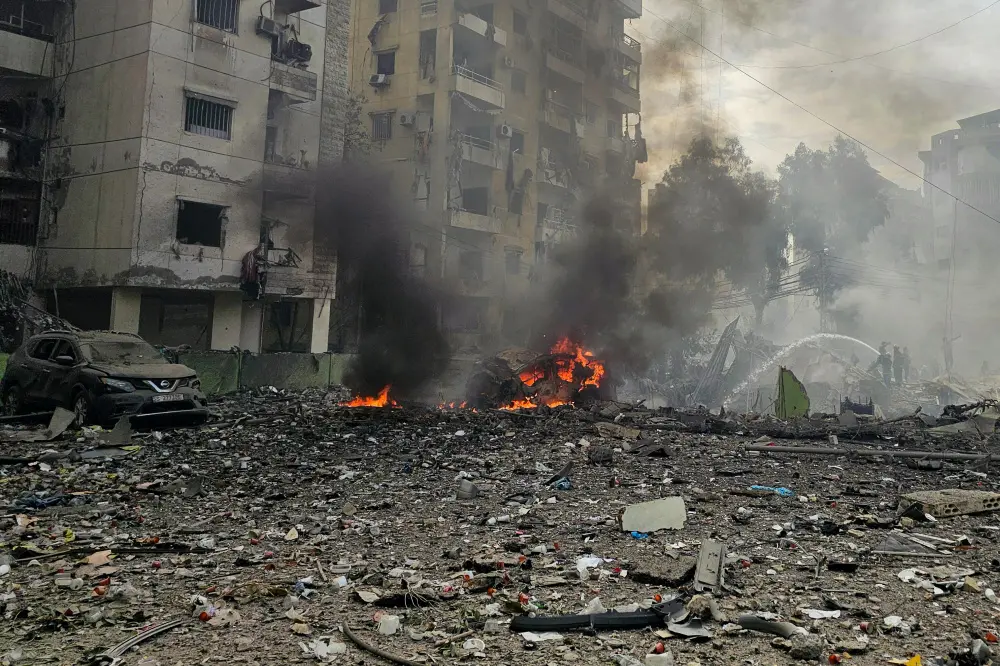
Beirut: Israel launched airstrikes on Beirut on Friday after rockets were fired toward its territory, heightening tensions and rattling the fragile ceasefire with Hezbollah.
It was the second time rockets had been launched at Israel from Lebanon since the November truce, and for the second time, Hezbollah denied any involvement.
Following the attack, Israeli Defence Minister Israel Katz warned, "If there is no quiet in Kiryat Shmona and the Galilee communities, there will be no quiet in Beirut either."
Hours later, Israeli forces carried out their first strike on the Lebanese capital’s southern suburbs since the ceasefire. The Israeli military had issued warnings to residents near the targeted area, urging them to evacuate as they were "near Hezbollah facilities".
The Israeli military said the strike targeted a Hezbollah drone storage site in Dahieh, a stronghold of the group. The area had been heavily bombed during last year’s conflict between Israel and Hezbollah.
Israel's warnings sparked panic in the densely populated district, with parents rushing to collect their children from schools, which quickly shut down. Roads became gridlocked as many residents attempted to flee.
Earlier, Israel reported that two projectiles were fired toward its territory, with one intercepted and the other landing inside Lebanon. In response, Israel launched further attacks on what it called "Hezbollah terror targets in southern Lebanon."
Hezbollah issued a statement denying involvement in the rocket attack, saying it "confirms the party's respect for the ceasefire agreement and denies any involvement in the rockets launched today from the south of Lebanon."
A planned speech by Hezbollah leader Naim Qassem in Beirut’s southern suburbs was canceled following the Israeli strikes.
Israeli Defence Minister Katz placed blame on Lebanon’s government, stating, "Lebanon's government bears direct responsibility for any fire toward the Galilee."
In response, Lebanese Prime Minister Nawaf Salam called on the army chief to "act quickly to uncover those behind the irresponsible rocket fire that threatens Lebanon's stability" and to bring them to justice.
French President Emmanuel Macron condemned the Israeli airstrike on Beirut, calling it "unacceptable" and a "violation of the ceasefire." France is part of the committee overseeing the truce agreement.
The United Nations special envoy for Lebanon, Jeanine Hennis-Plasschaert, expressed concern over the escalation, stating, "A return to wider conflict in Lebanon would be devastating for civilians on both sides of the Blue Line and must be avoided at all costs."
The Israeli military confirmed it had carried out multiple attacks across southern Lebanon, following rocket fire and an earlier Israeli operation that killed six people in the south.
Lebanon’s National News Agency (NNA) reported that Israeli airstrikes hit several regions, including Kfar Tebnit, southeast of Nabatiyeh, where one person was killed and 18 others, including three children, were wounded.
Heavy shelling was also reported in Naqura, where the UN peacekeeping mission (UNIFIL) is based, as well as in the Jezzine region, north of the Litani River, about 30 kilometers (20 miles) from the Israeli border.
Amid the escalation, schools in Nabatiyeh and Tyre were forced to close. Tyre had been hit by an Israeli airstrike last weekend that killed multiple people.
A father of four, Ali Qassem, described the growing fear in the region, saying, "I decided to bring my children to school in spite of the situation, but the administration told me they had closed it after the Israeli threats and I had to take them back home."