UAE port alert: Iran warns residents in Dubai, Abu Dhabi to evacuate 'immediately’
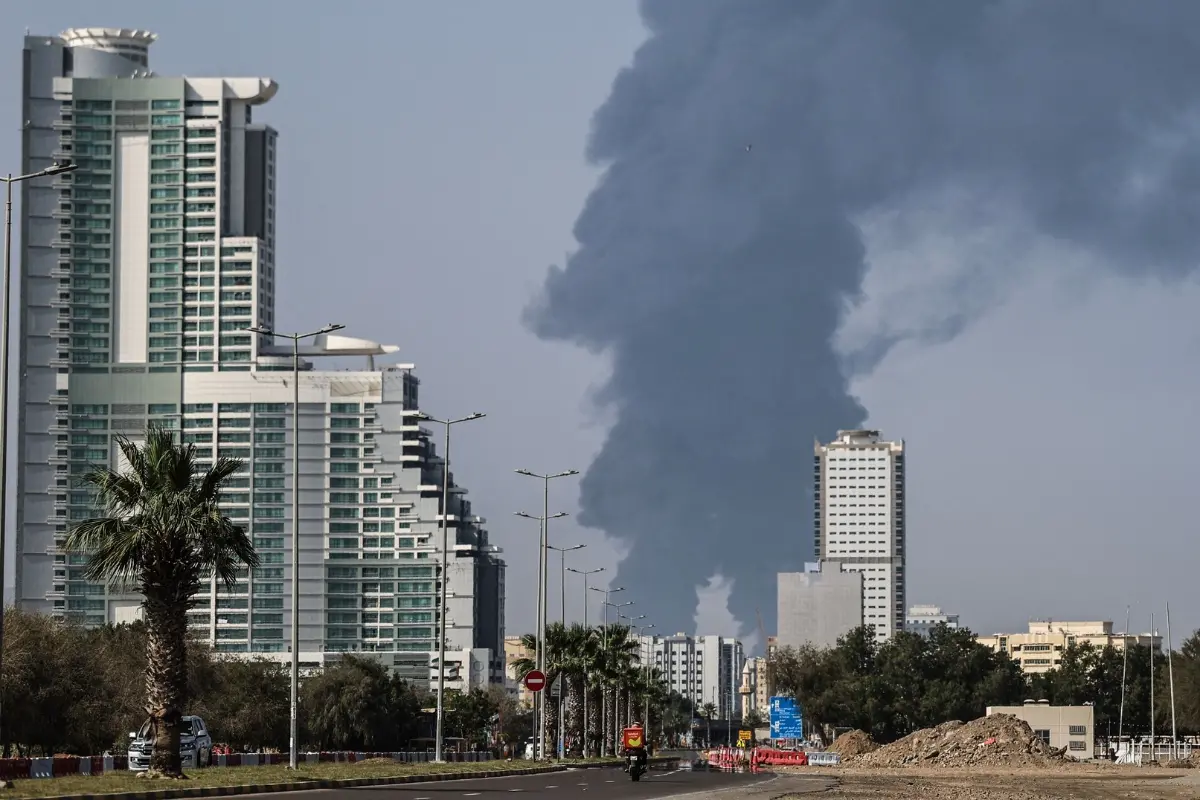
Tehran: Iran on Saturday explicitly threatened the non-U.S. assets of a neighbouring nation for the first time, ordering the immediate evacuation of the Middle East's most active port and two other critical maritime hubs in the United Arab Emirates as the conflict involving the U.S., Israel, and Iran entered its third week.
The escalation coincided with a missile strike on a helipad within the U.S. Embassy compound in Baghdad and a drone interception in the UAE that sent debris into an oil facility, further destabilising global energy markets.
Tehran warned of impending strikes on cities across the UAE, home to one of the world's premier aviation hubs, alleging without evidence that the U.S. utilised Emirati "ports, docks and hideouts" to launch recent attacks on Iran’s Kharg Island. Residents were urged to flee areas surrounding Dubai’s Jebel Ali port, the region's largest, as well as Abu Dhabi’s Khalifa port and Fujairah port.
While Iran has launched hundreds of projectiles at its Gulf neighbours during the hostilities, it had previously claimed to target only U.S. assets, despite numerous strikes on civilian airports and oil fields. Associated Press imagery Saturday confirmed a fire at the Fujairah port following a drone interception and documented smoke rising from the U.S. diplomatic mission in Iraq.
The Battle for Energy Routes
The threats follow President Donald Trump’s Friday announcement that U.S. forces "obliterated" military installations on Kharg Island, Iran's primary oil export terminal. Trump cautioned that Iran’s energy infrastructure remains a target if Tehran persists in blocking the Strait of Hormuz, where 20% of the world's oil supply is currently stalled.
In a social media post Saturday, Trump appealed to China, France, Japan, South Korea, and the U.K. to deploy warships to ensure the strait remains “open and safe.” Iran’s parliamentary speaker countered that such actions would trigger a "new level of retaliation," and military commanders reiterated threats to strike "oil, economic and energy infrastructures" linked to the U.S. across the region.
Military Buildup and Regional Toll
The Pentagon is significantly expanding its regional presence. A U.S. official confirmed Friday that 2,500 additional Marines from the 31st Marine Expeditionary Unit are being deployed alongside the amphibious assault ship USS Tripoli. These units specialise in embassy security and civilian evacuations, though their deployment does not necessarily signal a ground invasion.
The Tripoli was last tracked near Taiwan, roughly a week's sail from the Gulf. It joins a fleet that earlier this week included the aircraft carrier USS Abraham Lincoln and eight destroyers.
As U.S. and Israeli aircraft continue to strike targets across Iran, the humanitarian situation in Lebanon has reached a critical point. Israeli waves of strikes against Hezbollah have killed nearly 800 people and displaced 850,000.
Damage Assessment and Security Alerts
Conflicting reports emerged regarding the damage on Kharg Island. While U.S. Central Command reported the destruction of missile bunkers and naval mine storage, Iran’s semiofficial Fars news agency claimed the oil facilities were untouched, stating the strikes hit only a naval base, an airport tower, and a helicopter hangar.
Meanwhile, Israel’s air force reported hitting 200 targets in 24 hours, including weapons production sites. In Baghdad, no group has yet claimed the embassy helipad strike. The U.S. mission, which has maintained a Level 4 security alert, warned that Iran-aligned militias "may continue to target" American citizens and interests.
With inputs from AP