'Will respond ferociously': Iran warns US against any targeted strikes amid nuclear standoff
Tehran: Iran warned on Monday that it will respond "ferociously" to any U.S. military strike, as President Donald Trump weighs targeted attacks to force a breakthrough in stalled nuclear negotiations.
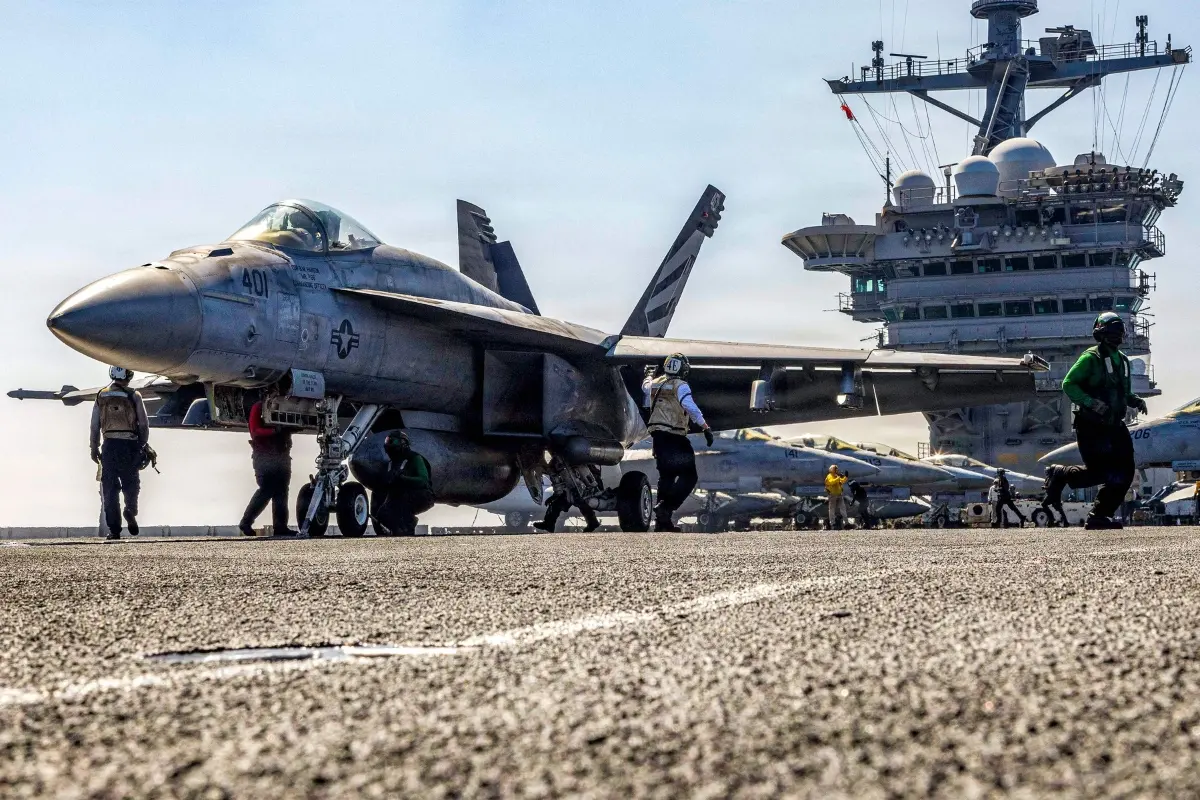
The threat from Tehran comes as the United States continues a massive military buildup in the Middle East, aimed at pressuring the Islamic Republic ahead of a pivotal round of talks scheduled for Thursday. While the Trump administration has framed a potential strike as a "limited" measure to compel compliance, the Iranian foreign ministry dismissed such distinctions on Monday.
"Any strike, even a limited one, would be regarded as an act of aggression. Period," ministry spokesman Esmaeil Baqaei said during a briefing. "And any state would react to an act of aggression as part of its inherent right of self-defence ferociously, so that's what we would do."
Diplomacy on a Deadline
The escalating rhetoric arrives as international mediators struggle to avert a direct conflict. While the U.S. and Iran concluded a second round of indirect talks in Switzerland last Tuesday, the path forward remains narrow.
Omani mediators have confirmed a follow-up session for Thursday, though the White House has yet to officially acknowledge the date. U.S. envoy Steve Witkoff and presidential advisor Jared Kushner are reportedly leading the American side, pushing a "zero enrichment" mandate that Tehran has so far rejected.
European Union foreign policy chief Kaja Kallas urged both sides to prioritise a diplomatic off-ramp, noting that Iran is currently at its "weakest point" following months of domestic upheaval and regional setbacks.
"We don't need another war in this region. We already have a lot," Kallas told reporters in Brussels. "We should be really using this time to find a diplomatic solution."
ALSO READ: ‘Decision made’: US to launch military strikes against Iran by Tuesday
Internal and Regional Pressures
The clerical leadership in Tehran is facing a convergence of crises. In addition to the looming threat of U.S. strikes, the government has been rocked by:
- Mass Protests: Nationwide demonstrations peaked in January, with rights groups alleging thousands were killed in a security crackdown.
- Economic Strain: New sanctions and the weakening of regional proxies have further isolated the regime.
- Academic Unrest: Over the weekend, students held rallies at major universities to honour those killed in recent pro- and anti-government clashes.
In a weekend interview with Fox News, Witkoff suggested that Trump has questioned why Iran has not "capitulated" under the weight of U.S. naval deployments. Baqaei retorted Monday that "Iranians had never capitulated at any point in their history."
Global Exodus
The heightened fear of an imminent conflict has triggered a flurry of travel advisories. India on Monday joined a growing list of nations, including Sweden, Serbia, Poland, and Australia, in urging its citizens to depart Iran immediately.
The Indian Embassy in Tehran issued a fresh advisory Monday afternoon, requesting that the estimated 10,000 Indian nationals in the country leave by any "available means of transport, including commercial flights."
With inputs from AFP