‘No more red lines’: Iran threatens Gulf internet cables as Trump hints at fresh ‘Epic Fury’ strikes
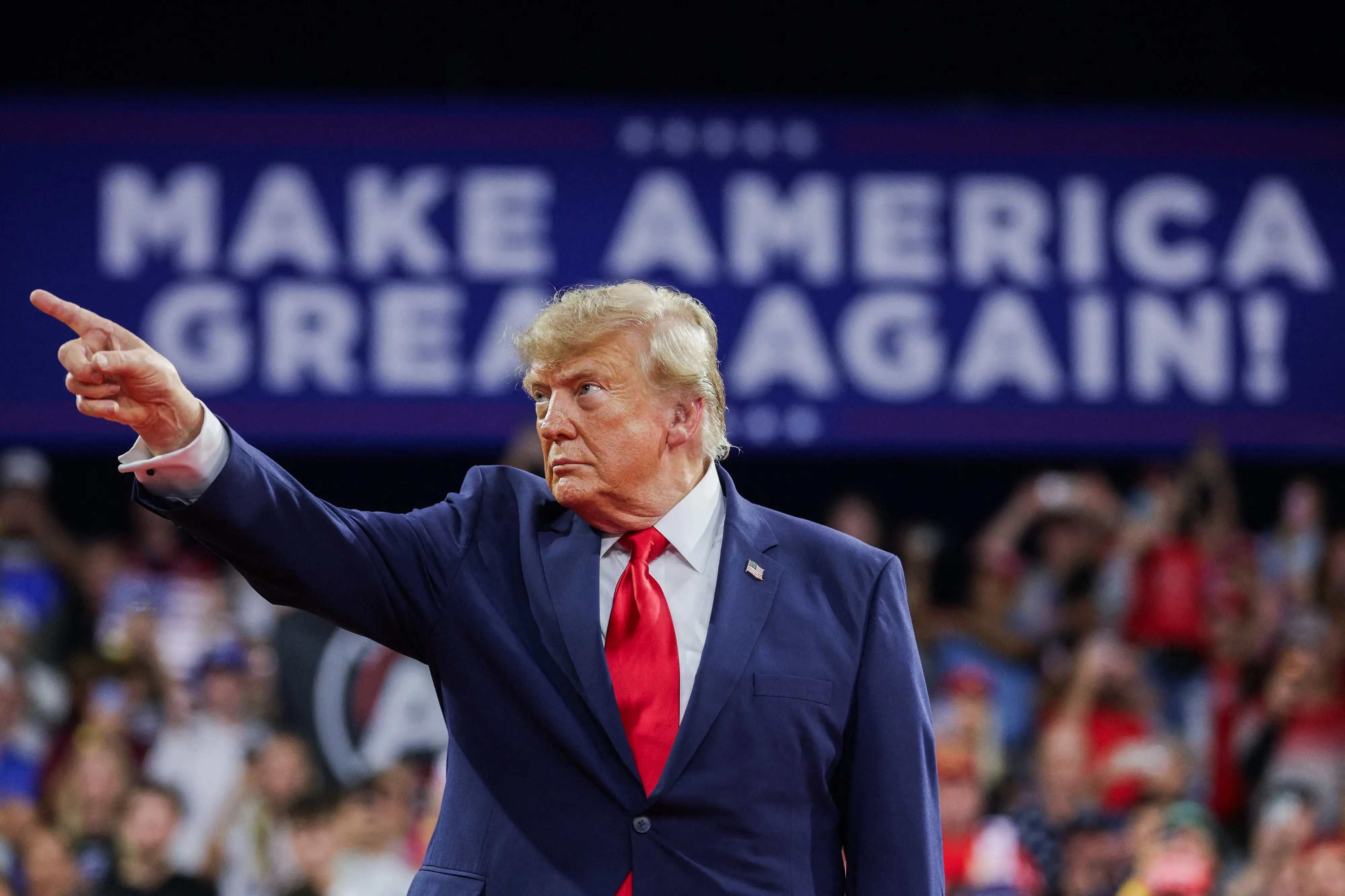
Washington DC: US President Donald Trump has raised the possibility of another major military operation against Iran, saying Washington could launch “another little Epic Fury” as the conflict approaches its eighth month. Speaking at a rally in Florida on Friday, Trump referred to the US military's operation against Iran, which began on February 28, but did not specify when another offensive might take place.
Trump also told reporters that the United States could end the war quickly, while questioning whether Washington should pursue an immediate conclusion or allow the conflict to gradually lose momentum. He said oil was continuing to move through the Strait of Hormuz, a critical route for global energy supplies.
The latest remarks come amid reports that Washington and Tehran have been discussing ways to end the conflict. Trump had previously indicated that the United States would not launch another attack before the November 3 midterm elections. However, reports cited by US media suggest that American and Israeli military planners have considered renewed strikes on Iranian energy infrastructure, nuclear facilities and missile and drone capabilities.
Military preparations fuel fears of fresh strikes
Military and foreign policy experts believe the possibility of renewed US strikes has increased. Suzanne Maloney, director of the foreign policy programme at the Brookings Institution, pointed to additional US military deployments, warnings to Americans in the region and heightened Israeli military readiness as potential indicators of further escalation.
Jason Campbell, a senior fellow at the Middle East Institute, also highlighted the planned deployment of the USS Theodore Roosevelt and another Marine Expeditionary Unit to the Middle East. He cautioned, however, that the timing of any renewed offensive remained uncertain.
Experts have warned that the United States faces constraints on its military options after months of fighting. Damage to US bases in the region could complicate a ground operation, while many conventional Iranian military sites have already sustained significant damage.
Maloney warned that a renewed campaign could increasingly affect civilian infrastructure and the Iranian population. Both analysts questioned whether another round of strikes would fundamentally change Tehran's strategic position or bring the conflict to an end.
Iran threatens undersea internet cables in the Gulf
As Washington signals the possibility of further military action, Iranian security officials have reportedly drawn up plans to target undersea communications cables in the Gulf if the United States and Israel resume their attacks.
Two senior Iranian security officials told Reuters that Tehran could target the cables and potentially delay repairs to prolong disruptions to internet connectivity and other communications services. The officials provided few details about possible targets or how such attacks might be carried out.
Yadollah Javani, deputy head of political affairs for Iran's Islamic Revolutionary Guard Corps, said Iran could target seven major internet cables beneath the Strait of Hormuz if Iranian infrastructure came under attack.
Iranian officials have also warned that US-linked digital infrastructure across the Gulf, including data centres and artificial intelligence facilities, could become targets.
The threats appear intended partly to deter further military action by highlighting the potential economic consequences for Gulf states and international technology companies with major investments in the region.
How cable attacks could affect global connectivity
Undersea cables carry approximately 99 per cent of global internet traffic, according to the International Telecommunication Union. However, telecommunications research firm TeleGeography estimates that less than 1 per cent of international bandwidth passes through the Strait of Hormuz.
This means damage to cables in the strait would not necessarily cause a global internet shutdown. Nevertheless, multiple cable cuts could slow connections, disrupt financial transactions, affect e-commerce and interfere with cloud computing services, depending on available alternative routes and network capacity.
Repairs could also become more difficult during a military conflict because of higher insurance costs, security risks and delays in obtaining permission to operate in territorial waters.
The Red Sea could represent a more significant vulnerability for international communications. According to TeleGeography research director Alan Mauldin, routes through the waterway account for around 3 per cent of global international demand and approximately 10 per cent of traffic travelling between regions.
Gulf technology investments face potential risks
Gulf countries have invested heavily in data centres, artificial intelligence and digital infrastructure as part of efforts to diversify their economies beyond oil. These investments have also strengthened their connections with major US technology companies.
Iranian strikes directly hit two Amazon Web Services facilities in the United Arab Emirates in March and damaged infrastructure near one of its facilities in Bahrain, according to the report. The Islamic Revolutionary Guard Corps also named several US technology companies, including Microsoft, Google, Apple and Nvidia, as legitimate targets during the conflict.
Land-based connections provide alternative routes for internet traffic, while governments and technology companies are investing in additional infrastructure to improve network resilience. Microsoft has announced plans to invest more than $400 million in subsea and terrestrial connectivity across the Middle East by 2030.
Any further attacks on regional digital infrastructure could therefore affect commercial operations, financial services and long-term technology investment plans.
Turkey, France and Germany urge diplomacy
Foreign ministers from Turkey, France, Germany, Britain, Egypt, Pakistan, Saudi Arabia and Italy met in Istanbul on Friday to discuss the conflict and the risks of further escalation.
Turkish Foreign Minister Hakan Fidan warned that another attack on Iran could expand the war across the region. He said diplomacy and dialogue remained the only viable route towards ending the conflict.
French Foreign Minister Jean-Noel Barrot cautioned that further escalation between Iran and the United States would benefit neither side and could have serious consequences for oil and other hydrocarbon prices.
German Foreign Minister Johann Wadephul said Germany, France and Britain remained prepared to negotiate with Iran to ensure it does not acquire nuclear weapons.
The diplomatic discussions reflect growing concerns that a renewed offensive could deepen instability across the Middle East, threaten energy supplies and expose critical infrastructure to further attacks.
Why another round of strikes may not end the war
The latest developments point to a conflict in which both sides are attempting to increase pressure on the other while facing limits on their military options. Washington's blockade of Iranian ports and its regional naval deployments are intended to pressure Tehran, while Iran's threats against shipping and communications infrastructure raise the potential cost of further US and Israeli attacks.
The November 3 US midterm elections add a domestic political dimension. Higher fuel prices and the economic consequences of the conflict could influence voters, while the timing of any renewed military operation remains uncertain.
Iran's threats against undersea cables also broaden the potential consequences of the conflict beyond conventional military targets. Although the Strait of Hormuz carries a relatively small share of international internet traffic, attacks on multiple routes could disrupt services and increase costs for businesses operating across the Gulf.
However, military analysts caution that further strikes are unlikely to deliver a decisive strategic outcome. With significant damage already inflicted on Iranian military facilities and both sides demonstrating a willingness to sustain losses, renewed attacks could prolong the conflict rather than resolve it.
The central question is whether military pressure will produce a negotiated settlement or trigger another cycle of retaliation involving energy supplies, shipping routes and critical digital infrastructure.