Iran meeting to take place in Qatar amid conflicting US-Iran claims; is Trump attending?
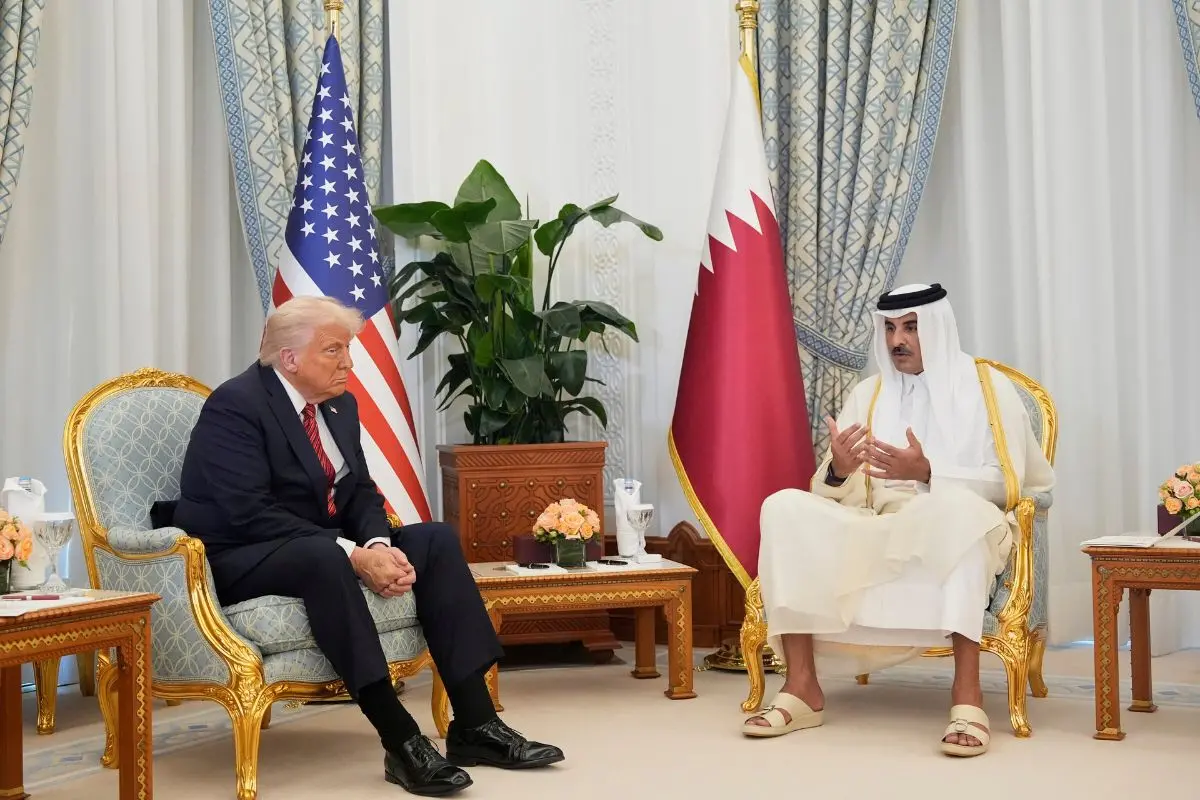
Doha: Iran has denied plans for direct negotiations with the United States after US President Donald Trump claimed Tehran had requested a meeting in Qatar, highlighting continued uncertainty over efforts to consolidate a fragile ceasefire and ease tensions in the Middle East.
Posting on his Truth Social platform on Monday, Trump said: "IRAN HAS REQUESTED A MEETING. IT WILL TAKE PLACE TOMORROW IN DOHA!" He did not specify who would attend the meeting or provide further details.
The White House later said US special envoy Steve Witkoff and Trump's adviser and son-in-law Jared Kushner would travel to Doha this week for high-level discussions.
However, Iranian Foreign Ministry spokesman Esmaeil Baqaei firmly rejected the claim, saying there would be no negotiations with the United States "at any level" in the coming days.
"We have not yet entered the stage of negotiating a final agreement," Baqaei said, adding that while an Iranian delegation of experts would travel to Doha this week, no direct talks with Washington were planned.
Iran and Oman hold first Hormuz talks
The developments come after Iran and Oman held their first discussions on managing the Strait of Hormuz since the US-Iran agreement was signed earlier this month.
Iran's Deputy Foreign Minister Kazem Gharibabadi said the Joint Hormuz Committee met in Muscat to discuss implementation of the agreement governing one of the world's most strategically important shipping lanes.
The Strait of Hormuz, bordered by Iran and Oman, carries roughly one-fifth of global oil and liquefied natural gas shipments. The waterway has remained a key flashpoint despite the recent US-Iran agreement aimed at ending months of conflict.
The latest tensions escalated after US Central Command said it struck 10 Iranian military targets on Sunday in response to what it described as continued Iranian aggression against commercial shipping. Iran later said it retaliated by targeting US bases in Kuwait and Bahrain.
Dispute over navigation and de-mining
Iran has warned that vessels attempting to bypass its preferred shipping corridor through the Strait of Hormuz could increase regional tensions.
Although international law generally prevents Iran and Oman from blocking passage or imposing tolls, Tehran insists ships should transit through a corridor closer to its coastline.
Questions also remain over how the new memorandum will be implemented, particularly regarding de-mining operations.
France and Oman announced plans to carry out joint de-mining efforts following talks between French President Emmanuel Macron and Omani Sultan Haitham bin Tariq.
Iran objected to the proposal, with Gharibabadi insisting that under the agreement only Iran would conduct de-mining operations.
"The situation is sensitive and complex. We strongly advise France not to complicate it further with its provocations," he said.
Shipping slows as security concerns persist
Commercial shipping through the Strait of Hormuz has slowed following recent security incidents.
According to maritime tracking firm Kpler, only 29 commodity vessels crossed the strait on Saturday and 12 on Sunday after a vessel was struck while transiting the waterway.
Data also showed no ships used the southern corridor through Omani waters, while shipping tracker AXSMarine reported that dozens of vessels had switched off their public tracking signals.
Iran's Revolutionary Guards said they were tightening control over maritime traffic and warned that vessels violating the new measures would face stronger enforcement.
Mohammad Mokhber, an adviser to Iran's Supreme Leader, said continued Iranian oversight of the strait would prevent what he described as Washington's "hegemonic dreams" in the region.
Analysts believe further incidents in the Strait of Hormuz remain likely, with experts suggesting Tehran could continue applying controlled pressure in the strategic waterway while negotiations remain unresolved.
Israel strikes southern Lebanon
Separately, Lebanese state media reported that Israel carried out fresh strikes in southern Lebanon on Monday despite a framework agreement reached last week aimed at securing a broader peace deal.
The region remains a stronghold of the Iran-backed Hezbollah movement, which entered the conflict earlier this year by launching rocket attacks on Israel.
Under the US-brokered agreement, Hezbollah is expected to disarm under the supervision of the Lebanese army, although Israeli officials have said their forces will remain in southern Lebanon until that process is completed.