Iranian Navy claims to have captured one of US military's most modern unmanned submarines at entrance of Strait of Hormuz
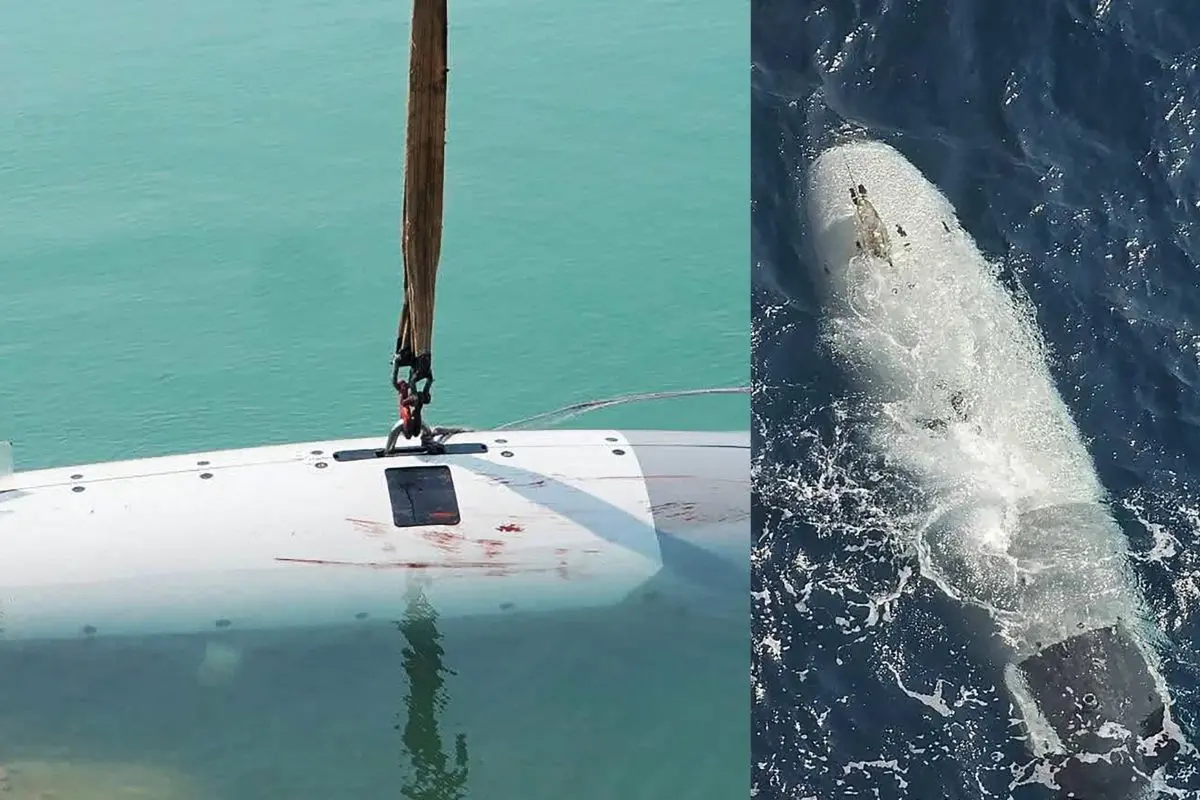
The Iranian Navy claims to have captured one of the US military’s most advanced autonomous submersibles near the entrance to the strategic Strait of Hormuz, amidst a sharp escalation in regional maritime conflict that has pushed global oil prices towards $100 per barrel.
In a statement broadcast by state media outlet Sepah News, the Islamic Revolutionary Guard Corps (IRGC) Navy reported that its forces seized an uncrewed underwater vehicle (UUV)—identified as an Anduril Dive-LD—during a "complex intelligence and operational action" at dawn. Iranian officials subsequently released video footage depicting the three-tonne, 5.8-metre craft being lifted from the water intact.
Footage released by Iranian media shows what the IRGC claims is an American Dive-LD unmanned submarine captured today. Iran says the vessel is now in its possession. pic.twitter.com/POWlEHHnd5
— Open Source Intel (@Osint613) September 8, 2026
The IRGC asserted that the captured vessel represents the apex of subsurface technology, deployed by Washington for seabed mapping, mine detection, and surveillance. However, United States Central Command (CENTCOM) downplayed the loss, maintaining that the craft was an older, non-classified model that had malfunctioned more than 24 hours prior to Tehran's announcement.
"The drone was essentially dead in the water for more than a day," said CENTCOM spokesperson Captain Tim Hawkins, confirming that the vehicle carried no classified radar or sonar systems. California-based manufacturer Anduril Industries noted that the Dive-LD is an "attritable" platform engineered for dangerous operational environments where loss is an anticipated operational variable, adding that the unit had already logged thousands of hours in regional missions.
The underwater seizure coincides with a sharp surge in direct military exchanges across West Asia. The IRGC claimed its air defence network successfully downed an American MQ-9 Reaper reconnaissance drone over the Strait of Hormuz. Simultaneously, CENTCOM announced that US forces destroyed five Iranian crude oil tankers following two consecutive days of Iranian ballistic missile strikes targeted at an American warship.
Tehran’s forces escalated retaliatory measures further on Wednesday, claiming strikes on a US military installation in Jordan and threatening to target oil tankers operating off the coasts of Kuwait and Bahrain. Addressing the nation, Iranian President Masoud Pezeshkian reaffirmed Tehran's stance on social media platform X:
"The Islamic Republic of Iran has always been opposed to war and considered the preservation of the people's interests and ensuring the region's security to lie in refraining from warmongering. However, just as it has courageously risen to defend against aggression up to this day, Iran will continue this resistance with strength until the aggressors are brought to complete regret."
The military exchanges follow months of heightened friction since joint US-Israeli strikes hit Iranian targets on 28 February, triggering retaliatory missile waves and an Iranian blockade of the Strait of Hormuz—a bottleneck responsible for a fifth of global petroleum exports. A 60-day diplomatic window established under a June memorandum of understanding expired on 17 August without a formal agreement, leaving maritime security unanchored.
In tandem with kinetic actions, Washington has intensified economic coercion. The US Department of the Treasury placed 27 Iranian airlines on its Specially Designated Nationals (SDN) List, effectively targeting all remaining commercial carriers. American officials contend the regime uses civilian air infrastructure for foreign arms procurement and personnel transport.
The compound military operations and shipping disruptions sent shockwaves through energy markets in early Asian trade on Wednesday. Brent crude climbed to $99.38 a barrel, whilst West Texas Intermediate rose to $94.51, raising global fears of prolonged stagflation as maritime transit through the Persian Gulf remains severely compromised.(Compiled)