Indian LPG ships set to make Hormuz passage as tankers signal readiness to sail amid tensions
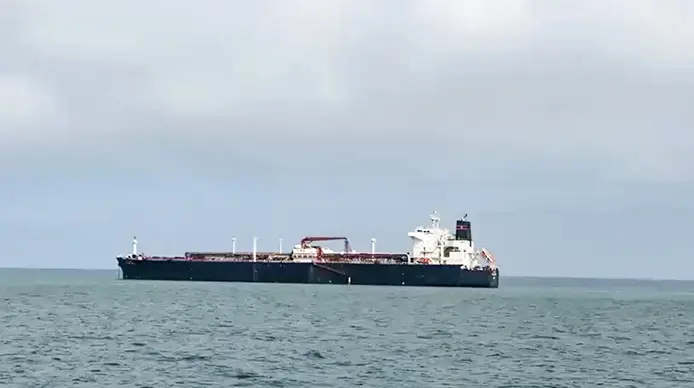
Two Indian-flagged liquefied petroleum gas (LPG) carriers appear to be preparing to resume voyages through the Strait of Hormuz, ship-tracking data showed on Friday, after a temporary halt triggered by Iranian threats against vessels attempting to exit the Gulf. No crude oil tankers have crossed the waterway in the past 24 hours, according to industry data and shipping sources.
Indian LPG tankers signal plans to move
The LPG carriers Pine Gas and Jag Vasant, both sailing under the Indian flag, remained anchored near the UAE’s hub of Sharjah on Friday but were broadcasting signals that they were preparing to sail, according to MarineTraffic and Kpler data.
A shipping industry source familiar with the situation said the two tankers could attempt to depart as early as Saturday.
India’s federal shipping ministry said it had no immediate information on the planned movements. Foreign ministry spokesperson Randhir Jaiswal reiterated that India supported the “safe and unhindered movement” of its 22-vessel fleet currently inside the Gulf, adding that Prime Minister Narendra Modi was in contact with other leaders regarding their safe passage.
The Jag Vasant has been chartered by Bharat Petroleum Corporation Limited (BPCL), while the Pine Gas is chartered by Indian Oil Corporation (IOC). Both state-run refiners did not immediately comment.
Last week, Iran permitted two Indian-flagged LPG ships to transit the strait, according to people briefed on the matter.
Crude shipments remain stalled
Market assessments on Friday indicated that no crude oil tankers had passed through the Strait of Hormuz in the previous 24 hours. Kpler data showed one empty, US-sanctioned crude carrier heading back toward Iranian waters on 18 March.
Hundreds of ships have been anchored across Gulf waters since Tehran warned it would target vessels attempting to leave via Hormuz, a corridor through which roughly 20% of the world’s oil and liquefied natural gas normally flows.
A Pakistan-bound oil tanker was tracked travelling through the strait in recent days, reflecting that some nations appear able to negotiate safe passage despite the backdrop of the ongoing Israel Defense Forces–Iran conflict and US involvement.
US temporarily eases sanctions on Iranian oil at sea
In a related development, the US Treasury on Friday issued a temporary waiver allowing the delivery and sale of Iranian crude already loaded onto ships before 20 March. The authorisation, valid until 19 April, was announced by Office of Foreign Assets Control (OFAC) and confirmed by Treasury Secretary Scott Bessent.
The move mirrors an earlier sanctions pause on Russian oil at sea and comes amid Iran’s effective blockade of the Strait of Hormuz and repeated strikes on regional energy infrastructure, factors that have pushed global crude prices sharply higher.
(With inputs from agencies)