India-New Zealand FTA: Landmark trade deal to double bilateral trade within 5 years | WATCH
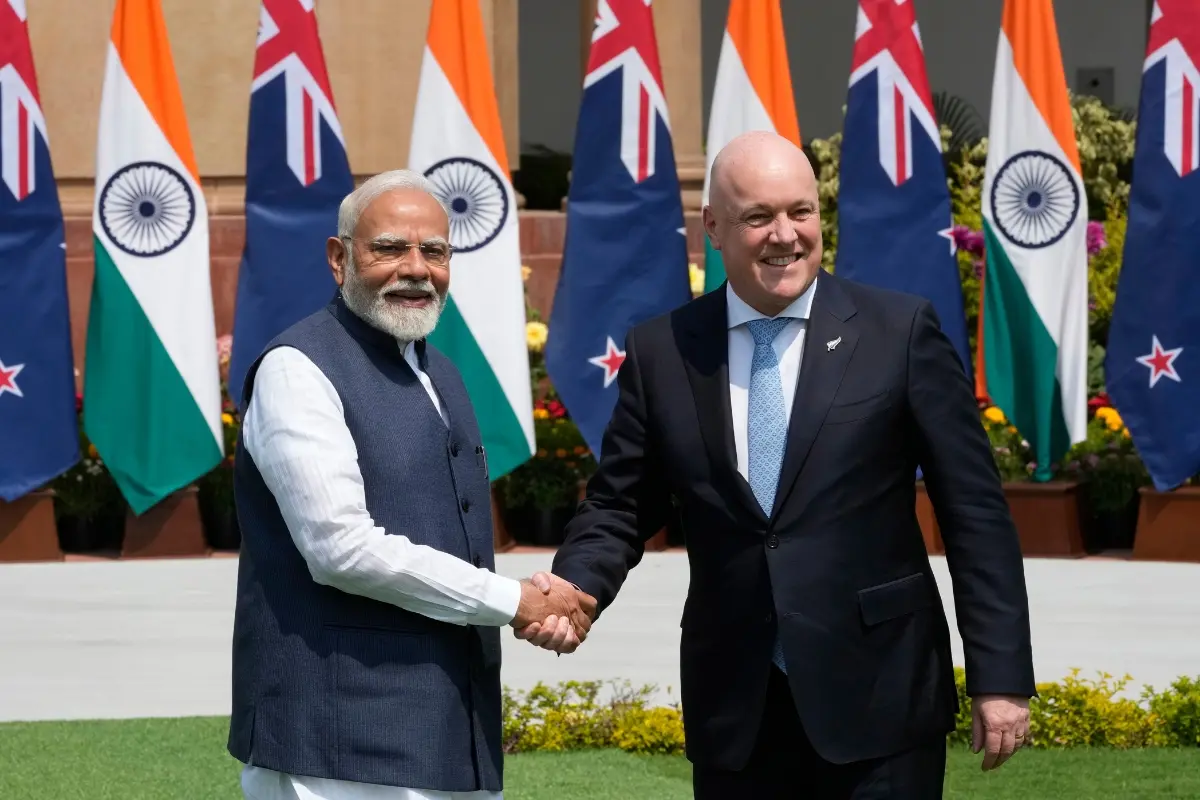
New Delhi: India and New Zealand on Monday declared the successful conclusion of a free trade agreement, a move intended to bolster economic integration and provide stability amid heightening global trade volatility.
The pact is part of a strategic push by New Delhi to broaden its export footprint and mitigate the repercussions of significant import tariffs recently imposed by the United States.
Petal Dhillon, India’s chief negotiator, informed journalists that the official signing is slated for the first quarter of next year, following a final legal review of the text.
The agreement, the result of nine months of negotiations, focuses on slashing tariffs, streamlining regulatory hurdles, and enhancing bilateral engagement in goods, services, and investments. It highlights India's intent to secure diverse trade alliances as international commerce grapples with protectionist trends, unpredictable duties, and geopolitical strain.
Under the terms of the accord, Indian officials stated that India will receive duty-free export access for all goods entering New Zealand. Conversely, Wellington will benefit from phased duty concessions and market access for approximately 70% of India’s tariff lines, representing 95% of New Zealand's exports.
Key Indian industries expected to profit from the tax-free access include textiles, apparel, engineering, leather, footwear, and marine products. New Zealand’s primary gains are anticipated in the horticulture, timber, coal, sheep wool, and meat sectors.
Furthermore, India’s Trade Ministry announced that New Zealand has pledged $20 billion in investments into India over the next 15 years as part of the deal.
However, citing “domestic sensitivities,” New Delhi has explicitly excluded several dairy items—such as milk, cream, yoghurt, whey, and cheese—as well as other animal and vegetable products, including goat meat, onions, and almonds.
While current bilateral trade is modest compared to India's major partners, standing at $2.4 billion in 2024, Trade Secretary Rajesh Agarwal expressed hope that the figure could double within five years.
“Given the limited scale of bilateral trade, the agreement is less a trade breakthrough than a framework for deeper cooperation,” said trade analyst Ajay Srivastava.
New Zealand Prime Minister Christopher Luxon posted on X on Monday that he had discussed the conclusion of the negotiations with his Indian counterpart, Prime Minister Narendra Modi. Luxon projected that New Zealand's annual exports to India would rise by $1.1 billion to $1.3 billion over the next 20 years.
“Boosting trade means more Kiwi jobs, higher wages and more opportunities for hard-working New Zealanders,” Luxon said.
New Zealand Trade Minister Todd McClay emphasised the unique nature of the deal, noting that Wellington secured concessions India has not granted to any other nation.
“New Zealand is the first country to secure any access for apples and honey into India in an FTA. We have secured the best access for kiwi fruit into India of any country in the world,” McClay said.
Indian Trade Minister Piyush Goyal remarked that the deal proves India is “rapidly expanding” its trade network with nations that complement rather than compete with its domestic economy.
The push to finalise free trade agreements comes as India seeks to insulate its exports from external shocks. New Delhi is currently in advanced discussions with the European Union and Chile, and aims to begin negotiations with Canada shortly.
These intensified efforts coincide with the pressure felt by Indian exporters due to U.S. tariffs implemented in August. These include an additional 25% levy linked to India's continued purchase of discounted Russian oil, raising the total U.S. tariffs on its ally to 50%.
Washington has criticised India, the world's second-largest buyer of Russian crude after China, for indirectly funding Moscow’s military operations in Ukraine. These trade tensions have particularly impacted India’s auto components, metals, textiles, and labour-intensive manufacturing sectors.
In recent years, India has secured major economic partnerships with the United Arab Emirates and Australia, and finalised an FTA with Britain in May that reduces duties on Scotch whisky and Indian spices. Just last week, India also entered into a comprehensive economic partnership agreement with Oman.
With inputs from AP