Knife-wielding Idaho teen with autism and cerebral palsy shot by police, sparks outrage
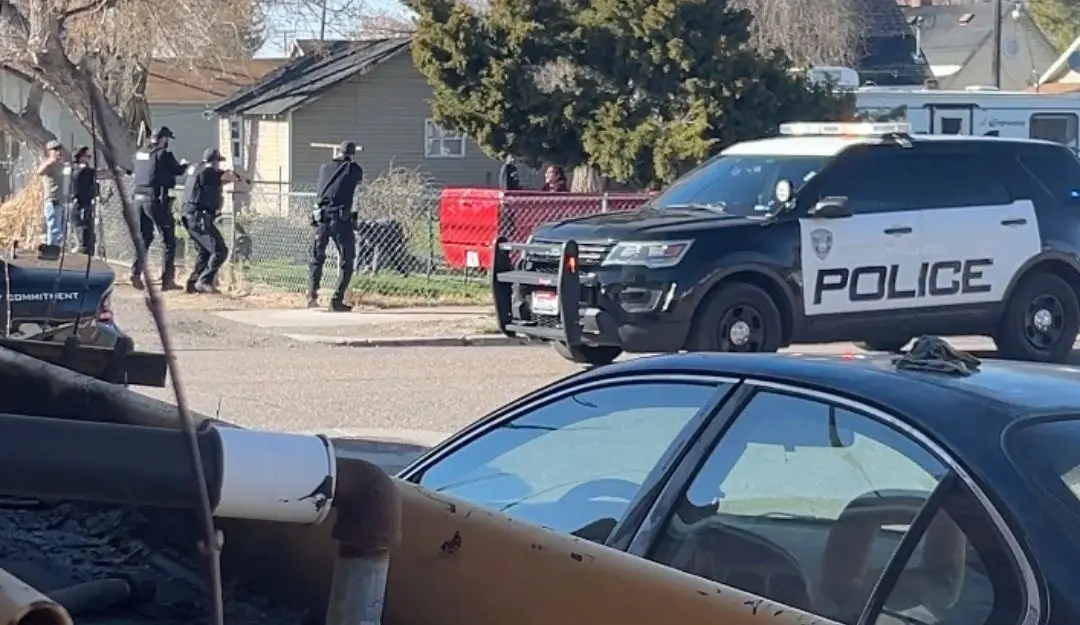
Idaho: Public anger is escalating after video footage emerged showing Idaho police officers shooting a 17-year-old autistic and intellectually disabled boy just seconds after arriving at the scene. Officers opened fire from behind a chain-link fence, critically injuring the teen, who also has cerebral palsy.
Victor Perez, who is nonverbal and described by his family as having a staggering gait due to his disabilities, was struck multiple times. He remains hospitalised in critical condition. His aunt, Ana Vazquez, said nine bullets were removed from his body and one of his legs had to be amputated.
“We don't know if he's going to wake up,” she told.
911 call described a knife-wielding ‘intoxicated’ male
The incident began shortly after 5.20 p.m. Saturday when 19-year-old Bridger Andres called 911, reporting a domestic disturbance behind his father’s auto shop. Audio of the call released by Pocatello police revealed the caller described a man — later identified as Perez — wielding a kitchen knife and appearing intoxicated.
“He seems pretty drunk,” the caller said. “He’s just running at them with a knife and then falling over. I think he just stabbed himself, actually.”
The caller also said the people involved were not speaking English and that Perez appeared to collapse to the ground during the episode.
Officers arrived and opened fire in under 12 seconds
According to witness Brad Andres, the officers “appeared to be like a death squad or a firing squad.” His video shows four officers arriving and running to the fence — three drawing handguns and another holding what appeared to be a shotgun. They yelled at Perez to drop the knife.
Perez then stood and began stepping toward them, still holding the knife. Within seconds, officers opened fire.
“They never once asked, ‘What is the situation, how can we help?’” Andres said. “They ran up with their guns drawn, they triggered a mentally disabled person to react and when he reacted ... they shot him.”
Vazquez said her 16-year-old niece shouted at officers that Victor was “special” and pleaded with them not to shoot. It is unclear if the officers heard the warning, which was not audible on the video. She also disputed reports that Victor was intoxicated.
“The police barely spoke to anyone,” she said. “They just said get back and they just, they shot to kill.”
She added that the family had never before contacted police for help with Victor and that this was his first interaction with law enforcement.
Police chief responds
On Monday, Pocatello Police Chief Roger Schei released a video statement acknowledging the video and growing criticism.
“We understand the concern and emotion surrounding the officer-involved shooting that occurred,” he said. “We are also aware of the video circulating online, which shows only one angle. The full picture requires careful review of all facts and evidence.”
Schei said an investigation is underway by the East Idaho Critical Incident Task Force and declined to take further questions.
“In situations like this, officers must make decisions in seconds,” he said. “They assess threats not just to themselves but to those nearby. In this case, two individuals were within a few feet of an armed, noncompliant individual. The risk was immediate, and the situation rapidly evolving.”
Use-of-force tactics questioned
Seth Stoughton, a former police officer and law professor at the University of South Carolina, questioned the use of lethal force.
“It does not appear to me that any officer is in immediate danger at the point where they begin shooting,” he said. “If he had made it over the fence and officers backed up and he continued to approach … then that could change.”
He also questioned why officers didn’t use less-lethal weapons or try to create more distance.
According to the Pocatello Police Department’s policy manual, all trained uniformed officers are required to carry Tasers and either a baton or pepper spray. The department has not confirmed whether the officers involved had such equipment or considered using it.
Growing calls for better police training as protests erupt in Pocatello
Across the United States, law enforcement agencies have been adopting specialised training to better identify and respond to individuals with developmental or intellectual disabilities. Many autism-focused programmes emphasise how sensory overload, lack of verbal communication, or uncoordinated movements can be misinterpreted by police officers as noncompliance.
Some groups have introduced autism alert stickers or marked licence plates to alert police when a resident with autism may be present.
“This was really traumatic for me to watch,” said Brad Andres. “My son was the one that called the 911 with the hopes of helping the family deal with the situation. He had no idea that what was going to transpire.”
Dozens of demonstrators gathered outside the Pocatello Police Department on Sunday, demanding answers and accountability. The shooting has raised broader questions about police readiness to deal with mental health and developmental challenges.
Pocatello is a city of nearly 60,000 residents, located approximately 165 miles north of Salt Lake City.
(With inputs from AP)