Houthis demand $51 billion from Saudi Arabia; seek recognition as Yemen's legitimate rulers
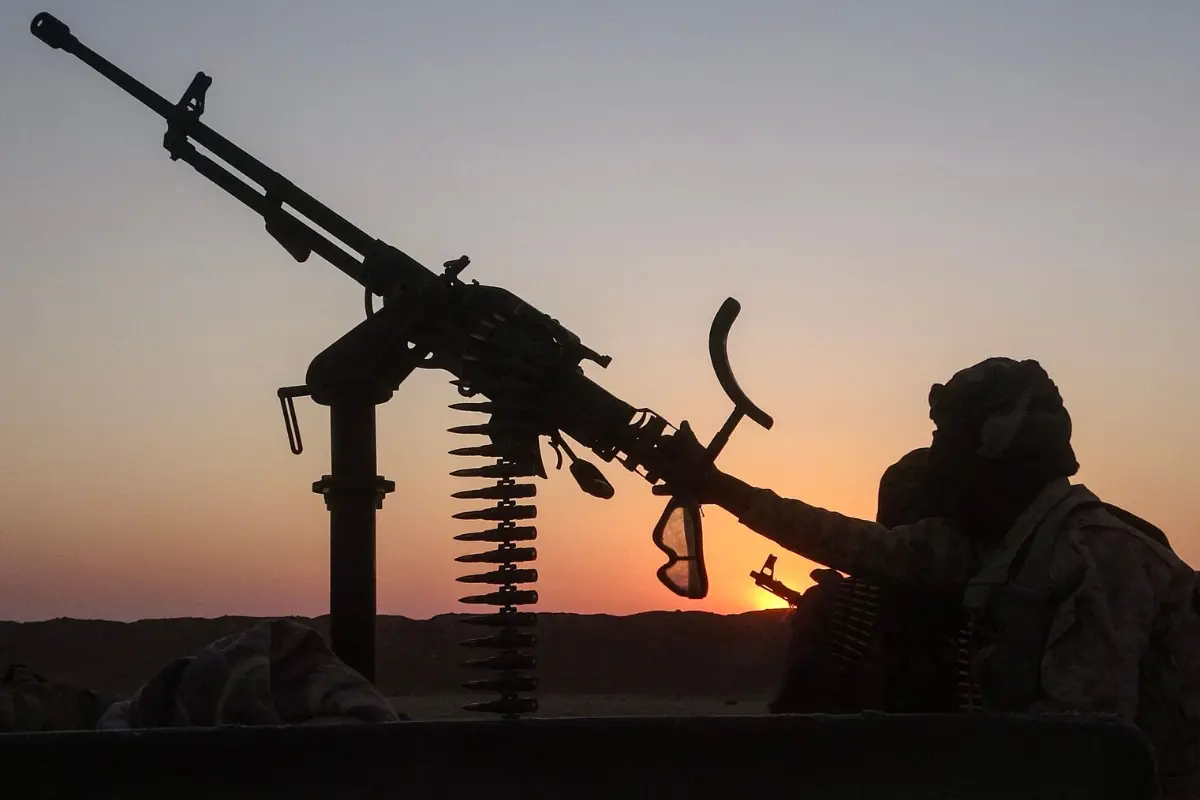
Yemen's Houthi rebels have reportedly demanded an eye-watering $51 billion in compensation from Saudi Arabia, alongside formal recognition as the country's legitimate rulers, as Riyadh explores a possible negotiated end to the war.
The extraordinary demands, reported by The Wall Street Journal (WSJ), come amid a renewed Houthi offensive, escalating attacks on Saudi targets and growing uncertainty over the kingdom's military options in Yemen.
According to a report by The Wall Street Journal (WSJ), the Iran-backed group made the demands after Riyadh reached out to explore negotiating an end to hostilities.
The Saudi initiative reportedly came in the wake of Houthi attacks on oil tankers in the Red Sea and the group's seizure of territory overlooking the strategically crucial Bab al-Mandeb Strait.
People familiar with the discussions told the publication that the Houthis sought $51 billion as compensation for years of Saudi airstrikes and the prolonged blockade imposed during the conflict.
Although different figures have since emerged in discussions, the rebels have maintained that any potential settlement would involve compensation in the tens of billions of dollars.
However, the financial demand is only one part of the challenge confronting Riyadh. The Houthis have also reportedly insisted that Saudi Arabia recognise their authority as Yemen's legitimate rulers.
Such an arrangement would effectively require the kingdom to accept an Iranian-backed adversarial force governing its southern neighbour.
Houthi offensive puts Saudi Arabia under pressure
The negotiations are unfolding against a backdrop of renewed violence in Yemen.
Fighting has intensified again this summer, with the Houthis stepping up attacks on Saudi oil infrastructure and airports while launching fresh military operations to seize strategically important territory.
Their advance towards Aden, the southern port city that serves as the seat of Yemen's internationally recognised, Saudi-backed government, has emerged as a major concern.
The rebels have reportedly moved to within approximately 50 miles of the city, marking their closest position since capturing parts of it in 2015.
On October 31, the group fired two missiles at the presidential palace in Aden, according to a police official quoted by AFP. The city has witnessed repeated attacks since Yemen's previously dormant civil war reignited in July.
Saudi Arabia has also come under mounting pressure from Houthi strikes. The group intensified its operations against the kingdom throughout October, carrying out near-daily attacks, with the frequency rising sharply toward the end of the month.
Why Riyadh is reluctant to negotiate
Despite responding with repeated airstrikes, Saudi Arabia is not in a comfortable position to dictate the terms of a settlement.
Saudi officials told the WSJ that Crown Prince Mohammed bin Salman remains reluctant to enter negotiations without first securing military and territorial advantages that could strengthen Riyadh's bargaining position.
The crown prince, who effectively governs the kingdom under his 90-year-old father, King Salman, is also wary of committing additional troops to Yemen.
A deeper military intervention could expose Saudi forces to substantial casualties and provoke domestic discontent.
Saudi authorities have not publicly disclosed the dozens of casualties reportedly already suffered by their forces.
The Houthis, meanwhile, have targeted locations in Yemen that could potentially be used as staging grounds or command centres for a Saudi-led ground offensive.
One such attack in the Shabwah governorate reportedly killed at least 75 people and left more than 200 injured. It was the deadliest incident since the civil war resumed.
Kristian Coates Ulrichsen, an expert at Rice University's Baker Institute, observed that Saudi Arabia is now facing greater risks than during the earlier phase of the conflict between 2015 and 2022.
Repeated attacks on civilian and energy infrastructure have also dented investor confidence.
Yemeni analyst and Sana'a Center for Strategic Studies co-founder Maged Al-Madhaji warned that agreeing to the Houthis' financial demands could create a dangerous precedent, allowing the group to use military escalation as a bargaining instrument.
He said the central concern is that the rebels could intensify attacks whenever they seek additional financial or political concessions.
Saudi Arabia struggles to secure military backing
Riyadh's predicament is further complicated by the uncertain support it can expect from its regional allies.
The United Arab Emirates, previously a key partner in the campaign against the Houthis, withdrew in December last year following disagreements with Saudi Arabia.
Abu Dhabi supports forces advocating an independent South Yemen, an objective that clashes with Riyadh's preference for maintaining Yemen's territorial unity.
Saudi Arabia has subsequently attempted to strengthen its security arrangements through the Mecca Pact with Turkey and Pakistan. The agreement commits members to treating an attack on one as an attack on all.
However, the arrangement has not yet translated into a unified military response. Turkey's Parliament has not approved the agreement, while Pakistan has declined to participate in military strikes inside Yemen.
Egypt's Parliament approved military support for Saudi Arabia in October, but President Abdel Fattah Al Sisi has maintained that any deployment would be limited to defensive operations.
The United States, too, has declined to offer direct military support against the Houthis following its weeks-long campaign against the group in 2025.
With its regional military backing uncertain, its infrastructure vulnerable and the Houthis advancing on the ground, Saudi Arabia faces an increasingly complicated choice.
Negotiating could mean accepting demands with enormous financial and political consequences, while continuing the military campaign risks prolonging a conflict Riyadh has struggled to contain decisively.