Honduras bloodbath: 25 killed as gunmen launch dual coastal attacks, ambush police task force
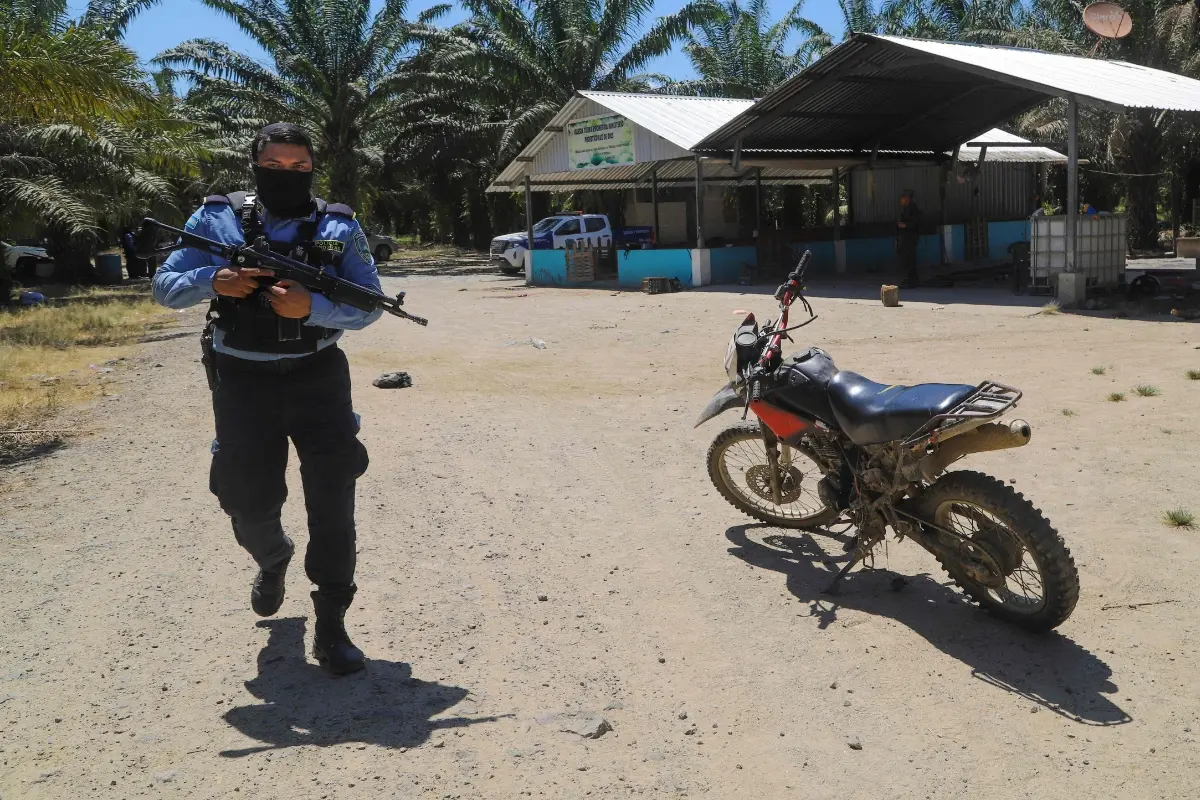
Tegucigalpa(Honduras): Assailants launched two separate firearms attacks on Thursday along the Honduran coast, killing at least 25 people, including six law enforcement officials, governmental authorities announced.
The initial assault occurred at an agricultural facility in the northern municipality of Trujillo, where a minimum of 19 labourers were shot and killed, according to Yuri Mora, a spokesperson for the Public Prosecutor's Office. The resource-rich territory has served as the epicentre of a protracted, decades-long agrarian conflict.
The Inter-American Commission on Human Rights has previously implemented precautionary protection protocols for several local activists who have faced surveillance, intimidation, and explicit threats due to their advocacy for environmental protection and territorial land rights.
The danger associated with safeguarding natural resources in this heavily militarised sector of Honduras was underscored by the 2024 assassination of environmental leader Juan Lopez. The Central American state consistently ranks among the global hotspots for violence targeting conservationists; according to data compiled by the nongovernmental organisation Global Witness, five environmental defenders were killed in 2024, following 18 homicides the preceding year.
Authorities recently apprehended three suspects accused of orchestrating the assassination of Lopez, a development that provides a rare instance of judicial accountability in a nation historically characterised by elevated rates of impunity.
Border Ambush and Law Enforcement Casualties
In the subsequent assault, gunmen opened fire on police personnel within the Omoa municipality of the Cortes department, located near the Guatemalan border. The ambush resulted in the deaths of six police officers, including a high-ranking commander, law enforcement officials stated.
The slain personnel were assigned to a specialised anti-gang operational task force and were ambushed while travelling toward Omoa from the nation's capital, Tegucigalpa.
National Police spokesperson Edgardo Barahona noted earlier Thursday that confirming the final casualty figures in Trujillo proved complex, largely because grieving family members had already extracted the remains of their relatives from the site. Investigative teams have been dispatched to the scene to conduct forensic inquiries, he added.
The Security Ministry announced that both the National Police and the Honduran armed forces will deploy responses to the respective regions affected by the violence. Furthermore, joint investigative units comprising prosecutors and forensic specialists are being assembled to oversee the criminal inquiries.
Security Trends and Human Rights Critiques
Honduras has long contended with severe criminal activity driven by street gangs and transnational narcotics syndicates. Despite these challenges, the national homicide rate has contracted significantly since its historical peak in 2011, when the country recorded 83 murders per 100,000 inhabitants, according to World Bank metrics.
International human rights organisations have frequently criticised the Honduran government's reliance on militarised policing strategies to combat civic crime, asserting that such methods have facilitated institutional abuses, including extrajudicial executions, torture, and forced disappearances.
These contentious measures included a three-year state of exception that suspended specific constitutional protections and expanded the detention authorities of domestic security forces. That emergency decree officially expired in January 2026.
With inputs from AP