Holes in the roof; death toll rises past 30: Taliban's hand suspected in Pakistan police headquarters attack
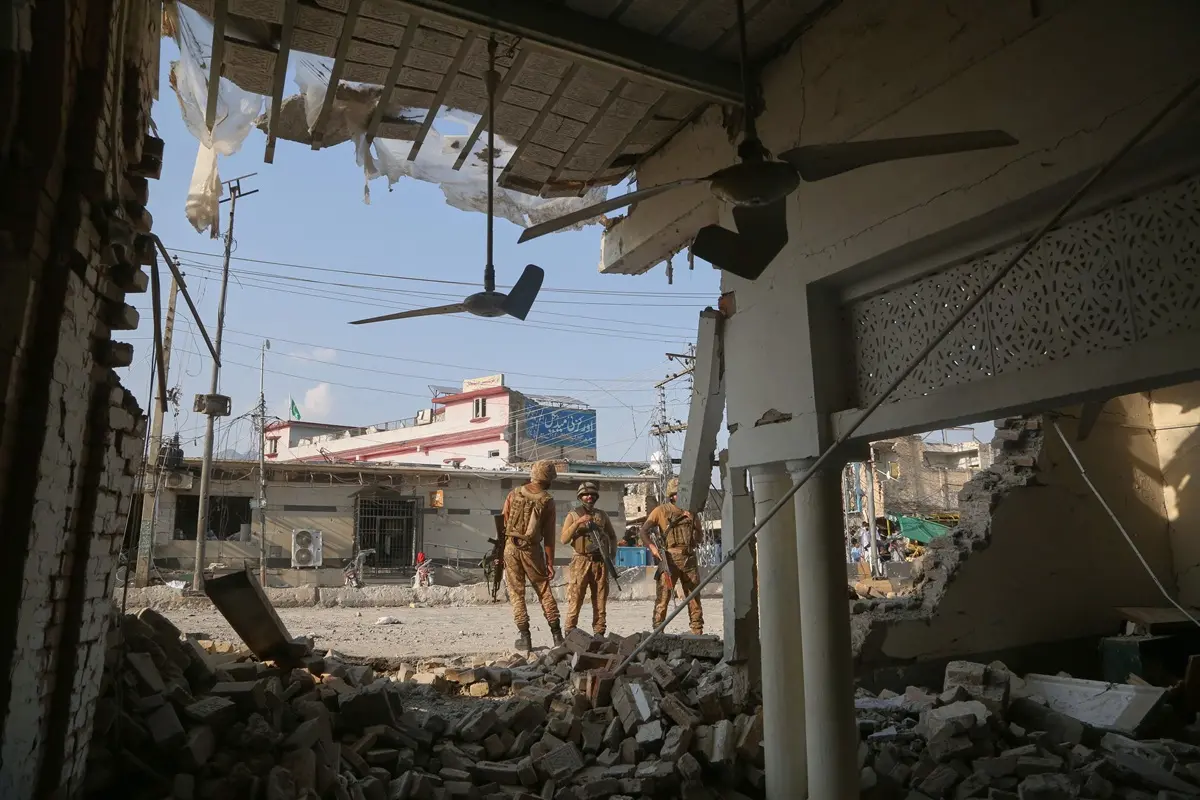
A major security crisis has unfolded in northwestern Pakistan following a deadly coordinated assault on a regional security hub. On Friday afternoon, armed militants and suicide bombers targeted the Old Police Lines complex in Kohat, a town of around 220,000 residents located in Khyber Pakhtunkhwa province. The death toll from the explosion and ongoing gun battle rose to at least 31 people on Saturday morning, including 16 police officers, with more than 100 others injured. Security forces remain engaged in active gunfire as several attackers stay holed up inside the compound.
What happened during the coordinated attack in Kohat?
The assault began when an attacker rammed a vehicle packed with explosives into a mosque situated next to police offices. The massive blast caused severe structural damage, collapsing the outer walls of the police facility and tearing through the mosque. Inside the place of worship, wires dangled from cracked walls, daylight poured through jagged holes in the roof, and piles of concrete buried the floor. Senior rescue official Bilal Faizi noted that most of those killed and wounded had been attending prayers when the bomb detonated.
At the same time, at least seven armed gunmen attempted to storm the police compound, which houses district headquarters for the Counter Terrorism Department, Special Branch, and other units. Officers engaged in an immediate firefight, killing six of the gunmen, while another suicide bomber attacked the nearby office of an intelligence agency. Describing the scene late on Friday, a senior police official told reporters on condition of anonymity, "Several militants are still holed up in the Special Branch section of the Kohat Police Complex". The official added, "An exchange of fire with them has been ongoing since late last night. Their exact number remains unclear".
How severe is the damage and human toll?
The scale of the casualties quickly overwhelmed local emergency services. A statement released by the Kohat district health officer late on Friday confirmed that over 100 people were injured—the vast majority being police officers—and several remained in critical condition. Providing an update on the casualties, a senior police official confirmed to AFP, "At least 31 people, including 16 police personnel, have been killed and more than 100 injured so far in the militant attack and suicide bombing".
Images from the site showed military personnel armed with assault rifles standing guard near piles of rubble and collapsed walls, while a long line of ambulances lined the street. Residents reported that the blast was heard far across the town, followed by thick rising smoke and persistent gunfire that continued for hours. Prime Minister Shehbaz Sharif condemned the strike, expressing "deep sorrow and regret over the injury of several people as a result of the blast" while directing authorities to accelerate rescue operations.
Who is responsible for the violence in the region?
While suspicion initially fell broadly on the Pakistani Taliban, formally known as Tehreek-e-Taliban Pakistan (TTP), responsibility was soon claimed by a local group. Ittehad-ul-Mujahideen Pakistan, a faction linked to the TTP, issued a statement claiming responsibility for the siege. The attack comes amidst an escalating surge in militant actions targeting counter-terrorism and intelligence forces across the province.
The region had already seen intense fighting earlier in the week. On Thursday, a roadside bomb struck a security forces convoy in the neighbouring Hangu district, killing six soldiers. That same day, government troops carried out raids across several areas, killing 10 suspected TTP militants. Pakistan has repeatedly attributed the rise in violence across Khyber Pakhtunkhwa and Balochistan to militants operating from Afghan territory. However, the Afghan Taliban government in Kabul firmly denies any Afghan involvement in these attacks.
What diplomatic efforts are taking place behind the scenes?
The border accusations have triggered a bitter rift and armed conflict between Pakistan and Afghanistan. Pakistan has previously launched airstrikes against alleged militant targets on Afghan soil, including June strikes that Kabul officials and the United Nations reported had killed dozens of civilians.
Diplomatic meetings were held on Thursday in an effort to defuse the growing regional friction. Turkish intelligence chief Ibrahim Kalin met in Pakistan with Prime Minister Shehbaz Sharif, Field Marshal Asim Munir, and intelligence chief Lt. Gen. Asim Malik. Kalin announced that Turkey would continue mediator efforts to help resolve Pakistan-Afghanistan tensions through dialogue. Kalin also held talks in Kabul alongside a senior Qatari security official, with Afghan Taliban deputy spokesperson Hamdullah Fitrat confirming that top officials discussed bilateral tensions between the two neighbouring states.