Hezbollah drone strike caught on camera as Israeli soldier killed in Lebanon
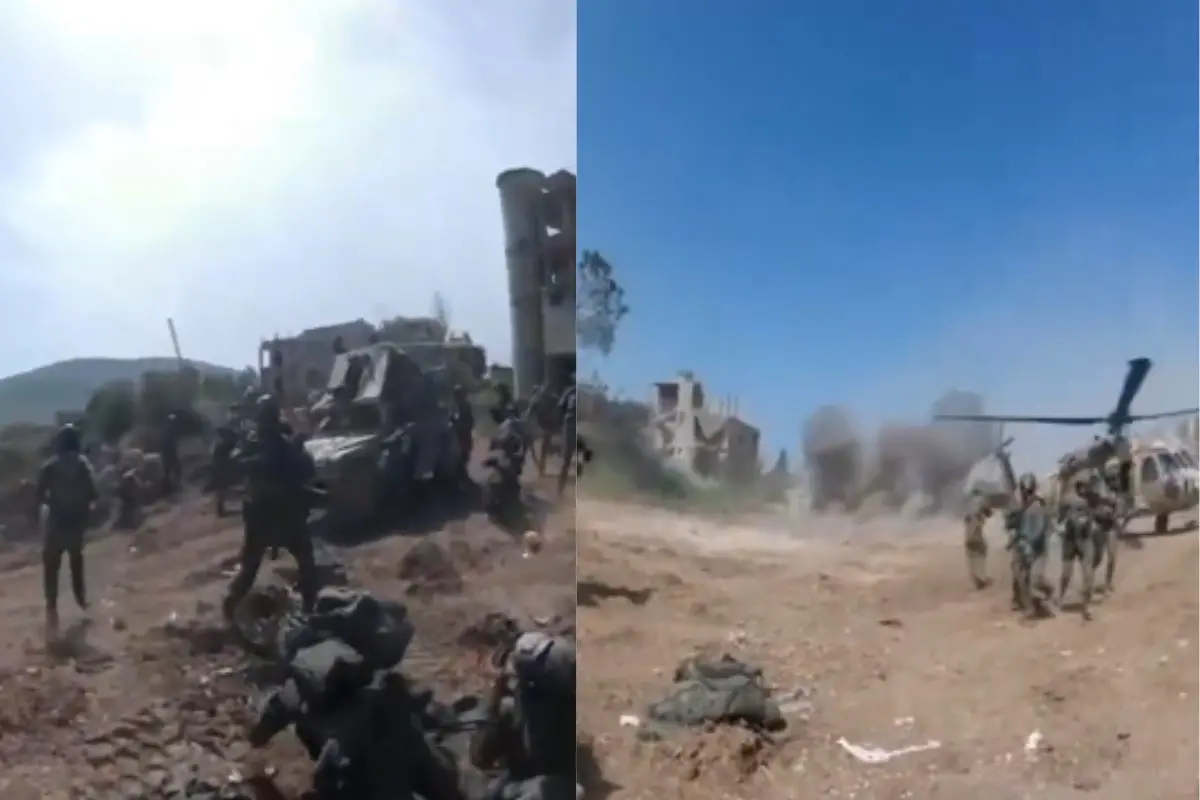
Beirut: A Hezbollah drone strike has killed an Israeli soldier and injured six others during intense fighting in Taybeh, southern Lebanon, as clashes continue despite a recently agreed ceasefire.
Footage circulating online shows an explosive-laden drone crashing near Israeli personnel who were reportedly attempting to evacuate injured soldiers. The incident followed reports that a Golani Brigade tank had broken down inside the village, prompting a rescue effort.
Israeli authorities later confirmed casualties, stating that one soldier had died and six others were wounded, including four who sustained serious injuries. During the evacuation attempt, additional drones were reportedly launched at the rescue teams and even targeted a helicopter involved in the operation.
Hezbollah also claimed responsibility for striking a Merkava tank in the nearby area of Beit Lif using a guided missile.
Deadliest day since ceasefire
Lebanon’s health ministry reported that Israeli strikes in the south of the country on Sunday killed 14 people, marking the highest death toll since the ceasefire came into effect just over a week earlier.
The ministry added that among the dead were two women and two children, while 37 others were injured in the attacks.
Fresh accusations over truce violations
The escalation comes amid renewed accusations from both sides of breaching the fragile truce. Israeli Prime Minister Benjamin Netanyahu said the military was acting forcefully against Hezbollah, while the group pledged to continue responding to what it described as ongoing violations.
Since the ceasefire agreement on April 17, Israel has carried out multiple strikes in Lebanon. The truce was extended for an additional three weeks on Thursday following six weeks of conflict, during which Israeli forces also entered southern Lebanon.
Israeli troops are currently operating within what they describe as a “yellow line”, a zone stretching roughly 10 kilometres into Lebanese territory along the border. Residents have been warned not to return to this area.
Military actions and evacuation warnings
Lebanon’s state-run National News Agency reported Israeli air strikes across several southern locations on Sunday, including areas both within and outside previously designated evacuation zones.
Journalists on the ground observed heavy traffic moving northwards as civilians fled after new warnings and intensified bombardment.
Netanyahu, speaking at a weekly cabinet meeting, accused Hezbollah of undermining the ceasefire in practice. He stated that Israel was operating in line with arrangements agreed with the United States and Lebanon.
Under the terms of the truce, Israel maintains that it has the right to act against planned or imminent threats. Netanyahu said this includes responding to attacks as well as taking pre-emptive measures against emerging dangers.
Hezbollah vows continued response
Hezbollah, which is backed by Iran, said Israel’s continued presence in Lebanese territory and what it called repeated violations of sovereignty would not go unanswered.
The group stated that its fighters had targeted Israeli positions and troops in southern Lebanon in retaliation for attacks on Lebanese villages and breaches of the ceasefire.
Hezbollah had entered the broader regional conflict on March 2 by launching rockets into Israel, saying it was avenging the killing of Iran’s supreme leader Ali Khamenei in joint US-Israeli strikes.
Ongoing strikes and rising toll
On Sunday, Israel’s military issued evacuation orders for residents in seven towns and villages in southern Lebanon. Shortly after, air strikes were reported in Kfar Tibnit, causing casualties, while a raid in Zawtar al-Sharqiyah destroyed a mosque and another religious structure.
Shelling was also reported in several border villages. Reporters observed thick grey smoke rising over Nabatieh al-Fawqa and other areas following the strikes.
The Israeli military said it had targeted rocket-launching units and weapons storage sites linked to Hezbollah. It added that artillery and air strikes had been conducted against what it described as militant infrastructure north of the “yellow line”.
The military also confirmed intercepting three drones that were heading towards Israeli territory.
According to Lebanon’s health ministry, Israeli attacks have killed more than 2,500 people and injured over 7,700 since the conflict began.
With agency inputs