Greek firefighters calm deadly Athens wildfire, thousands displaced
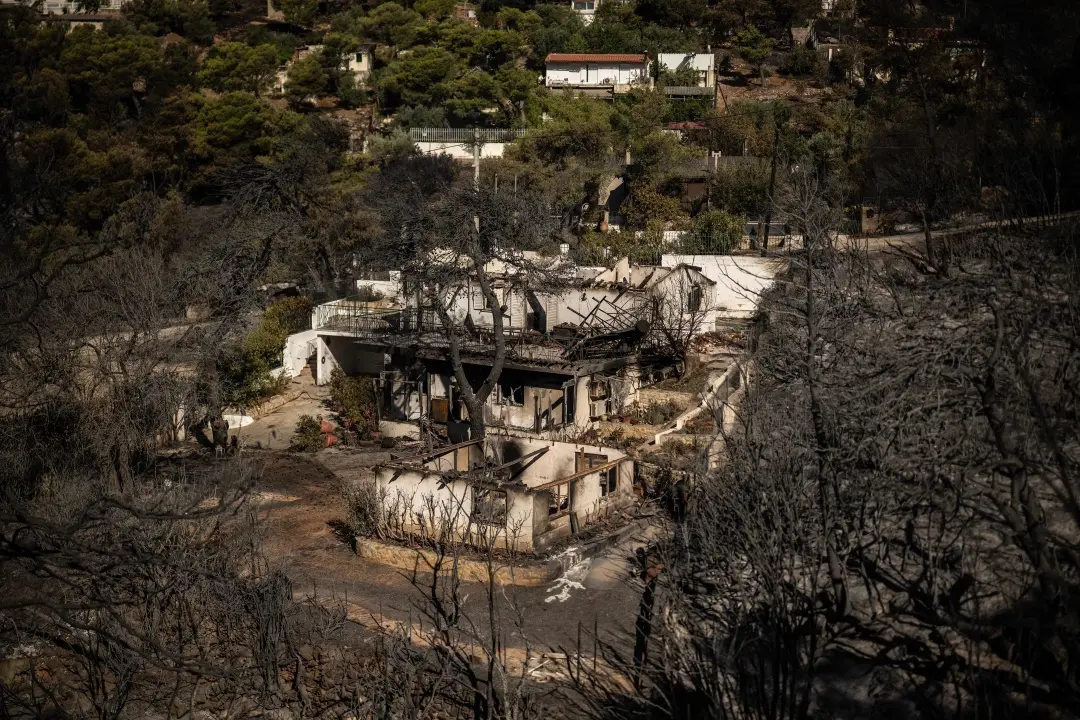
Athens: Greek emergency services worked tirelessly on Tuesday to control a massive wildfire that has ravaged the suburbs of Athens, resulting in one death, widespread damage, and the evacuation of thousands of residents.
A spokesperson for the fire department informed AFP that while "pockets of flame" are still being managed, there are no longer any "areas of particular concern."
The fire, which began on Sunday in Varnavas, approximately 35 kilometres (22 miles) from Athens, has prompted a massive response. Hundreds of firefighters, supported by around 200 fire engines and 20 water-bombing aircraft, are battling the blaze.
Authorities reported the discovery of a Moldovan woman's body in a burned-out factory, with at least 66 people receiving medical treatment for injuries. Five firefighters have also been injured.
Fueled by strong winds, the wildfire swept across a dry landscape northeast of the capital, destroying dozens of homes, vehicles, and businesses over an area of more than 10,000 hectares (24,700 acres).
In response to Greece's request for international help, countries including France, Italy, Czech Republic, Romania, Serbia, and Turkey have sent firefighters, helicopters, fire engines, and water tankers.
The blaze reached Mount Pentelikon, impacting suburbs such as Nea Penteli, Palaia Penteli, Patima Halandriou, and Vrilissia. Sports facilities, including the Athens Olympic Stadium, have been repurposed to shelter displaced residents and pets.
"We saw huge flames, and at the same time (explosions) began. We thought we were at war," said Nikos Karoulias, a 71-year-old former defender for Greece's national football team.
Halandri mayor Simos Roussos reported that nearly a dozen homes were destroyed in his town, along with businesses and warehouses. Mayors from Penteli and Varnavas also reported similar destruction in their areas. "The fire travelled 50 kilometres and changed direction 10 times," Roussos said.
The labour ministry has banned outdoor work in the affected regions due to the presence of toxic chemicals in the burned factories, particularly from Sunday night to Monday night.
With much of Athens enveloped in thick smoke, scientists have noted a significant increase in hazardous airborne particles. Firefighter chief Costas Tsigkas warned that the team remains on high alert for potential flare-ups as winds might strengthen.
"Never in a million years did I think a fire would come here," said 65-year-old Sakis Morfis outside his gutted home in Vrilissia. "We're without clothes, money, everything was burned inside," he said.
Greece’s National Observatory, which is also at risk from the fire, has forecasted temperatures up to 38°C (100°F) and wind gusts reaching 70 kilometres per hour (44 miles per hour) for Tuesday.
The Greek government, led by Prime Minister Kyriakos Mitsotakis who cut his holiday short to address the crisis, has faced criticism from the media, public, and political opponents. "Every year we are doing our best to improve, but unfortunately conditions are becoming more difficult," Mitsotakis said after an emergency cabinet meeting on Tuesday.
On Tuesday evening, around 200 people demonstrated outside parliament, with one sign reading: "They burned us! Government, ministers, you are responsible for this crime."
"Enough is enough," thundered the front page of Greece's top-selling centrist daily Ta Nea. The liberal Kathimerini said the "out of control" inferno "had left huge destruction (and) unanswered questions".
"Evacuate Maximou," said the left-wing Efsyn newspaper, referring to the building housing the prime minister's office.
This disaster has rekindled memories of the 2018 Mati fire, which claimed 104 lives and was blamed on evacuation missteps.
This year’s wildfire season in Greece has been particularly severe, following the country’s warmest winter and hottest June and July on record. Scientists attribute the increasing frequency and intensity of heatwaves to human-induced fossil fuel emissions.
Agencies