World's largest iceberg is on the move again | WATCH
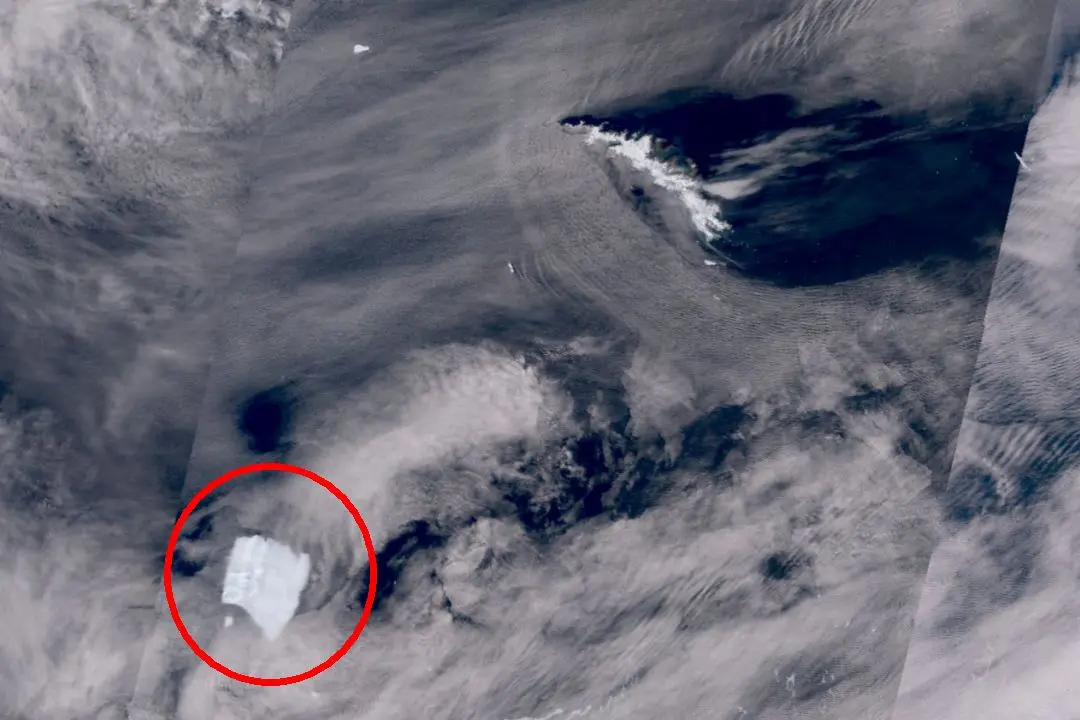
The world’s largest iceberg, A23a, is on the move once more after decades of being grounded on the seafloor, according to the British Antarctic Survey (BAS). The massive iceberg, which had been spinning in place near the South Orkney Islands in recent years, has now begun drifting into the Southern Ocean.
The A23a iceberg, measuring an enormous 4,000 square kilometers -- three times the size of New York City and more than twice the size of Greater London -- was originally carved from Antarctica's Filchner Ice Shelf in 1986. It remained stuck in the Weddell Sea for years, grounded on the ocean floor.
Dr Andrew Meijers, an oceanographer at BAS, expressed enthusiasm about the iceberg’s renewed movement.
"It is exciting to see A23a on the move again after periods of being stuck. We are keen to observe whether it follows the same route as other large icebergs and to study its impact on the local ecosystem," Meijers said.
Significance of A23a's movement
The drift of A23a, aided by wind and ocean currents, presents a unique opportunity for scientists to study the behavior of mega icebergs and their environmental impacts. The iceberg's movement could disrupt local ecosystems and offer clues about how Antarctic ice loss affects global ocean circulation and climate patterns.
A path toward breakup and melting
Scientists predict that A23a will drift into the Southern Ocean, propelled by the Antarctic Circumpolar Current, likely heading toward the sub-Antarctic island of South Georgia.
In this region, the iceberg will encounter warmer waters, which are expected to cause it to break apart into smaller icebergs before eventually melting.
Scientific opportunity
Last year, Britain's polar research vessel, the RRS Sir David Attenborough, encountered A23a during its inaugural scientific mission near the Antarctic Peninsula. The "lucky" crossing allowed researchers to collect valuable seawater samples from the surrounding area, offering insights into the iceberg’s influence on the marine environment.