850,000 fireworks in 40 minutes; Why experts are worried about America's mega celebration
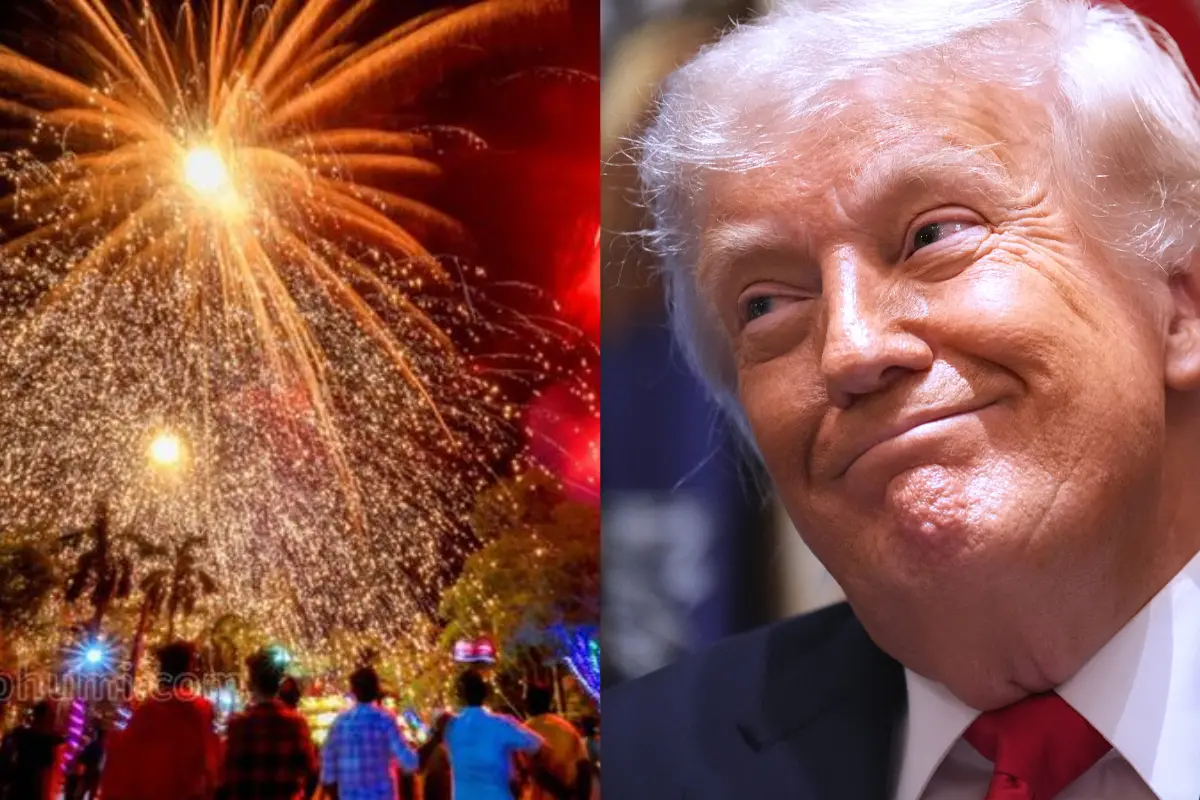
Washington: As the United States prepares to celebrate its 250th birthday with what is expected to be the largest fireworks display ever staged, health and environmental experts are raising concerns about the potential consequences of launching more than 850,000 fireworks in a single night.
The massive pyrotechnic event, scheduled for Saturday in Washington, DC, is being promoted as the centerpiece of the Trump administration's "Freedom250" celebrations. Organisers say the display will span 10 launch sites around the Lincoln Memorial and the Potomac River, creating a spectacle designed to mark America's quarter-millennium milestone.
But while supporters view the event as a historic celebration, scientists warn that the unprecedented scale could trigger a short-term surge in air pollution, exposing hundreds of thousands of spectators to unhealthy levels of smoke and fine particulate matter.
The planned display would exceed the current Guinness World Record for the world's largest fireworks show and dwarf Washington's traditional Fourth of July celebrations.
Atmospheric scientists say the concern is not merely the visual scale of the event but the volume of pollutants released into the air within a short period.
Russell Dickerson, professor of atmospheric chemistry at the University of Maryland, described the proposal as alarming from an air-quality perspective.
"First let me say, I like fireworks -- I think they're fun," Dickerson told AFP. "But in my professional opinion, it's probably ill-advised to try to set off 850,000 fireworks on a hot, stagnant, already polluted day."
He added that he would avoid attending the event himself and would not bring his grandchildren to the National Mall because of concerns over smoke exposure.
Fireworks smoke could push pollution to dangerous levels
The biggest health concern involves PM2.5, microscopic airborne particles that are small enough to penetrate deep into the lungs and enter the bloodstream.
Medical researchers have linked elevated PM2.5 exposure to breathing difficulties, aggravated asthma, cardiovascular problems and increased hospital visits, particularly among children, older adults and people with pre-existing health conditions.
According to Dickerson, pollution levels typically spike immediately after large fireworks displays.
While concentrations often fall within hours, he warned that people attending the show could be exposed to extremely high levels during that period.
The timing of the celebration is also drawing attention. Much of the US East Coast is experiencing hot summer conditions, which can worsen air quality by trapping pollutants near the ground and increasing emissions from energy production and transportation.
Air quality data highlights previous July 4 pollution spikes
Environmental monitoring company IQAir says Independence Day fireworks routinely create dramatic pollution spikes across major American cities.
Glory Dolphin Hammes, chief executive of IQAir North America, said the environmental impact of large-scale fireworks displays is often underestimated.
"The amount of pollution that we produce is apocalyptic during this one particular day," Hammes told AFP.
Data compiled by IQAir showed that Washington's air quality deteriorated sharply during last year's July 4 celebrations, with PM2.5 concentrations peaking late in the evening at levels considered unhealthy.
Experts note that fireworks release not only fine particles but also trace metals used to create vivid colours, along with volatile organic compounds that contribute to air pollution.
The potential impact is not limited to people.
Animal welfare advocates and pet owners say fireworks can trigger intense stress among dogs and other animals. Loud explosions often cause pets to panic, shake uncontrollably or attempt to escape their homes.
Washington resident and physician Adrian Aceves said he plans to stay indoors with his dog during the event.
"Trying to distract her with treats and toys, and I will medicate her," he said, referring to his five-year-old dog Rosy.
Researchers have also documented effects on wildlife. Studies have shown that fireworks can disrupt the behaviour of birds and other animals, forcing them to flee resting areas and altering migration patterns.
Environmental scientists additionally point to concerns over chemical residues left behind after fireworks displays. Previous research conducted near Mount Rushmore found traces of perchlorate, a chemical commonly used in fireworks, had entered nearby water sources.
Benefits must also be considered
Despite the warnings, supporters argue that fireworks remain deeply embedded in American culture and continue to serve as a powerful symbol of national celebration.
Jodi Dague, director of marketing for Pennsylvania-based Pyrotecnico, the company responsible for the display, said fireworks create shared experiences that bring communities together.
"Fireworks are a tried-and-true American tradition. They bring back childhood memories and allow families to create new ones. It's a reason to gather and celebrate."
Others believe the significance of the country's 250th anniversary warrants a large-scale celebration.
Erica Walker, assistant professor of epidemiology at Brown University School of Public Health, said the effects of a single-day event should be viewed differently from ongoing sources of pollution and noise.
"As an American who has ancestors here who descended from slavery, Independence Day for me is incredibly relevant," she said. "I think for me those are the sounds of independence... it's also the sound of freedom, without trying to sound all corny."
With AFP inputs