Fastest ever! China’s Maglev test achieves 650 km/h in 7 seconds
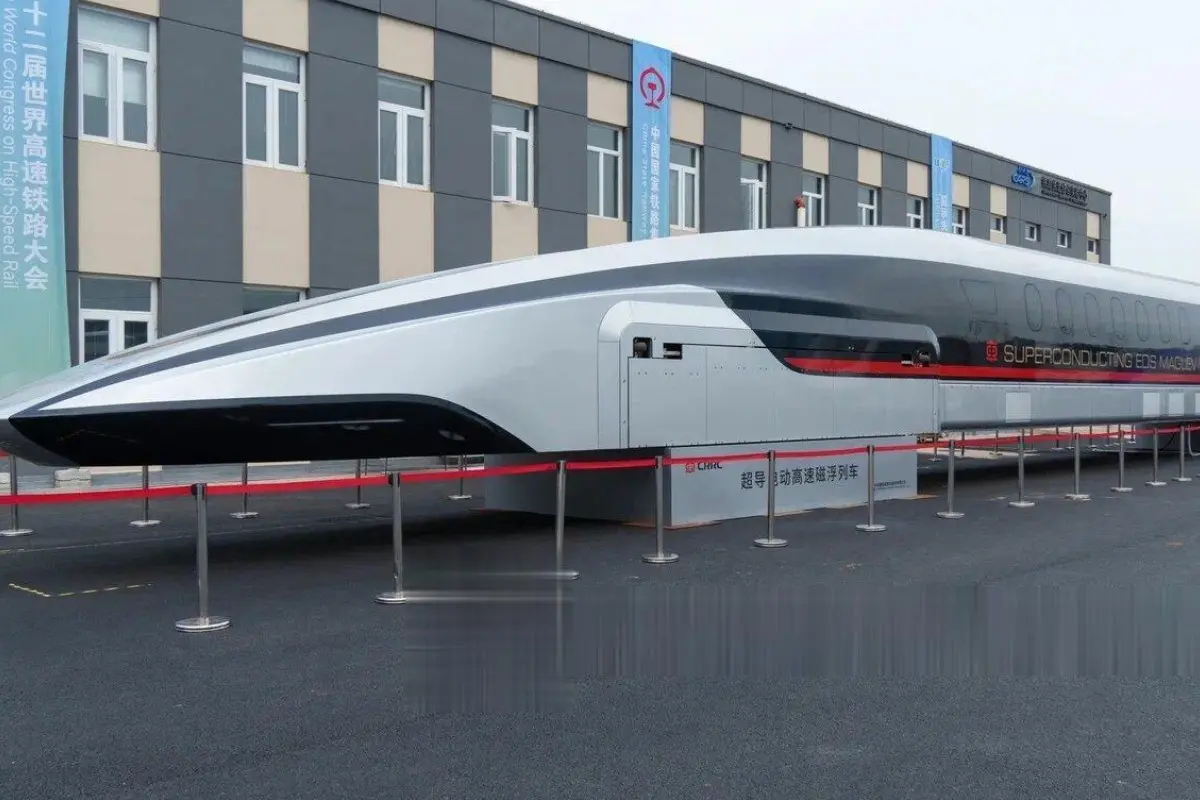
In a major leap forward for magnetic levitation (maglev) transport technology, Chinese researchers at Donghu Laboratory in Hubei Province have successfully propelled a 1.1-tonne test vehicle to a speed of 650 kilometres per hour in just 7 seconds. This milestone was achieved using a compact, self-developed 1,000-metre-long test track, an innovation that may reshape the future of high-speed transportation.
How fast did the test vehicle go?
The vehicle, weighing 1.1 tonnes, was accelerated to 650 km/h over a running distance of 650 metres. The feat took approximately 7 seconds, according to Li Weichao, director of the High-speed Maglev Electromagnetic Propulsion Technology Innovation Centre at Donghu Laboratory.
He stated that this is the fastest speed achieved globally using maglev technology within such a short track.
What’s unique about the test track?
Unlike conventional high-speed rail testing that requires 30 to 40 kilometres of track, the Donghu lab’s platform spans only 1,000 metres.
Despite its limited length, it uses a short-distance acceleration method, which demands extremely accurate speed and positioning systems.
Li explained that the current accuracy in speed measurement and positioning can reach up to 4 millimetres. This high level of precision is essential for reliable performance in such a constrained testing environment.
How does the maglev system work?
The maglev vehicle levitates above the track through electromagnetic repulsion. This effect occurs between like poles on the vehicle and track, allowing for lift without any physical contact. As a result, there is no friction from the track, and the vehicle only needs to overcome air resistance while accelerating.
This magnetic levitation, combined with electromagnetic propulsion, enables the vehicle to reach extremely high speeds quickly and efficiently.
Is 650 km/h the final target?
According to Li, the 650 km/h mark is not the ceiling for this project. The test platform is designed to operate at a typical speed of 800 km/h. Construction of the full system is expected to be completed by the end of this year, and the facility will then meet the conditions required for official acceptance and further research.
What about deceleration and safety?
The system’s technological sophistication extends beyond acceleration. The test vehicle can decelerate from its top speed to zero within just 200 metres. This rapid braking capability, paired with controlled acceleration, makes the platform a vital resource for high-speed train research and broader transportation innovation.
Are there any practical applications for this technology?
Li noted that the technologies being used on this maglev test line are already being applied in other research centres. He also highlighted that there are multiple potential applications across civilian sectors, indicating that the significance of this achievement extends well beyond experimental testing.