Explainer | Why Texas wants to redraw political maps before 2030
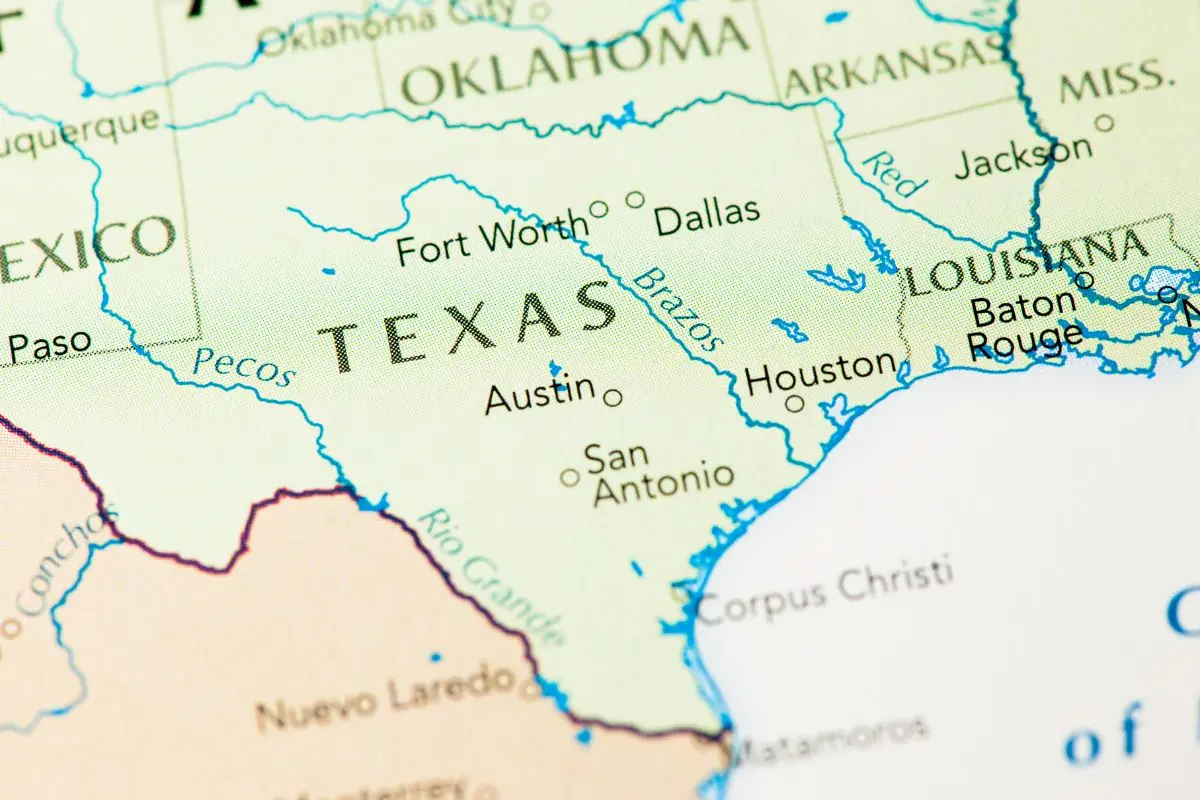
Washington: Redistricting in the United States usually happens once every 10 years, following the national population count by the US Census Bureau. But Texas Republicans now want to break from that tradition and other states are watching closely, possibly preparing to follow.
This move could have serious implications for political representation across the country. Here’s what’s happening and why it matters.
What is redistricting and how does it normally work?
Redistricting is the process of redrawing the boundaries of electoral districts. In the US, this is done every 10 years after the Census Bureau completes its population count.
The goal is to adjust the 435 seats in the US House of Representatives based on population shifts among the 50 states, a process known as reapportionment.
States use their own rules and procedures to divide their allotted seats into districts. The smallest states get just one representative, so the whole state becomes a single district. Larger states like Texas, which has 38 seats, must create multiple districts.
Some states rely on independent commissions to draw the maps or advise the legislature. Others let lawmakers draw the lines, a process that often leads to legal challenges, especially when districts are seen as unfair or discriminatory under the Voting Rights Act.
Sometimes, if lawmakers fail to agree on a map, courts step in and draw the lines themselves.
What is Texas doing differently this time?
Texas Republicans want to redraw the political map before the next Census, aiming to gain an advantage in the 2026 midterm elections.
They have proposed a redistricting plan backed by President Donald Trump that would send five more Republicans to Washington and make it harder for Democrats to regain the majority in the House.
Democrats in Texas’ House have responded by leaving the state to stop the vote on the plan. They fled to Illinois to deny the House a quorum, echoing a similar move by Texas Democrats in 2003.
“There’s been a lot more efforts by the parties and political actors to push the boundaries – literally and figuratively – to reconfigure what the game is,” said Doug Spencer, Rothgerber Jr. Chair in Constitutional Law at the University of Colorado.
Is this even legal?
There is no federal law stopping states from redrawing their maps mid-decade.
“The laws about redistricting just say you have to redistrict after every census,” said Spencer. “And then some state legislatures got a little clever and said, well it doesn’t say we can’t do it more.”
However, some states do have laws that either prevent redistricting mid-cycle or make it difficult to do so in a way that benefits only one party.
Courts can also intervene if they find that new maps violate the Voting Rights Act by diluting the votes of a racial minority group. But in 2019, the US Supreme Court ruled that federal courts should not weigh in on political gerrymandering, the practice of drawing districts for partisan advantage. Chief Justice John Roberts noted at the time that redistricting is “highly partisan by any measure.”
Has Texas done this before?
Yes. After the 2000 Census, the Texas Legislature could not agree on a redistricting plan, so a federal court drew the map.
Later, Republican Tom DeLay, then the US House Majority Leader, pushed for a redraw, arguing that Texas should have five more Republican-friendly districts.
“I’m the majority leader and we want more seats,” DeLay said at the time.
Democrats responded by fleeing to Oklahoma, once again depriving the Legislature of the numbers it needed to function. But in the end, DeLay succeeded, and Republicans won five additional seats in the 2004 elections.
What are other states saying?
Other states are watching closely. Washington Representative Suzan DelBene, who leads the House Democrats’ campaign arm, said that if Texas moves forward, Democratic-led states may do the same.
“If they go down this path, absolutely folks are going to respond across the country,” DelBene said. “We’re not going to be sitting back with one hand tied behind our back while Republicans try to undermine voices of the American people.”
In California, Governor Gavin Newsom has threatened to retaliate by drawing more Democrat-favourable seats. However, his ability to do that is limited by a constitutional amendment that requires an independent commission to lead the redistricting process.
New York Governor Kathy Hochul has also expressed openness to mid-decade redistricting, but again, state laws and independent commission rules may limit what’s possible.
Could Republican-led states also redraw maps?
Yes. In Ohio, a state law quirk means maps must be redrawn before the 2026 midterms. Republicans, who currently hold a 10-5 edge in the House delegation, may try to strengthen their advantage.
In Florida, Governor Ron DeSantis said he is “working through what that would look like” in terms of early redistricting.
What happens next?
Texas is at the centre of a growing fight over how far states can go in redrawing their political maps — and how often. If the Texas plan goes through, it could set a new precedent for mid-decade, politically driven redistricting, prompting responses from both parties in various states.