Explainer: Why South Korea is poised to legalise tattooing after 30 years
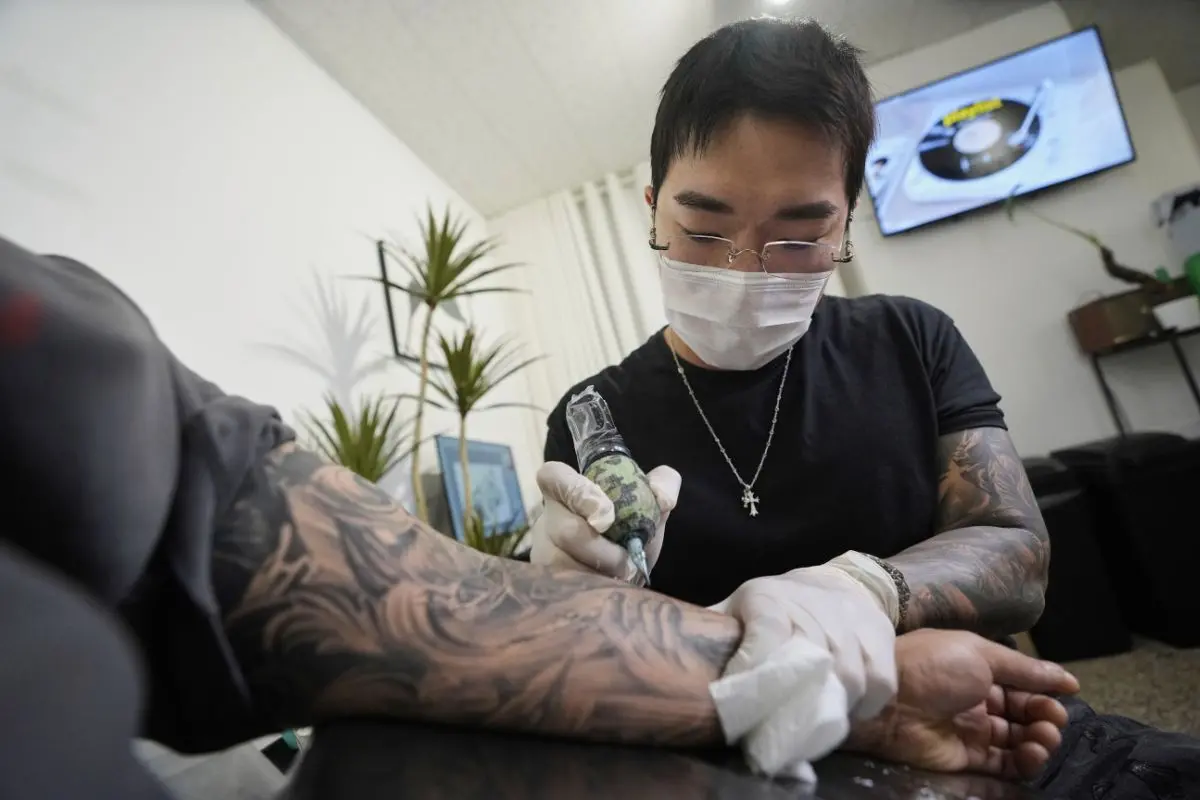
Goyang, South Korea: For decades, tattoo artists in South Korea have operated in a legal grey zone, practising their craft despite a law that makes tattooing without a medical licence illegal. Now, a proposed bill — the Tattooist Act — could change that, transforming the industry and the cultural perception of tattoos in the country.
The current legal landscape
Since a 1992 Supreme Court ruling, tattooing in South Korea has been considered a medical procedure. Under the law, only licensed doctors can legally perform tattoos. Tattooists face up to five years in prison and fines of up to 50 million won ($35,740) if caught.
Enforcement is rare, allowing tattooists to operate quietly, but the risk remains high. According to a 2023 Health Ministry survey, only 1.4% of people with personal tattoos and 6.8% of those with cosmetic tattoos were inked in hospitals.
That has forced artists to work “in the shadows,” often without studio signs, and exposed them to legal threats, harassment and exploitation. Some have been fined, while others have chosen to relocate abroad.
Changing perceptions of tattoos in South Korea
Tattoos in South Korea were long associated with gangsters and criminality. That perception is shifting rapidly. Today, tattoos are increasingly embraced as a form of self-expression, with millions of South Koreans sporting them. K-pop idols such as BTS’s Jungkook, TWICE’s Chaeyoung, and BigBang’s G-Dragon have normalised tattoos in popular culture.
Experts estimate that around 70% of tattoos in South Korea are semi-permanent cosmetic tattoos on eyebrows, lips or scalp.
Kim Soyoung, 54, a customer at a cosmetic tattoo studio in Hanam city, questioned the law: “I think it’s nonsensical ... Lawmakers, entertainers and so many people around me have tattoos. But if it’s really illegal, am I a lawbreaker?”
Tattoo artists speak out
Song Jaemin, 28, a popular tattoo artist based in Goyang near Seoul, is booked weeks in advance. His clients include police officers, civil servants, soldiers and U.S. troops stationed in South Korea, with some travelling from abroad.
“I began this even though I knew it was illegal, but I was confident that legal restrictions would be eased and things would change,” Song said. “Many tattoo artists think we are not doing illegal things and there is just no law for us.”
During a recent visit to his studio, Song was putting the final touches on a months-long tattoo of Jesus Christ on a client’s forearm. Lee Byong-joo, 37, who already has multiple tattoos including a tiger, whale and clouds, said: “I feel good as I can have pictures that I like on my body for good. But I can't have more tattoos after this because my wife told me to stop getting new ones.”
For Song, tattooing is limitless. “Whatever you draw on paper, carbon paper, walls or elsewhere, we can also do the same on human bodies. There are really unlimited tattoo styles and artists,” he said.
The struggle of tattooists
For many tattooists, the risks go beyond legal penalties. Some have faced threats, harassment or violence. Kim Sho-yun, who runs a cosmetic tattoo studio in Hanam, recalled: “I was truly terrified when a person close to me threatened to report my business to authorities and destroy all I have after we fought over something unrelated six years ago.”
Some female tattooists have suffered sexual assaults but refrained from reporting incidents to authorities for fear of losing their livelihoods, according to Lim Bo-ran, leader of the Korea Tattoo Federation.
The lack of legal recognition has created uncertainty and fear among artists, who call for change.
The Tattooist Act: What it proposes
The Tattooist Act, which has bipartisan support and cleared health and judiciary committees, would allow non-medical personnel to perform tattoos legally after a two-year grace period. It would establish licensing for tattooists and require annual hygiene training at government-designated centres.
Lim Bo-ran welcomed the bill but cautioned: “The law would be a welcome development but it would also burden tattoo artists by putting them under government supervision.”
For artists like Kim Sho-yun, the bill represents years of struggle: “I think I'll shed tears, as it would take a long-accumulated load off my mind.”
The earliest possible date for the bill’s passage is Thursday, when a plenary session of the National Assembly is scheduled.
A cultural and legal shift
The Tattooist Act reflects a broader cultural change in South Korea. Tattoos are no longer taboo but a recognised form of artistic expression, cutting across generations and social groups. Support for the bill also signals a recognition that the legal framework needs to catch up with evolving public attitudes.
If passed, the law would transform the tattoo industry, granting legitimacy to tens of thousands of artists and offering protection for their work. For clients and artists alike, it would mark the end of a decades-long battle over art, identity, and personal freedom.
(With inputs from AP)