Europe protests explained: What is driving unrest from France to Albania and Italy?
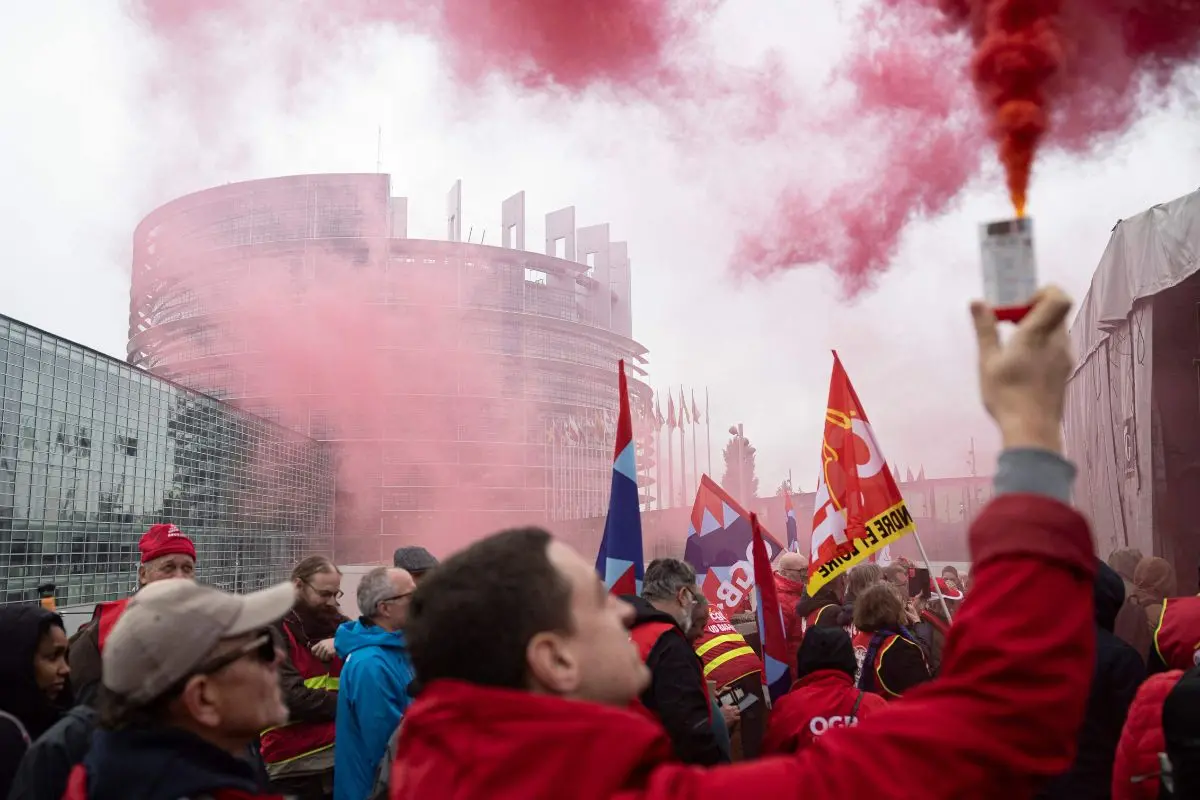
Paris: Europe is witnessing a fresh wave of protests driven by rising living costs, pressure on public services, housing shortages, pension concerns and demands for political accountability. Demonstrations across France, Albania, Italy, Spain and Portugal have led to clashes, arrests and heightened security, while protests in Poland have focused on restrictions on abortion and the government's alleged failure to deliver promised reforms.
Although the protests are unfolding in different countries and are not part of a single coordinated movement, they reflect mounting public frustration over economic pressures and government policies. Students, workers, housing activists and political groups have taken to the streets, with some demonstrations turning violent.
The latest protests come amid broader political tensions across Europe, including approaching elections, disputes over public spending and concerns about the future of public services.
France: School funding, living costs and clashes with police
France has witnessed some of the largest demonstrations, with protests initially driven by students demanding better-funded schools and improved facilities, particularly in lower-income neighbourhoods. The movement expanded as trade unions and other activists joined in, bringing demands over the cost of living and public services to the forefront. The unrest has also included looting, attacks on public buildings and clashes between protesters and police.
During Saturday's demonstrations, nearly 1,000 people were arrested, according to Interior Minister Laurent Nuñez. The government estimated that 4,10,000 people took part nationwide, while organisers put the number at nearly 8,00,000.
In Paris, police used tear gas and water cannons after projectiles were thrown at them. Authorities said the demonstration along the Cours de Vincennes had been dispersed, with a gendarmerie helicopter deployed to help locate remaining groups. The police response has itself become a point of political contention. Left-wing leader and presidential candidate Jean-Luc Mélenchon accused authorities and media outlets of portraying the movement negatively and criticised the use of force against demonstrators.
US President Donald Trump blamed the unrest on immigration, claiming that France's open borders had allowed people who disliked the country to enter. His remarks contrasted with the broader range of grievances reported among protesters.
The protests illustrate how disputes over education and public services can expand into a wider challenge over economic conditions, policing and political leadership.
Albania: Anti-government anger and corruption allegations
In Albania, demonstrations in the capital, Tirana, have grown into a wider anti-government movement involving students, artists and political groups.
The protests, described as part of the “Flamingo” movement, have called for Socialist Prime Minister Edi Rama to resign. Tackling corruption is a central demand, alongside calls to protect healthcare, education and public pensions.
Opposition has also focused on a proposed luxury tourism development linked to Jared Kushner, the son-in-law of Trump. The project has become a point of contention among critics of the government.
The demonstrations escalated after students joined the movement. Police fired tear gas to disperse protesters, while government buildings were attacked and demonstrators detained. Authorities reported that more than 300 protesters and police personnel had been injured during the latest unrest. The protests reflect broader concerns over political accountability and the management of public resources, with demonstrators demanding changes beyond individual policy decisions.
Italy: Inflation, jobs and pressure on public services
In Italy, thousands of people have marched in cities including Milan, Rome, Turin, Naples, Bologna and Florence. Their demands include higher wages, better employment opportunities, improved healthcare and education, and more affordable housing.
Rising prices have added to household pressures. According to government data cited by The Associated Press, inflation in Italy reached 4.2% in September, above the eurozone rate of 3.8%.
The demonstrations have also exposed tensions between peaceful protest and public order. While many people joined marches over economic and social concerns, some gatherings were followed by violent clashes, property damage and looting. Italian police said they made nine arrests and briefly detained 371 people during demonstrations in eight cities on Saturday. Of those taken to police stations, 110 were minors.
Prime Minister Giorgia Meloni thanked law enforcement personnel for maintaining public order and protecting the right to peaceful protest. She also defended measures intended to strengthen the authorities' ability to prevent violence.
A group calling itself the “Oct. 17 Movement” has announced plans for continuing demonstrations every Saturday in cities across Italy, indicating that the unrest may extend beyond a single weekend.
Also read | The plot thickens as the evidence gets Trumped
Spain: Housing costs and pension security
In Spain, housing affordability has become a major source of public discontent, particularly among young people struggling with high rents.
Protests in Madrid intensified after the eviction of 87-year-old Maricarmen from a Madrid home where she had lived for decades. She later died while hospitalised. Activists established tent camps in central Madrid, with similar demonstrations emerging in other cities, including Barcelona.
The gap between earnings and housing costs illustrates the pressure on renters. Data cited by The Associated Press put Spain's minimum wage at 1,221 euros a month, while the average monthly rent for an 80-square-metre apartment was around 1,130 euros. The housing crisis has become a political issue, with the ruling Socialist government approving affordable housing measures that failed to secure parliamentary support.
Pensions have also featured in demonstrations. Protesters in Madrid have called for pension increases linked to actual inflation, higher minimum pensions in line with the minimum wage, measures to narrow the gender pension gap and safeguards against privatisation of the public pension system. Teachers have staged strikes over pay and working conditions, adding pressure on the government over education and public services.
Together, the housing and pension protests highlight concerns about whether wages, social benefits and public policies can keep pace with the cost of living.
Portugal: Housing affordability at the centre
Portugal has also seen demonstrations over the rising cost of housing, particularly in Lisbon and Porto.
As rents and property prices put pressure on households, protesters have demanded more affordable homes. Similar concerns have emerged in Spain, where tourism and demand for accommodation have intensified debates about access to housing. For younger residents and lower-income households, the issue extends beyond property prices to whether they can afford to live and work in the cities where jobs and services are concentrated.
Housing has therefore become a shared source of public frustration in parts of the Iberian Peninsula, although the protests and policy debates differ between countries.
Poland: Abortion rights and accusations of broken promises
In Poland, women have protested in more than 20 cities and towns over the lack of access to free and legal abortion services.
Hundreds gathered outside parliament in Warsaw despite heavy rain, accusing Prime Minister Donald Tusk's liberal government of failing to fulfil its promise to relax the country's strict abortion laws. The protests continued even after parliament passed two bills intended to ease abortion restrictions. Activists argue that the measures are unlikely to become law because conservative President Karol Nawrocki is expected to veto them.
Poland has permitted legal abortions only in limited circumstances since 1993. Restrictions were tightened further in 2020, when the country's Constitutional Tribunal ruled against allowing abortion on the grounds of severe foetal abnormalities.
Tusk's coalition won the 2023 election partly on a promise to liberalise abortion laws. However, the government has struggled to implement broader changes amid opposition to reform.
Activists say the gap between political promises and access to services leaves women uncertain about their options. They also argue that public claims of improved access can obscure the difficulties women face in obtaining care.
The demonstrations show how disputes over reproductive rights and the credibility of political promises can sustain public mobilisation even when governments take limited steps towards reform.
Also read | Why are the Houthis targeting Saudi Arabia? Mecca-Medina missile claims and Riyadh airport threat explained
What connects the protests across Europe?
The grievances differ, but several common themes run through the demonstrations:
- Cost-of-living pressures: Inflation, wages and the affordability of everyday necessities have fuelled discontent, particularly in Italy and France.
- Housing shortages and high rents: Spain and Portugal have seen protests over the difficulty of finding affordable accommodation.
- Pressure on public services: Students and teachers in France and Spain have demanded better-funded schools, improved facilities and better working conditions.
- Pensions and social protection: Demonstrators in Spain and Albania have raised concerns about retirement benefits and the future of public services.
- Political accountability: Anti-government protests in Albania and demonstrations over abortion rights in Poland reflect dissatisfaction with political decisions and unfulfilled promises.
- Policing and public order: Clashes in France, Albania and Italy have intensified debates over how authorities respond to demonstrations and how peaceful protesters are protected.
Young people have been prominent in several of these movements. A sociology professor cited by The Associated Press described a strong sense of uncertainty and a lack of control among young Europeans, arguing that specific grievances can act as a spark that brings wider frustration onto the streets. The unrest is also unfolding against a tense political backdrop, with pivotal elections approaching in some countries, gains by far-right parties in parts of Europe and continuing disputes over support for Ukraine.
However, the protests should not be treated as evidence of one unified European uprising. Each movement has its own demands, political context and level of public support.
The immediate challenge for governments is to address the concerns driving demonstrations while protecting the right to peaceful protest and preventing violence. Whether the protests lead to lasting policy changes will depend on how national governments respond to demands over living costs, housing, public services and political accountability.
(With ANI, AP inputs)