The 'Trump Dollar': President's signature to appear on all new US paper currency
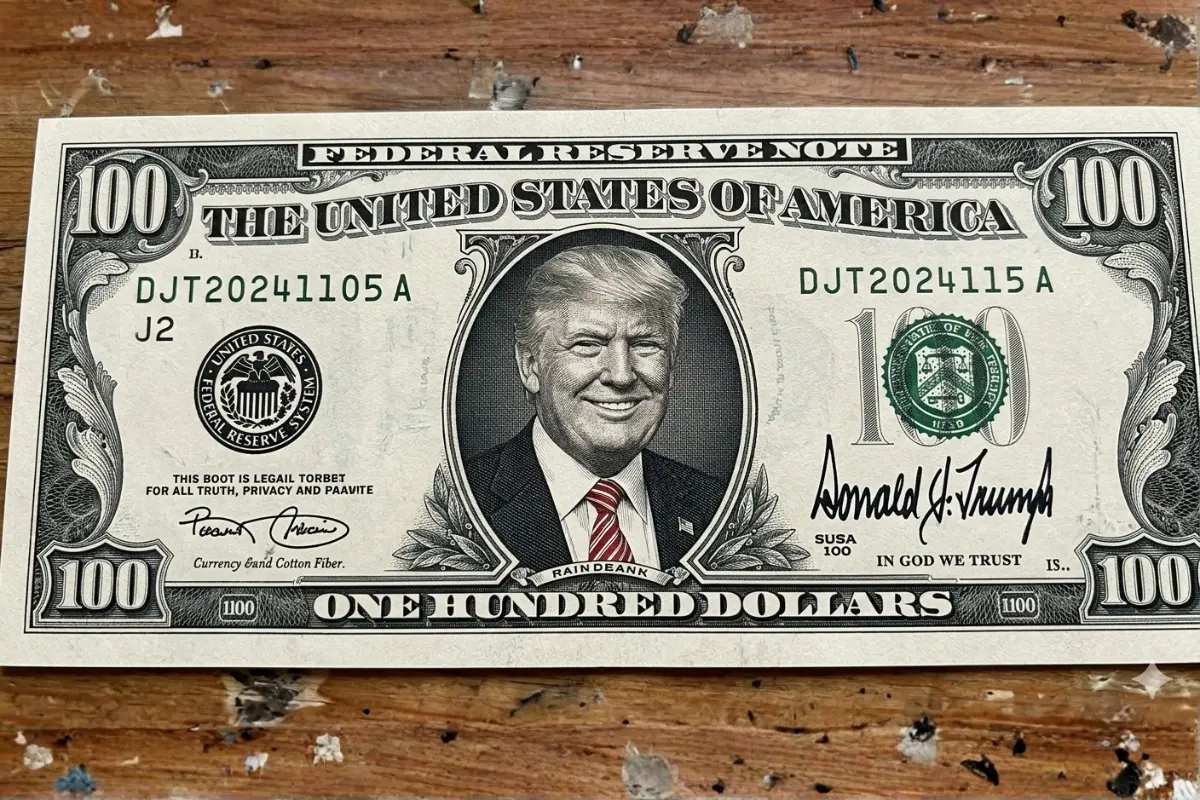
Washington: In a departure from nearly two centuries of fiscal tradition, the U.S. Treasury Department announced on Thursday that President Donald Trump’s signature will appear on all newly printed paper currency.
The decision marks the first time a sitting president’s signature will be featured on American banknotes. Historically, U.S. paper currency has exclusively carried the signatures of the Secretary of the Treasury and the Treasurer of the United States.
The move is the latest in a series of initiatives to incorporate the president’s name and likeness into national institutions. It follows the recent renaming of the U.S. Institute of Peace, the Kennedy Centre, and a new class of naval battleships in his honour.
Commemorative Coins and Legal Hurdles
The announcement coincides with a push to feature the president’s face on a 24-karat gold commemorative coin intended for the nation's 250th anniversary on July 4. While federal law generally prohibits the depiction of a living president on legal tender, the U.S. Commission of Fine Arts—composed of members appointed by the president—approved the design without objection earlier this month.
Treasury officials stated that adding the president’s signature to paper bills is intended to celebrate the upcoming semiquincentennial. Treasury Secretary Scott Bessent, whose signature will also appear on the notes, lauded the change in a statement.
“There is no more powerful way to recognise the historic achievements of our great country” than by issuing currency bearing the president’s name, Bessent said.
Historical and Legal Context
While the move is unprecedented, experts suggest it may be legally permissible. Michael Bordo, director of the Centre for Monetary and Financial History at Rutgers, noted that while political opposition is certain, the Treasury Secretary has held the authority to design and print "greenbacks" since Congress first authorised the practice during the Civil War in 1862.
"I do not know if he has crossed any legal red lines," Bordo said, adding that the bills would likely become "collectors’ items" in the future.
The U.S. Bureau of Engraving and Printing is tasked with producing the notes, while the U.S. Mint handles coinage. Currently, more than $2 trillion in Federal Reserve notes are in circulation.
Political Backlash Amid Economic Strain
The timing of the announcement has drawn sharp criticism from Democratic lawmakers, who pointed to the soaring cost of living. The ongoing war in Iran, which began Feb. 28, has triggered a spike in global oil and gas prices, exacerbating domestic affordability concerns.
Rep. Shontel Brown, D-OH, criticised the plan on social media, calling it “gross and un-American.” She added that the signature would serve as a reminder of "who to thank when we pay more for gas, goods, and groceries.”
Despite the outcry, U.S. Treasurer Brandon Beach defended the decision, stating that the inclusion of the signature "is not only appropriate, but also well deserved."
With inputs from AP