Days after a storm left over 200 dead, Philippines now faces a mightier super typhoon
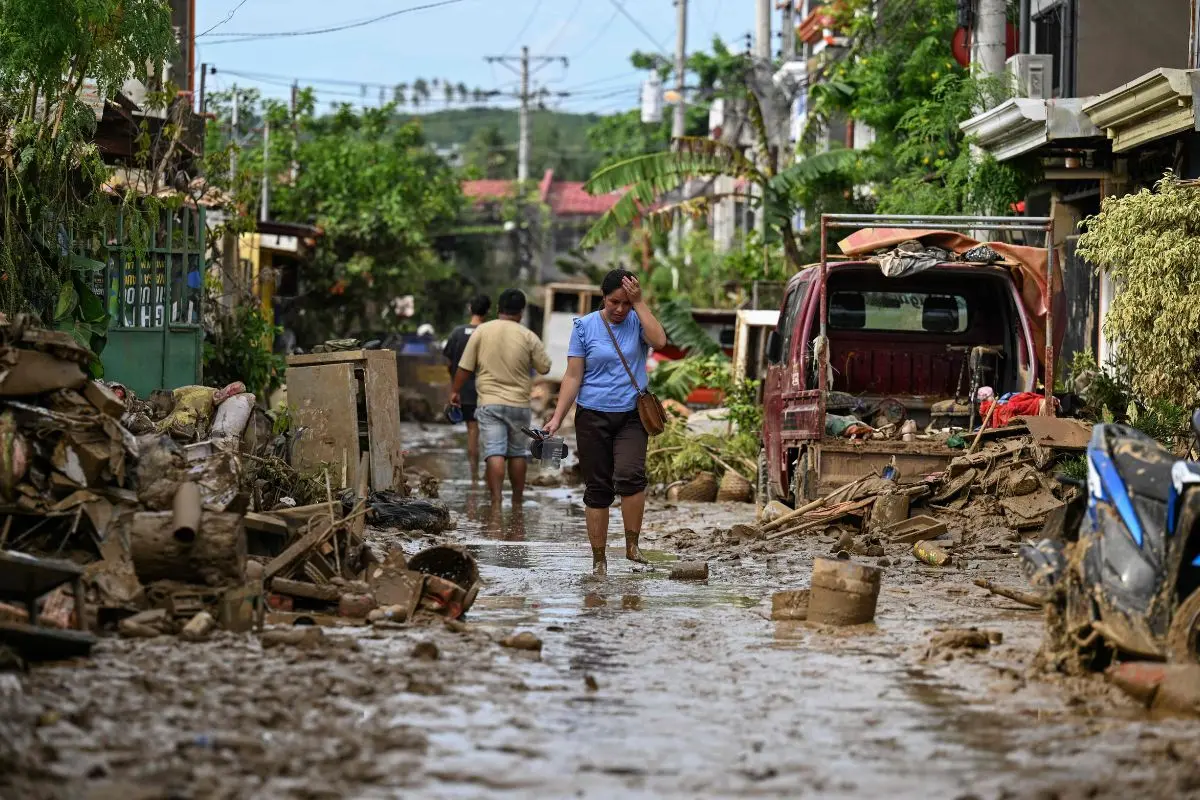
Manila: Super Typhoon Fung-wong, the biggest storm to hit the Philippines this year, began lashing the country’s northeastern coast on Sunday, triggering mass evacuations and widespread power failures. The typhoon’s arrival prompted Defence Secretary Gilberto Teodoro Jr. to urge millions living in high-risk villages to evacuate before conditions worsen.
Massive storm system approaching landfall
According to state forecasters, Fung-wong — known locally as Uwan — spans an enormous 1,600-kilometre-wide rain and wind band, covering nearly two-thirds of the country. It approached from the Pacific even as the nation continues to recover from Typhoon Kalmaegi, which killed at least 204 people in central island provinces earlier in the week before hitting Vietnam, where five more died.
Fung-wong, packing sustained winds of 185 kph and gusts up to 230 kph, was located about 125 kilometres northeast of Virac in Catanduanes province on Sunday morning. It is expected to make landfall on the coast of Aurora or Isabela province later Sunday or early Monday.
State of emergency declared
President Ferdinand Marcos Jr. has declared a state of emergency due to the devastation caused by Kalmaegi and the impending impact of Fung-wong. Under Philippine weather guidelines, storms with sustained winds exceeding 185 kph are classified as “super typhoons,” underscoring the severity of the threat.
‘Move now before it’s too late,’ defence chief warns
In televised remarks on Saturday, Defence Secretary Teodoro cautioned that the storm could affect a wide area of the country, including Cebu — already hit hard by Kalmaegi — and Metro Manila, the nation’s capital and financial hub.
“We need to do this because when it’s already raining or the typhoon has hit and flooding has started, it’s hard to rescue people,” Teodoro said, urging immediate evacuation from flood-prone and coastal communities.
Widespread disruption as power, transport hit
Government agencies reported power outages across several eastern towns and villages as Fung-wong’s outer bands swept through. Around 50,000 families were evacuated from high-risk areas in Bicol, a region vulnerable to Pacific cyclones and volcanic mudflows from Mount Mayon.
Local authorities in northern provinces pre-emptively closed schools and government offices for Monday. Several domestic flights were cancelled, while more than 6,600 passengers and cargo workers were stranded at 86 seaports after the coast guard barred vessels from sailing in rough seas.
International aid on standby
Although the Philippines has not yet requested global assistance following Typhoon Kalmaegi, Teodoro said that the United States and Japan — long-time allies — were prepared to help if needed.
Country among world’s most disaster-prone
The Philippines faces around 20 typhoons and storms annually, along with frequent earthquakes and volcanic eruptions, making it one of the world’s most disaster-prone nations.