Court battles intensify over Trump's birthright citizenship order
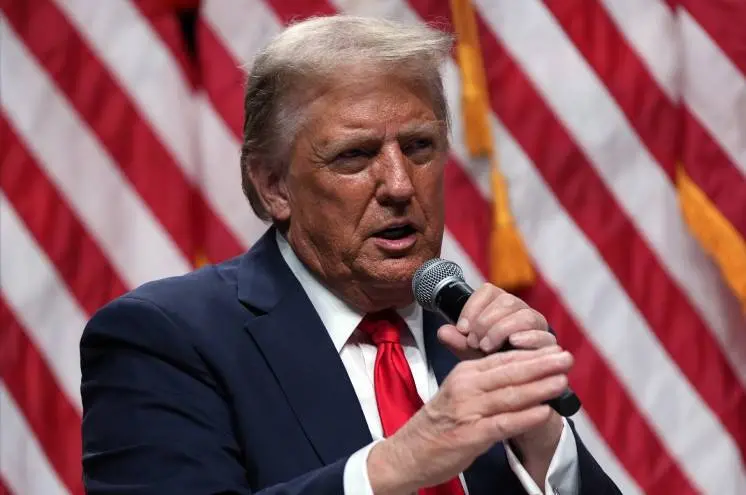
Seattle, US: Legal challenges against President Donald Trump's executive order to end birthright citizenship are intensifying, with a federal judge set to hear arguments Thursday on whether the directive should be paused longer term. This follows a temporary restraining order issued by U.S. District Judge John Coughenour, who previously questioned the order's constitutionality.
The executive order seeks to revoke automatic U.S. citizenship for children born to parents who are in the country illegally or on temporary visas. The Trump administration argues that such children are not "subject to the jurisdiction" of the United States, thus not entitled to citizenship under the 14th Amendment. However, opponents argue that the amendment guarantees birthright citizenship, a view upheld by the 1898 Supreme Court case United States v. Wong Kim Ark.
The Seattle hearing is part of a broader legal battle, with 22 states and several organizations filing lawsuits to stop the order. A Maryland judge recently issued a nationwide pause, and additional cases are ongoing in other states. The outcome of these legal proceedings could have significant implications for U.S. immigration policy and birthright citizenship.
At the heart of the lawsuits is the 14th Amendment to the Constitution, ratified in 1868 after the Civil War and the infamous Dred Scott Supreme Court decision, which held Scott, an enslaved man, wasn't a citizen despite having lived in a state where slavery was outlawed.
The plaintiffs argue the amendment, which holds that “all persons born or naturalised in the United States and subject to the jurisdiction thereof, are citizens of the United States and of the State wherein they reside", are indisputably citizens.
The Trump administration has asserted that children of noncitizens are not “subject to the jurisdiction” of the United States and therefore not entitled to citizenship.
“The Constitution does not harbour a windfall clause granting American citizenship to ... the children of those who have circumvented (or outright defied) federal immigration laws,” the government argued in reply to the Maryland plaintiffs' suit.
Attorneys for the states have argued that it certainly does — and that has been recognised since the amendment's adoption, notably in an 1898 US Supreme Court decision.
That decision, United States v. Wong Kim Ark, held that the only children who did not automatically receive US citizenship upon being born on US soil were children of diplomats, who have allegiance to another government; enemies present in the US during hostile occupation; those born on foreign ships; and those born to members of sovereign Native American tribes.
The US is among about 30 countries where birthright citizenship — the principle of jus soli or “right of the soil” — is applied. Most are in the Americas, and Canada and Mexico are among them.