'Benefit no one': China warns US against fresh tariffs, rejects 'overcapacity' allegations
Beijing/Washington: China on Wednesday urged the United States to maintain stable economic and trade relations after reports emerged that the Trump administration was preparing to announce additional tariffs on imports from China, the European Union and 14 other economies.
Chinese Foreign Ministry spokesperson Guo Jiakun said tariff wars and trade wars were not in the interests of either country and called for differences to be resolved through dialogue and consultation.
Responding to questions about Washington's reported plans at a regular press briefing, Guo said the two countries should address trade-related issues on the basis of equality, respect and mutual benefit.
He also rejected allegations that China's industrial production was excessive, describing the so-called overcapacity argument as a "false premise" and a potential "pretext for political manipulation".
"China and the United States should work together to effectively implement the important consensus reached by the two heads of state and uphold the stable development of China-US economic and trade relations," he said.
US plans fresh tariffs on 16 economies
The Chinese response comes after reports by Bloomberg and The Wall Street Journal that the Trump administration was preparing additional tariffs on China, the European Union, Japan, South Korea and 12 other economies.
According to two people familiar with the matter cited by The Associated Press, the US Trade Representative's Office is expected to release the findings of a months-long investigation into industrial subsidies provided by the 16 economies.
The investigation is examining whether government support has contributed to excessive manufacturing capacity and the export of goods at prices that undercut American producers.
The sources said the timing of the announcement could still change. The proposed tariff rates were also not immediately clear.
The White House and the US Trade Representative's Office did not respond to requests for comment, according to AP.
Section 301 investigation forms basis for proposed duties
The investigations were initiated under Section 301 of the Trade Act of 1974, which allows the US president to impose trade measures against countries found to engage in practices that discriminate against or burden American commerce.
The proposed duties are part of the Trump administration's efforts to replace broader tariffs announced in April 2025, which were subsequently struck down by the US Supreme Court in February 2026.
The administration had earlier introduced tariffs ranging from 10% to 12.5% on 60 trading partners in July 2026, citing concerns about the enforcement of restrictions on goods produced through forced labour.
The additional duties under consideration would come on top of those existing tariffs, although the final rates and implementation timeline remain unclear.
China-US trade tensions and the tariff truce
Trade tensions between Washington and Beijing escalated after US President Donald Trump began his second term in 2025 and imposed additional duties on Chinese imports.
China responded with retaliatory measures, triggering a series of tariff increases. At one stage, duties on Chinese goods entering the US reached as high as 145%, intensifying concerns about disruptions to global supply chains and international trade.
The two countries reached a temporary trade truce in October 2025 following discussions between Trump and Chinese President Xi Jinping. The arrangement was subsequently extended by two months in September 2026 and is due to expire in January 2027.
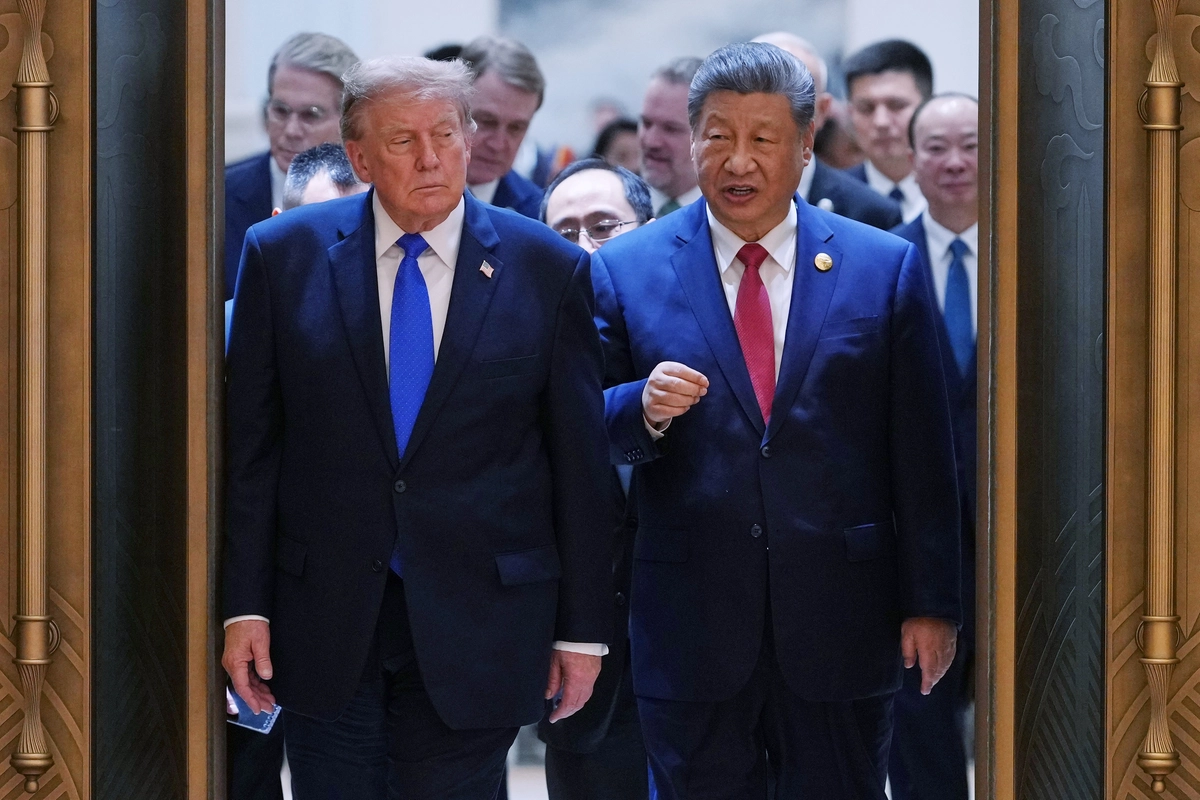
Trump and Xi met at the Asia-Pacific Economic Cooperation (APEC) summit in Shenzhen last week. They are expected to meet again at the G20 summit in the United States in December.
During their recent meeting, Xi described China's relationship with the US as "stable and improved" and called for cooperation in areas including artificial intelligence.
The possibility of fresh tariffs now raises questions about the durability of the existing trade understanding between the two economic powers.
The reported tariff plans also come amid domestic political and economic challenges for the Trump administration.
The Republican Party suffered a significant setback in the November 2026 midterm elections, with affordability concerns and elevated inflation emerging as important issues for voters.
The proposed tariffs could add another dimension to the domestic debate over trade policy, particularly if higher import duties increase costs for American businesses and consumers.
Although Trump retains the power to veto legislation seeking to reverse or dilute tariffs, the proposed measures could face political scrutiny over their economic impact.