‘1 billion barrels, zero for Iran’: CENTCOM Chief details impact of US naval blockade in Hormuz
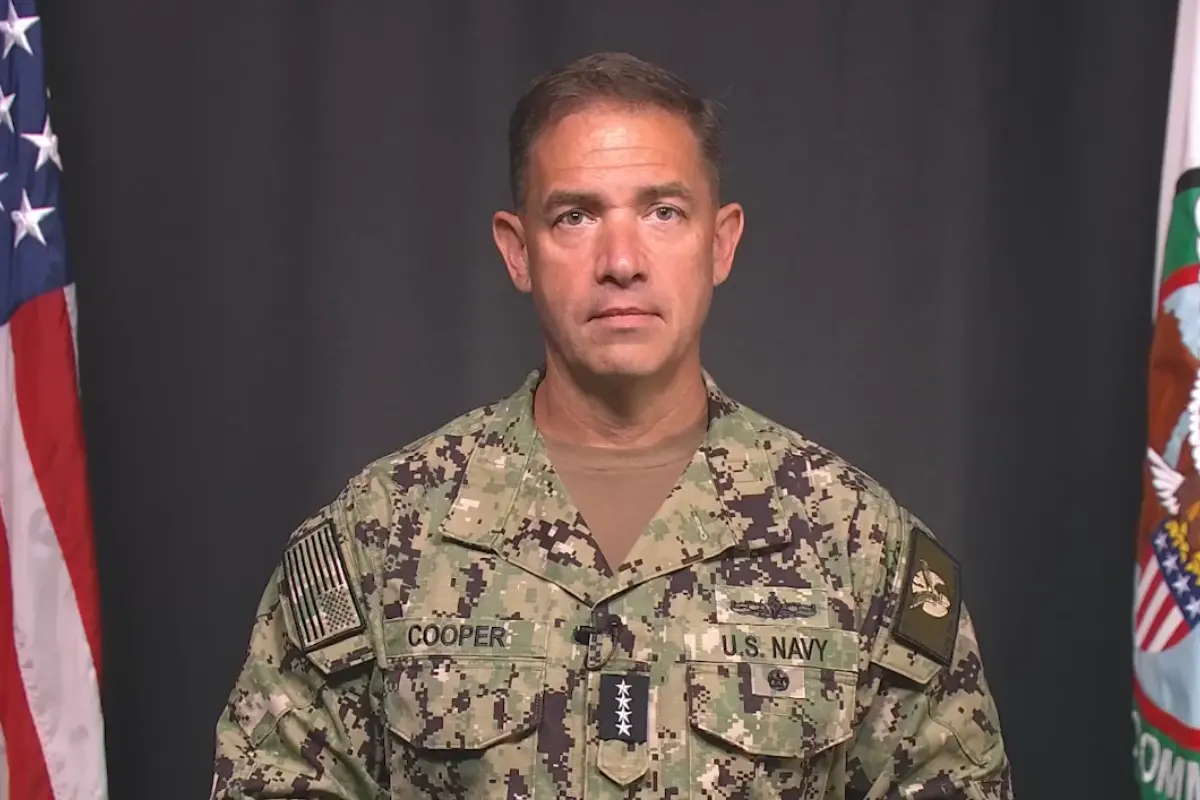
Washington DC: US Central Command chief Admiral Brad Cooper has released an operational update outlining security and commercial benchmarks achieved by American forces in the Middle East.
Cooper delivered the briefing in a video statement released on X, stating that "CENTCOM forces have supported more than one billion barrels of crude oil leaving the Gulf. That's one billion barrels of crude oil out through the Strait of Hormuz in the last couple of months."
He highlighted that major benchmarks were accomplished whilst safeguarding merchant shipping, stating, "We've reached this significant milestone while assisting over 2,000 commercial ship transits through the Strait by providing coordinated protection. Clearly, momentum is building. Primary transit lanes in the Strait are clear of mines."
Elaborating on shipping volumes and the naval blockade, Cooper noted, "Thousands of ships have passed through the Strait. Over one billion barrels of crude have been shipped from Gulf partners through the Strait of Hormuz, and Iran has exported zero barrels thanks to our ironclad blockade."
He added that joint efforts persist to streamline commercial activity: "Even with this progress, we remain clear-eyed and laser-focused as we work with our teammates in the US interagency as well as all six partners in the Gulf Cooperation Council, known as the GCC, as well as insurance and shipping companies to increase the volume of traffic flow through the Strait of Hormuz."
Underlining measurable progress, Cooper stated, "The effort is paying off. The volume of crude oil, cargo, and liquid natural gas these past two weeks is higher than at any point in the past six months."
Furthermore, he detailed wider regional defence measures: "We're also working with every partner in the region, enhancing their air defence, forming a new coalition attack drone unit, and keeping the Strait of Hormuz and surrounding waters open and clear."
Lauding deployment personnel, Cooper remarked, "The average American doing this important work is in their mid-20s. There are pilots, maintainers, logisticians, culinary specialists, air defenders, intelligence analysts, and members of every other career field that make up America's military, the greatest force on earth," before concluding with an exhortation for deployed forces to "stay focused and keep up the great work."
Amid these regional operations, US President Donald Trump published a list outlining what he termed his "TOP 25 TRUMP ACCOMPLISHMENTS OF TERM THREE" ahead of the November midterm elections, spotlighting military engagements by asserting the US had "obliterated Iran's nuclear enrichment capacity" via Operation Midnight Hammer and Operation Epic Fury to guarantee Tehran would "NEVER have a nuclear weapon".
However, the financial expenditures and human casualties of the ongoing conflict involving the United States and Iran have reportedly outstripped previously disclosed totals, with congressional briefings indicating cumulative costs have reached $45.1 billion (£34.2 billion) alongside emerging reports indicating American military fatalities may exceed official public records.
According to sources cited by CNN, the Pentagon advised lawmakers that conflict-related outlays had reached $43.6 billion as of 3 September, with a further $1.5 billion earmarked for supplementary fuel requirements, noting this figure excludes infrastructure repairs and wider operational overheads.
This revised financial total exceeds Congressional Budget Office estimates predicting outlays of $38 billion through 1 August, with the CBO further forecasting ongoing monthly expenditures of $2 billion to $3 billion for the duration of hostilities.
Concurrently, investigative findings by The Washington Post, referencing accounts from six US officials familiar with internal military casualty monitoring, indicated that deaths amongst American service members in the region may have reached at least 22, surpassing the 18 fatalities formally recorded in the Pentagon's public register.
One official noted an even higher death toll of 23, explaining that certain casualties occurred amongst personnel in the region amidst active hostilities rather than solely through direct combat engagements, alongside three contractor deaths, whilst the Pentagon declined to comment on the numerical discrepancies.
ANI