Smoke from Canadian wildfires triggers air quality alerts across US, thousands evacuated
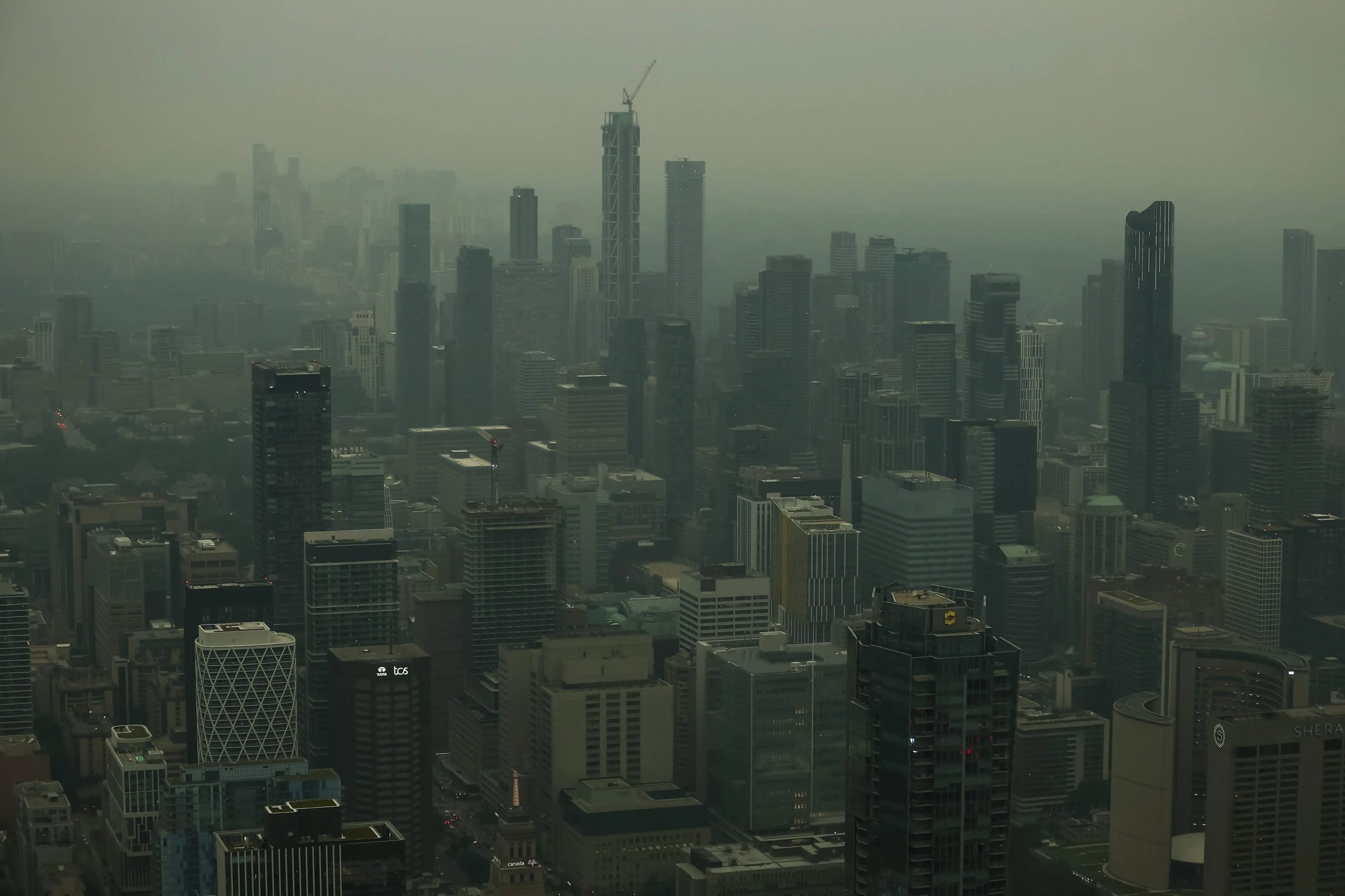
Minnesota: Thick smoke from hundreds of wildfires burning in Canada spread across large parts of the United States on Wednesday, shrouding cities in the Midwest and Northeast, triggering widespread air quality alerts and forcing the evacuation of thousands of campers from Minnesota's remote Boundary Waters wilderness.
Authorities warned residents to remain indoors as hazardous smoke combined with an intense heatwave, creating dangerous conditions across the region. Air quality advisories stretched from Minnesota through Toronto and into New York, with smoke expected to drift farther south toward Washington, D.C.
"The two things coinciding with each other is not good from a health perspective," said Tyler Hasenstein, a meteorologist with the National Weather Service in Chanhassen, Minnesota.
Thousands evacuated as fires spread through boundary waters
The Boundary Waters Canoe Area Wilderness, a vast 1.1-million-acre protected area accessible mainly by canoe, was closed after about 17 lightning-sparked wildfires rapidly expanded across the region.
Officials estimated that between 6,000 and 10,000 visitors were inside the wilderness when evacuation efforts began. Rangers spent hours travelling across lakes and waterways to reach campers, while Canadian authorities also helped rescue groups that had crossed the international border.
"It’s an arduous job," Superior National Forest spokesperson Joy VanDrie said of the evacuation efforts. Rangers had safely evacuated about 90% of visitors by Wednesday, with no injuries or deaths reported.
Among those rescued was Jan Bailey, who was camping with family members when a distant plume of smoke quickly turned into a fast-moving firestorm.
"We had fire on both sides of us at that time," Bailey told Minnesota Public Radio. "So we’re just weaving between the lakes. It’s a little smoky. Campsites are going up."
Officials said some fires in the wilderness may be allowed to burn for an extended period while being closely monitored to ensure they do not threaten nearby communities or infrastructure.
Heat and smoke create dangerous conditions
Meteorologists warned that wildfire smoke and unusually high temperatures are combining to create serious health risks, particularly for children, older adults and people with heart or lung diseases.
Dan Westervelt, an associate professor at Columbia University's Climate School, said prolonged drought and intense heat have created "a perfect storm for really dry conditions to provide a lot of fuel for these wildfires to burn." He added that research shows warming temperatures driven by burning coal, oil and gas are making wildfires more frequent and intense.
Authorities advised people to remain indoors where possible, keep windows closed, use air purifiers or air conditioning, and wear N95 masks if they must go outside.
The smoke was so dense across northern Minnesota that skies turned an eerie orange, while residents reported the smell of burning wood hundreds of miles away.
Residents in Michigan, Wisconsin, New York and Maine also experienced deteriorating air quality, with forecasters warning the thickest smoke could reach as far south as Washington, D.C., by Thursday.