Brazil's worst drought: Wildfires rage, Amazon River hits record low
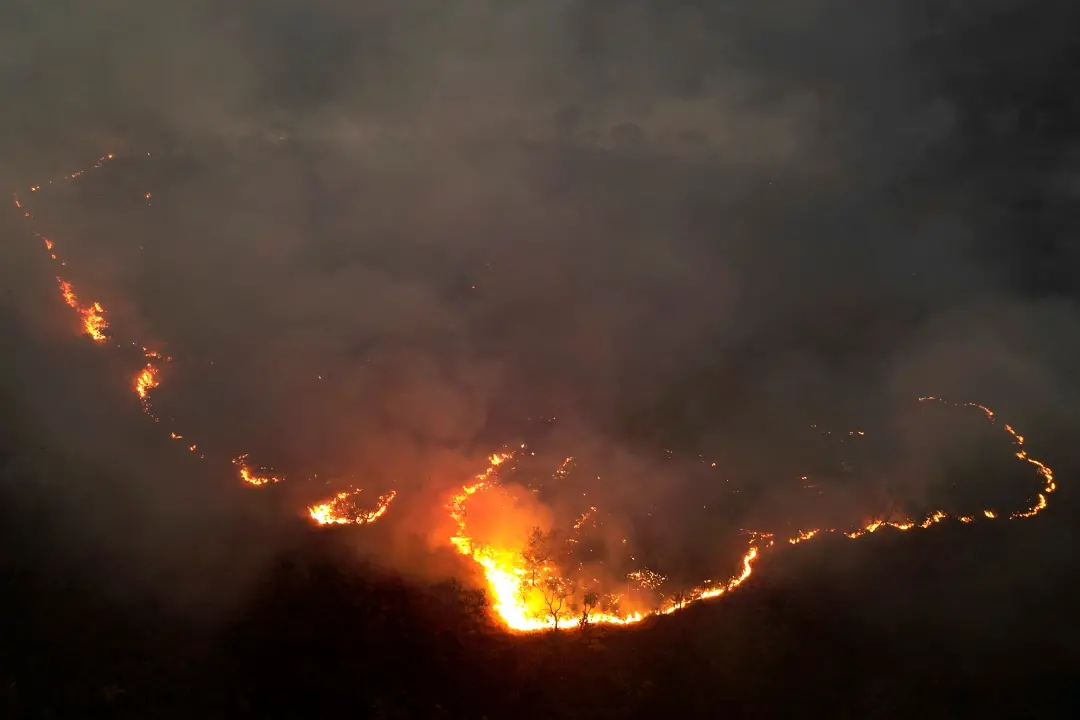
Brasilia, Brazil: Brazil is grappling with its worst drought in over 70 years, with nearly 59% of the country experiencing severe drought conditions, an area roughly half the size of the U.S. Major rivers in the Amazon basin are at historically low levels, and uncontrolled wildfires have devastated protected areas, causing widespread smoke and severely impacting air quality.
“This is the first time that a drought has covered all the way from the North to the country's Southeast,” Ana Paula Cunha, a researcher at the National Center for Monitoring and Early Warning of Natural Disasters, said in a statement Thursday. “It is the most intense and widespread drought in history.”
On Monday, Sao Paulo, a city of 21 million people, reported the second most polluted air in the world, behind Lahore, Pakistan, according to Swiss air quality monitoring company IQAir.
To the north, wildfires are spreading through Chapada dos Veadeiros National Park, a popular tourist destination. “This year, the dry season started much earlier than in previous years, whereas the rain season was intense yet short,” said Nayara Stacheski, head of the park. “The wind is strong, the air humidity is very low and it’s extremely hot. All this worsens the wildfire.”
One fire is burning uncontrollably in a remote area, with a helicopter expected to help transport firefighters. Another blaze, managed by 80 firefighters and two aircraft, is under control, but two other fires are threatening to reach the park.
This is part of a broader crisis. From January to September 8, Brazil recorded nearly 160,000 fires, marking the worst year since 2010. In Pantanal, the world’s largest wetland, it has been the second worst fire year on record. Most of these fires are caused by deforestation and clearing land for agriculture. This year, fires have burned an area equivalent to the size of Italy.
In addition to the fires, the drought is causing severe problems. The Amazon River and its tributary, the Madeira River, are experiencing record low water levels in the city of Tabatinga, with no significant rain expected until October. Low river levels have isolated many communities, including Fidadelfia, home to 387 families from the Tikuna tribe. The drought has led to a shortage of clean water, with children drinking contaminated water and an increase in illnesses. Food supplies are dwindling as crops fail, and travel to the city has become increasingly difficult.
Local leader Myrian Tikuna shared a photo of her community, where vast expanses of sand have replaced what used to be water.
“This used to be the Amazon River," she said. "Now it’s a desert. If things get worse, our people will disappear. Now we are realising the severity of climate change.”
Agency