Was one of the Bondi Beach shooters of Indian origin? What authorities have said
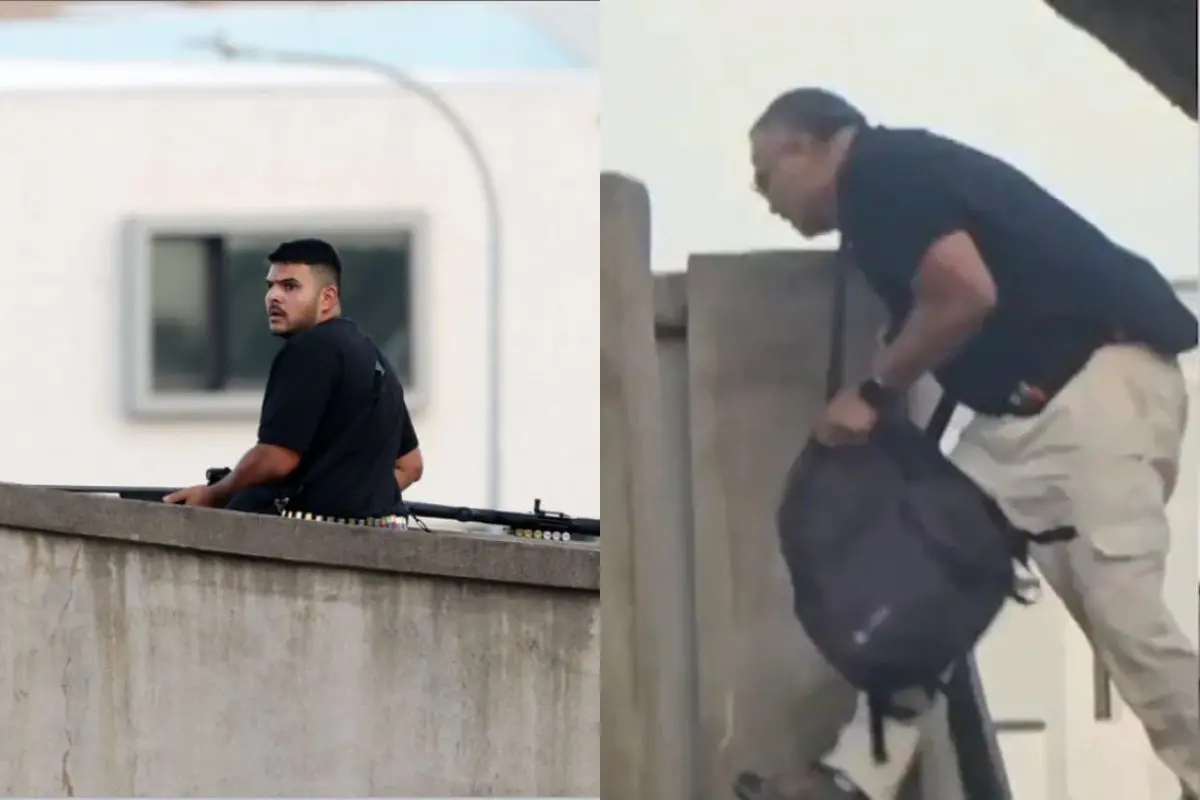
Australian and Philippine authorities have confirmed that one of the two men behind the deadly mass shooting at Sydney’s Bondi Beach was an Indian national, while the other was an Australian citizen. The reports about the confirmation come amid an expanding international investigation into what officials have described as Australia’s worst mass shooting in nearly three decades.
Fifteen people were killed and at least 42 others wounded when a father and son opened fire on a Jewish Hanukkah celebration at Bondi Beach on Sunday evening. Australian Prime Minister Anthony Albanese has said the attack appeared to be driven by Islamic State ideology and is being treated as an act of terrorism targeting the Jewish community.
What authorities have said about their nationalities
The Philippines Bureau of Immigration on Tuesday told Reuters that the gunmen were Sajid Akram, 50, an Indian national and Australian permanent resident, and his son Naveed Akram, 24, an Australian citizen.
Dana Sandoval, a spokesperson for the bureau, told AFP, “Sajid Akram, 50, Indian national (Australian resident), and Naveed Akram, 24, Australian national, arrived in the Philippines together last November 1, 2025 from Sydney, Australia.”
She added, “Both reported Davao as their final destination. They left the country on November 28, 2025 on a connecting flight from Davao to Manila, with Sydney as their final destination.”
Australian Home Affairs Minister Tony Burke said the father had arrived in Australia in 1998 on a student visa and later transitioned to a partner visa, while Naveed was Australian-born.
Travel to the Philippines before the attack
Immigration records show the duo travelled aboard Philippine Airlines Flight PR212 from Sydney to Manila on November 1 and continued on to Davao, a city in the southern Philippines. They returned to Australia on November 28 on the same flight route, weeks before the Bondi Beach attack.
Authorities said it remains unclear what activities they undertook during their nearly month-long stay or whether they travelled beyond Davao after landing. The city is located in Mindanao, a region where ISIS-linked militant groups have operated in recent years.
The Armed Forces of the Philippines said it is validating the reports and coordinating with other agencies over the movements of foreign nationals and possible terrorist links.
Mindanao has long been considered a hotspot for extremist activity. In 2017, Islamic State-inspired militants seized parts of Marawi city, triggering five months of military operations involving air strikes and ground offensives.
The siege, the Philippines’ largest battle since World War Two, displaced about 3,50,000 residents and left more than 1,100 people dead, most of them militants.
What the Australian Prime Minister said
Prime Minister Anthony Albanese said early indications pointed to extremist radicalisation.
“It would appear that this was motivated by Islamic State (IS) ideology,” Albanese said, “The ideology that has been around for more than a decade that led to this ideology of hate, and in this case, a preparedness to engage in mass murder.”
Albanese also revealed that Naveed Akram had come to the attention of Australia’s intelligence agency in 2019.
“He was drawn to their attention because of his association with others. Two of the people he was associated with were charged and went to jail, but he was not seen at that time to be a person of interest,” he said.
Details of the Bondi beach attack
Police said the gunmen used long-barrelled firearms and fired continuously for around 10 minutes at the crowded beach. Sajid Akram was shot dead by police at the scene, while Naveed Akram was arrested and remains in a coma under police guard.
Health officials said on Tuesday that 25 people remain hospitalised, including 10 in critical condition. Several children are among those receiving treatment.
The attack occurred during the “Chanukah by the Sea” celebration, which included food stalls, face painting and a petting zoo, drawing hundreds of families to the iconic beach.
ISIS symbols recovered
New South Wales Police Commissioner Mal Lanyon confirmed that two homemade ISIS flags were recovered from the vehicle used in the attack, which was registered in Naveed Akram’s name. Lanyon confirmed the men had travelled to the Philippines but declined to provide further details about their alleged ISIS associations.
Family background and Indian links
Sources in the Indian security establishment told ThePrint that Sajid Akram hailed from Old Hyderabad in Telangana and had family there, including two brothers. Sajid reportedly left Hyderabad more than 25 years ago and later married a Christian woman, after which ties with his family were severed.
His brother told TNM that the family had not been in touch with him for many years and that Sajid did not return to India even when their father died in 2009. Sources said Sajid last visited India in 2022 and had travelled to the country at least three times over the past 27 years.
Australia’s 9 News reported that Naveed Akram’s mother is Italian, while his father was Indian. A former colleague described Naveed as someone who spoke about religion occasionally but did not aggressively push his views and legally owned firearms.
Telangana police dismiss local radicalisation links
Telangana police on Tuesday said there was no indication that the radicalisation of the Bondi Beach attackers had any link to India or to local influences in the state.
In a statement cited by Reuters, police said the family had denied knowledge of any extremist leanings. “The family members have expressed no knowledge of his radical mindset or activities, nor of the circumstances that led to his radicalisation,” the statement said.
Authorities said Sajid Akram, who migrated to Australia in 1998, visited India six times mainly for family reasons and had no “adverse record” before leaving the country. Police added that while the men’s recent trip to the Philippines is under investigation, the factors behind their radicalisation “appear to have no connection with India or any local influence in Telangana”.
Diplomatic response
Australian Foreign Minister Penny Wong spoke to India’s External Affairs Minister S Jaishankar following the attack.
Wong said: “I thanked minister Jaishankar for his condolences and for the Indian government’s messages of support. We agreed that there must be no place for antisemitism, violence and terrorism.”
Jaishankar said he conveyed “our deepest condolences about the Bondi beach terrorist attack and offered our fullest support”.
(With inputs from agencies)