Bolivia declares state of emergency, deploys troops to clear protest roadblocks
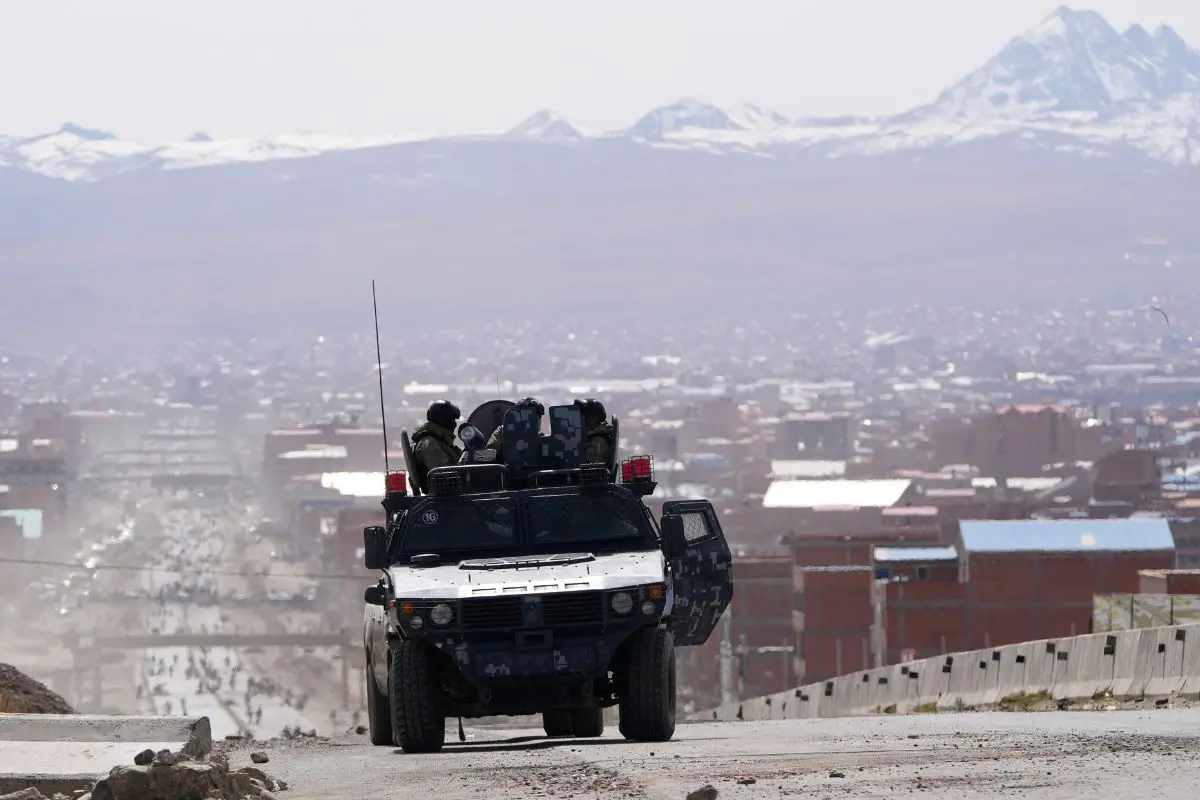
La Paz: Bolivia's President Rodrigo Paz has declared a 90-day state of emergency and ordered the deployment of soldiers and heavy machinery to remove anti-government roadblocks that have paralysed large parts of the country.
The move comes after more than six weeks of nationwide protests led by unions, Indigenous organisations and coca growers opposed to the government's economic policies. Demonstrators have blocked major roads with rubble, logs and debris, causing severe disruptions to transport and supply chains.
The unrest has triggered acute shortages of fuel, food and medicines in several cities, while the government estimates the economic cost has run into billions of dollars. The crisis has also raised concerns over the stability of Bolivia's first non-socialist administration in more than two decades.
In a televised address before dawn on Saturday, Mr Paz warned protesters they would face "the full force of the law" as authorities sought to restore order.
The state of emergency limits the right to protest and permits the domestic deployment of the armed forces.
Later in the day, convoys of soldiers and heavily armed police officers were seen entering the city of El Alto alongside bulldozers tasked with clearing roadblocks. Some residents welcomed the operation, applauding as security forces passed through the streets.
"I'm very happy," said Carla Butron, a 39-year-old shopkeeper in El Alto. "Everything has been difficult here during these 50-something days — work, free movement, everything."
Security was also tightened in neighbouring La Paz, where military police and naval personnel guarded the presidential palace while tactical police units were deployed across key public squares.
In a message posted on social media, Mr Paz said Bolivians could no longer be "held hostage by blockades" that prevented people from working, studying, receiving medical treatment and obtaining essential supplies.
"This state of emergency is not intended to take away normality, but to restore it," he said.
Protesters are demanding that Mr Paz abandon his programme of liberal economic reforms and resign from office, despite having been elected less than a year ago.
The president had recently signalled a willingness to negotiate and reached an agreement earlier this week with one of the country's largest labour organisations. Under the deal, the government pledged not to privatise state-owned companies and committed to further talks, prompting the Bolivian Workers' Central union to suspend its demonstrations.
However, several Indigenous groups have vowed to continue protesting, and officials say more than 40 major roadblocks remain in place.
"We want him gone. We don't want him governing us," said Lidia Callisaya, a 42-year-old Aymara community leader.
Many Bolivians affected by the disruption have expressed relief at the government's intervention. Truck driver Erland Richard Segovia, who had been stranded on the road to La Paz, said traffic was beginning to move again.
"They abandoned us on the road and we had to wait," he said. "At least now we're seeing things start to return to normal."
Mr Paz has accused what he describes as "narcoterrorists" of orchestrating the unrest, specifically pointing to former president Evo Morales.
Mr Morales, who served as president from 2006 to 2019, remains in hiding while facing allegations of trafficking a minor, charges he strongly denies. His political stronghold is the Chapare region of central Bolivia, where thousands of supporters have so far prevented police from carrying out an arrest.
Interior Minister Marco Antonio Oviedo declined on Saturday to rule out a future operation to detain the former leader.
"The security forces will carry out whatever operations are necessary at the appropriate time," he said, adding that Mr Morales must answer the charges against him.
Speaking recently from hiding, Mr Morales rejected the government's claims and argued that Bolivians were rising up against a conservative administration he described as "utterly submissive" to the United States.