‘We are just numbers now…’: Baby Zainab’s mother loses her to hunger in Gaza, warns ‘many will follow’
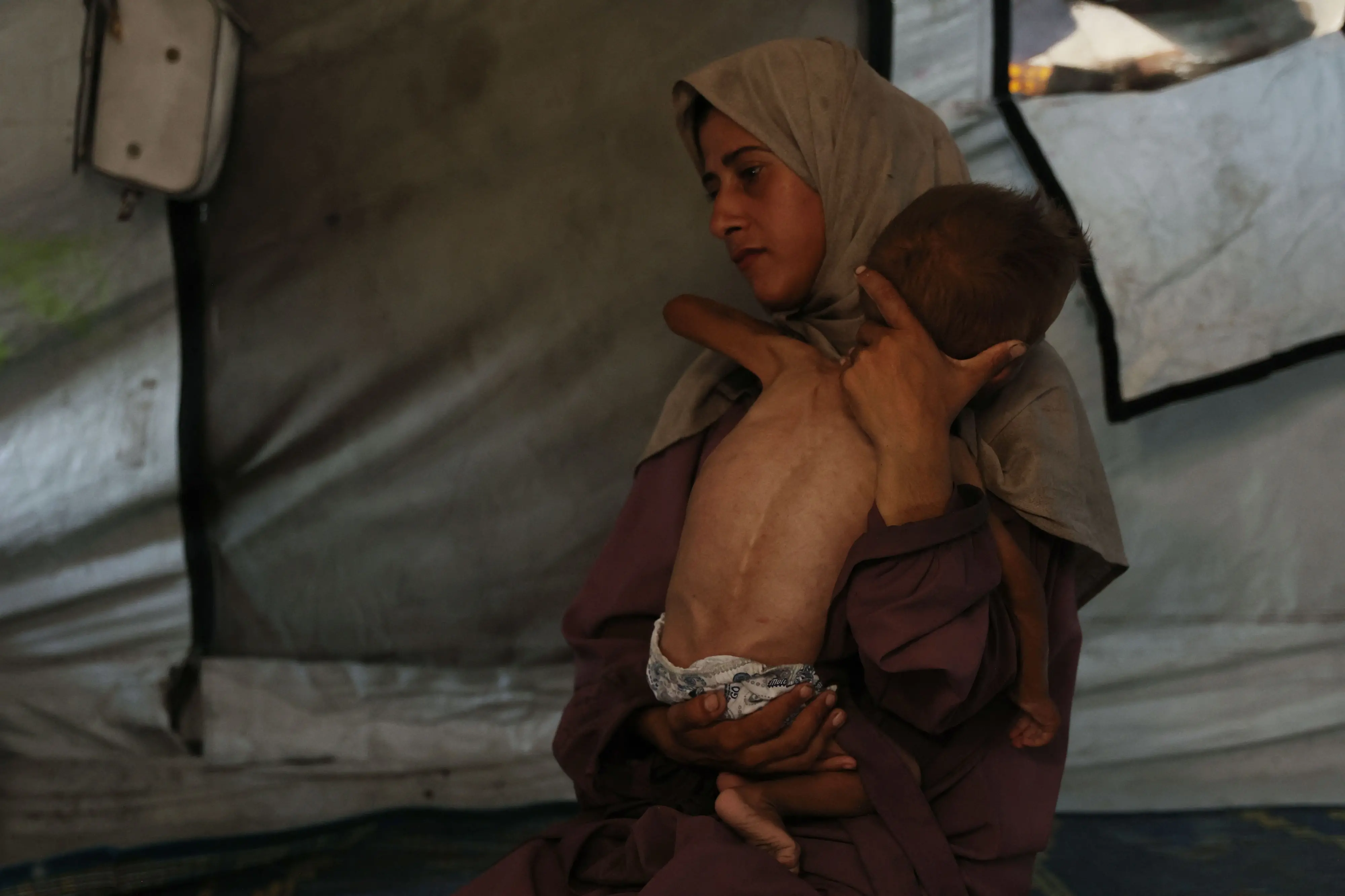
Gaza: Wrapped in a small blanket and weighing less than at birth, baby Zainab took her last breath in Gaza—killed not by bombs, but by hunger.
Who was Zainab Abu Halib?
Five-month-old Zainab Abu Halib died weighing less than when she was born. She had no illness, no injury—just hunger. Born at over 3 kilograms, Zainab weighed under 2 kilograms at the time of her death. Her skeletal body, documented in heart-wrenching photographs, became a symbol of the catastrophic humanitarian crisis in Gaza.
Zainab suffered from an allergy to cow’s milk and required a special baby formula—something that no longer existed in Gaza after nearly two years of war and a blockade imposed by Israel. Her mother, Esraa, had breastfed for only six weeks before her own malnutrition ended her ability to feed her daughter.
“Many will follow,” Esraa said, cradling her daughter's lifeless body. “We are just numbers. Our children… have become just numbers.”
Zainab was one of 85 children reported to have died from malnutrition-related causes in Gaza, according to the latest figures from Gaza’s Health Ministry. Her death raises fundamental questions about access, accountability, and aid in conflict zones.
Also read: UK opposition pushes vote on Palestine recognition as Starmer resists pressure
What caused Gaza’s starvation crisis?
Since the war began in October 2023 after Hamas’ deadly attack on Israel, Gaza has endured waves of military assaults, displacement, and aid restrictions. Israel says the blockade—especially severe since the end of a ceasefire in March 2025—is intended to pressure Hamas to release remaining hostages.
However, the result has been catastrophic for civilians. With basic supplies of food, medicine, fuel, and clean water cut off for more than two months, Gaza’s health infrastructure collapsed. Even after the blockade was slightly eased in May, the average of 69 aid trucks per day fell far short of the 500–600 trucks the U.N. says are required.
Doctors across Gaza are reporting a surge in children suffering from acute malnutrition. At Nasser Hospital, where Zainab was taken, pediatric wards built for eight patients now hold sixty, with children lying on the floor. Dr. Ahmed al-Farah, head of pediatrics, warned, “Unless crossings open and baby formula is allowed in, we will witness unprecedented numbers of deaths.”
Also read: ‘We don’t care’ — Netanyahu rejects Palestinian statehood as Trump says Gaza talks ‘going very well’
What is Israel doing?
Facing mounting global criticism—including from allies—over images of starving children and repeated UN warnings about famine, Israel announced a “tactical pause” in military operations beginning Sunday, July 27.
The pause applies to three areas—Gaza City, Deir al-Balah, and Muwasi—between 10:00 a.m. and 8:00 p.m. daily to allow aid deliveries. Aid corridors are being established, and the Israeli military says it has conducted airdrops of essentials like flour, sugar, and canned food.
Critics, however, call the move too little, too late.
“This truce will mean nothing if it doesn’t turn into a real opportunity to save lives,” said Gaza’s Health Ministry director, Dr. Muneer al-Boursh.
The U.N. and aid groups have also warned that even when trucks do enter Gaza, food is often intercepted by desperate crowds or armed groups, making organized distribution nearly impossible.
Are Israel’s claims about aid diversion by Hamas substantiated?
Israel insists that aid restrictions are necessary because Hamas siphons aid to support its fighters—though no conclusive evidence has been provided. The U.N. has firmly denied this, stating its delivery systems are among the most secure and effective available.
To bypass the U.N., Israel has supported the Gaza Humanitarian Foundation (GHF), a U.S.-registered organization distributing food through its own channels. But this, too, has drawn controversy. The U.N. Human Rights Office reported that over 1,000 Palestinians have been killed by Israeli forces since May while trying to access food—many near GHF distribution sites.
On Sunday, at least 11 people were reportedly killed on their way to a GHF aid center in Nuseirat. GHF denies any connection to the violence.
What are the wider implications of this crisis?
As of July 2025, over 59,700 Palestinians have been killed since the war began, according to Gaza’s Health Ministry. More than half are women and children. Meanwhile, 898 Israeli soldiers have also died in the conflict. Hamas continues to hold 50 hostages, many of them presumed dead.
With 2.3 million people crammed into a decimated strip of land, famine looms. Many now live in tents, displaced repeatedly by conflict and bombings. The lack of water, sanitation, fuel, and medical supplies has made survival an hourly struggle.
In this environment, every humanitarian delay is not a diplomatic issue—it’s a death sentence.
Will this “pause” lead to peace—or more death?
For now, fighting continues in areas not covered by the pause. The ceasefire talks between Hamas and Israel have stalled, and both sides continue to accuse each other of intransigence and war crimes.
Hamas official Mahmoud Merdawi dismissed Israel’s humanitarian measures as a “public relations” move, saying, “Israel will not escape punishment… it will pay the price.”
The international community faces urgent questions:
- Will aid finally reach Gaza’s most vulnerable?
- Can humanitarian efforts be de-politicized and prioritized?
- Will there be accountability for starvation as a weapon of war?
The world is watching—but for Zainab Abu Halib and dozens of others like her, it is already too late.