US B-1B bomber leaves UK as Iran awaits Trump’s reply on war talks: Where is it headed?
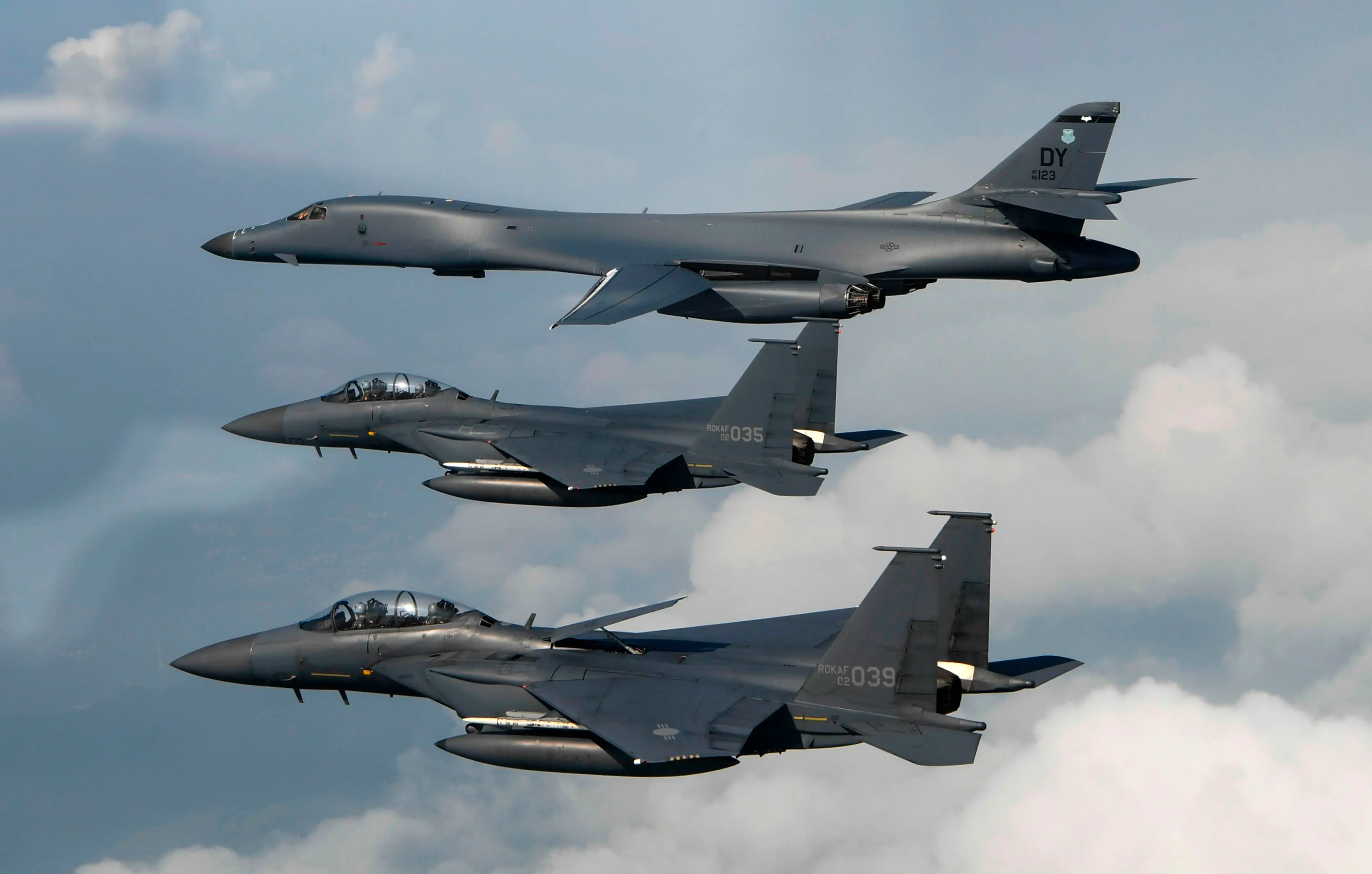
London: A B-1B bomber has reportedly taken off from RAF Fairford in the UK amid renewed US-Iran tensions, with Tehran awaiting a response from President Donald Trump after conveying conditions for negotiations through Qatar. However, there is no official confirmation that the aircraft's departure is connected to the latest diplomatic developments.
Footage reportedly shows a US Air Force B-1B Lancer taking off from RAF Fairford. The Gloucestershire base is regularly used for US bomber deployments, training and operations, so the departure by itself does not establish that the aircraft was sent in response to Iran's latest message.
Reports have also focused on the aircraft using afterburners during take-off. Such departures can occur when an aircraft is heavily loaded, but they can also be part of operational or training activity. There is no publicly confirmed information establishing what weapons, if any, were carried by the aircraft.
RAF Fairford has played a major role in US bomber operations connected to the Iran conflict, making movements from the base particularly significant to observers. However, the purpose of this particular flight remains unclear.
Iran awaits Trump's response
The bomber movement comes as Iran says it has conveyed conditions to Washington through Qatar for renewed negotiations.
Mohsen Rezaei, secretary of Iran's Supreme National Security Council, told Al Jazeera that Tehran was awaiting Trump's response. The conditions he publicly outlined included an end to the war on all fronts, the release of frozen Iranian funds and an end to the US naval blockade.
Iran has simultaneously maintained that it is prepared for continued military confrontation if diplomatic efforts fail. Rezaei described Tehran as prepared for what he called a "decisive war". That statement is an attributed position of the Iranian official, rather than an independent assessment of Iran's military capability.
Why the bomber movement is drawing attention
The timing has raised questions because several developments have occurred together:
Iran says its conditions for renewed talks have been passed to Washington through Qatar.
Tehran says it is awaiting Trump's response.
A B-1B has reportedly departed RAF Fairford.
The US has issued security warnings covering parts of the Middle East.
Trump has reportedly shortened his stay at Camp David amid the latest developments.
These events are occurring against an already active military conflict, but there is no confirmed evidence that the B-1B flight was specifically ordered in response to Iran's negotiating message.
The aircraft's departure should therefore be treated as a development to watch rather than proof of an imminent US military action.
RAF Fairford's role
RAF Fairford is an important US bomber operating location in Europe and has hosted B-1B, B-52 and B-2 deployments. The base has also been used for operations and training involving long-range US bombers.
Its established role means aircraft movements there can occur for several reasons, including training, repositioning, operational missions and other routine military activity. The context of the current Iran conflict makes the latest movement more closely watched, but does not by itself reveal the aircraft's mission.
What Iran's conditions mean for diplomacy
The latest Iranian message shows that Tehran is combining diplomatic engagement with continued military preparedness.
Qatar and Pakistan have been involved in efforts to facilitate communication between Iran and the US. The previous Pakistan-mediated memorandum expired in August without producing a lasting settlement, according to reports.
Iran's publicly stated conditions also indicate that any renewed talks would be tied to broader issues surrounding the conflict, frozen Iranian assets and the US naval blockade.
What happens next?
The immediate question is whether Washington responds to Tehran's conditions and whether mediated contacts lead to formal negotiations.
At the same time, military movements from RAF Fairford and elsewhere will continue to attract attention because of the base's established role in US bomber operations. Until the US military or another authoritative source confirms the purpose of the B-1B flight, its connection to Iran's latest diplomatic message remains unconfirmed.
The significance of the B-1B departure lies largely in its timing and context, rather than in the flight alone. RAF Fairford routinely supports US bomber activity, while the wider region remains under heightened military tension.
Iran's latest message presents two tracks simultaneously: conditions for renewed negotiations and warnings that Tehran is prepared for further fighting.
That combination means military movements and diplomatic signals are likely to be watched together. However, a single bomber movement cannot establish whether Washington has decided on further strikes, is preparing for a contingency, or is conducting a routine mission.
For now, the confirmed diplomatic development is that Iran says it has sent conditions to Washington through mediators and is awaiting Trump's response. The operational purpose of the B-1B flight remains unconfirmed.