2 Australian women arrested over alleged female slave abuse in Syria
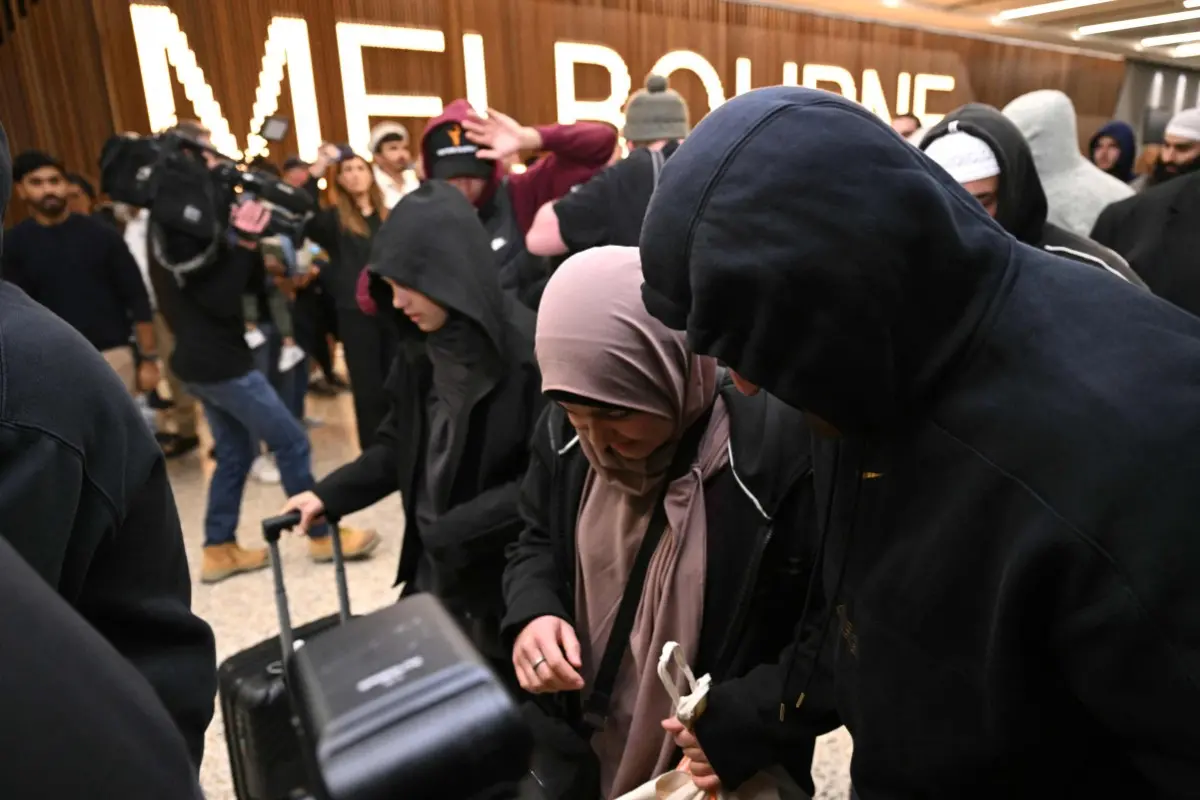
Sydney: Two Australian women have been charged in Melbourne after returning from Syria, where they are alleged to have lived under Islamic State rule and kept a woman in slavery, police said on Friday.
The pair, a mother and daughter, arrived back in Australia after nearly a decade and were immediately taken into custody upon landing at Melbourne International Airport on a Qatar Airways flight.
Officials allege that the women, aged 53 and 31, committed crimes against humanity during their time in the former Islamic State stronghold. The 53-year-old is accused of being involved in the purchase of a female slave for US$10,000, while the younger woman is alleged to have knowingly kept a woman in slavery within a household.
The investigation remains ongoing, with police describing the case as involving extremely serious allegations linked to activities during the group’s self-declared caliphate.
Return from Syria and arrest at airport
The two women were among a group of four Australian women and nine children who returned from Syria on Thursday night. They had been living in a Syrian detention camp after the collapse of the Islamic State group and were previously held by Kurdish forces from 2019, according to police. The group had been detained in the Roj camp, a facility in northern Syria known for housing individuals linked to extremist organisations.
Upon arrival in Melbourne, the mother and daughter were arrested immediately by Australian Federal Police.
Additional arrest in Sydney
A separate woman, identified as Janai Safar, aged 32, was also arrested after arriving in Sydney. She has been charged with entering a restricted area and with joining a terrorist organisation.
Police said Safar travelled to Syria in 2015 to join her husband, who was an Islamic State member.
Of the four women who returned to Australia, one was not arrested upon arrival.
Background to travel and Islamic State context
Officials noted that Australia had made it an offence to travel to designated conflict zones such as Raqqa province in Syria during the period when Islamic State controlled large territories in the early 2010s.
At the height of its influence, the group attracted hundreds of foreign women, including from Western countries, many of whom were believed to have travelled to Syria after following husbands or partners who joined the organisation as fighters. These women are often referred to in public debate as “ISIS brides”.
The case has drawn significant public attention in Australia. The Australian Human Rights Commission earlier urged the government to facilitate the return of 34 women and children still in Syria’s Roj detention camp.
However, there has also been strong criticism from those who argue that people who travelled to support Islamic State should face consequences and not be repatriated easily.
Home Affairs Minister Tony Burke said the returning women had made what he described as “a horrific choice to join a dangerous terrorist organisation”.
Ongoing repatriations
The latest return is part of a series of repatriations in recent years. Small groups of Australian women and children have previously been brought back from Syrian detention camps in 2019, 2022 and 2025, as authorities continue to manage cases involving citizens who travelled to conflict zones and later became stranded following the collapse of Islamic State.
Agency inputs