President Yoon Suk Yeol detained over martial law amid escalating tensions in South Korea
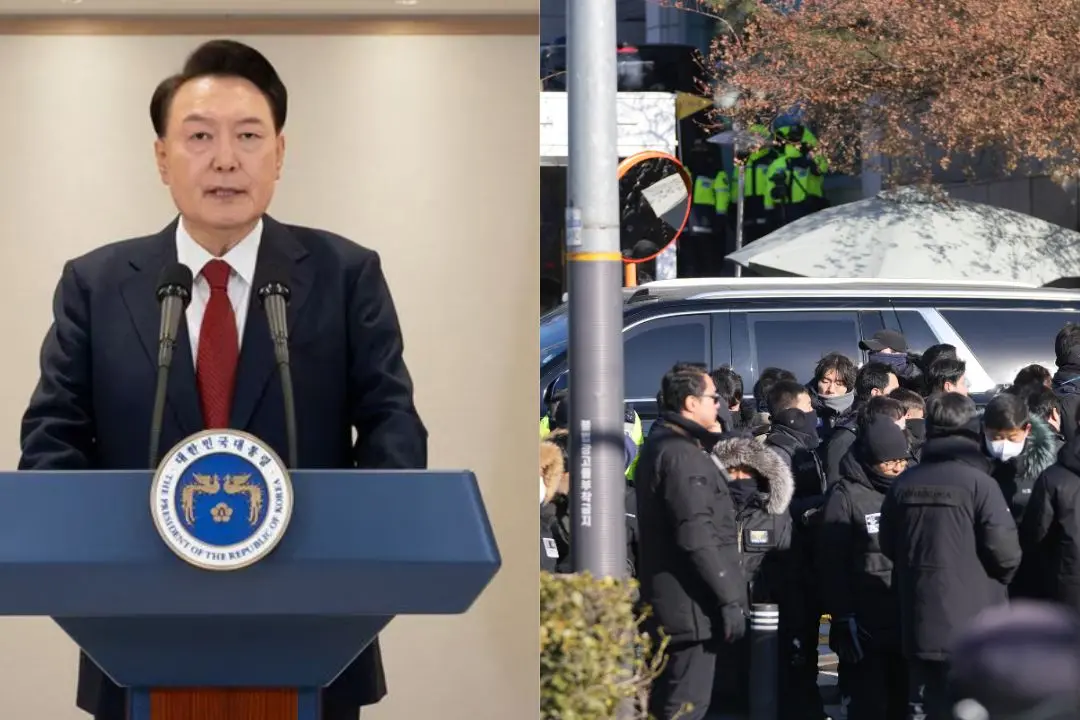
South Korea: South Korean law enforcement officials detained impeached President Yoon Suk Yeol on Wednesday after a brief but controversial imposition of martial law in December. This move follows an intense standoff at his residential compound, and his detention comes after his continued defiance of legal summonses.
Video message before detention
In a video message before his arrest, Yoon stated that the “rule of law has completely collapsed in this country.” However, he also affirmed his compliance with the detention warrant to avoid conflict between law enforcement and the presidential security service.
Detention amid standoff
Yoon, who has been holed up in his Seoul residence for weeks, was escorted in a series of black SUVs, some with sirens, under police guard. He was taken to the Corruption Investigation Office for High-Ranking Officials in Gwacheon, after the second attempt to detain him. This operation followed hours of efforts to break through barriers set up by his security forces, which included buses and barbed wire.
Martial law declaration and legal battles
Yoon justified his martial law declaration on December 3 as an act of governance aimed at quelling opposition disruptions to his agenda. He claims that the opposition, using its legislative majority, attempted to thwart his initiatives.
However, the anti-corruption agency has been investigating whether his actions amounted to an attempted rebellion. Despite warnings from his lawyers that the detention warrant was invalid, the Seoul Western District Court upheld the warrant, which is valid until January 21.
Protests and escalating tensions
As the standoff continued, both supporters and critics of Yoon gathered near his residence, each side demanding opposing actions. Supporters rallied to protect him, while others called for his imprisonment. Police, in their thousands, closely monitored the unfolding situation, with the National Police Agency planning a potential multiday operation to apprehend Yoon.
Legal implications and Constitutional Court
Yoon's impeachment, triggered by the opposition-dominated assembly, suspended his presidential powers on December 14. His fate now lies with the Constitutional Court, which began deliberations on whether to remove him from office. The court held its first hearing on Tuesday, but the session lasted only five minutes, as Yoon refused to attend. The next hearing is scheduled for Thursday.
Yoon’s detention has marked a significant chapter in South Korea’s political crisis, raising questions about the country's governance and legal procedures.
With AP inputs