Allies hesitate: Will nations send warships after Trump’s Strait of Hormuz warning?
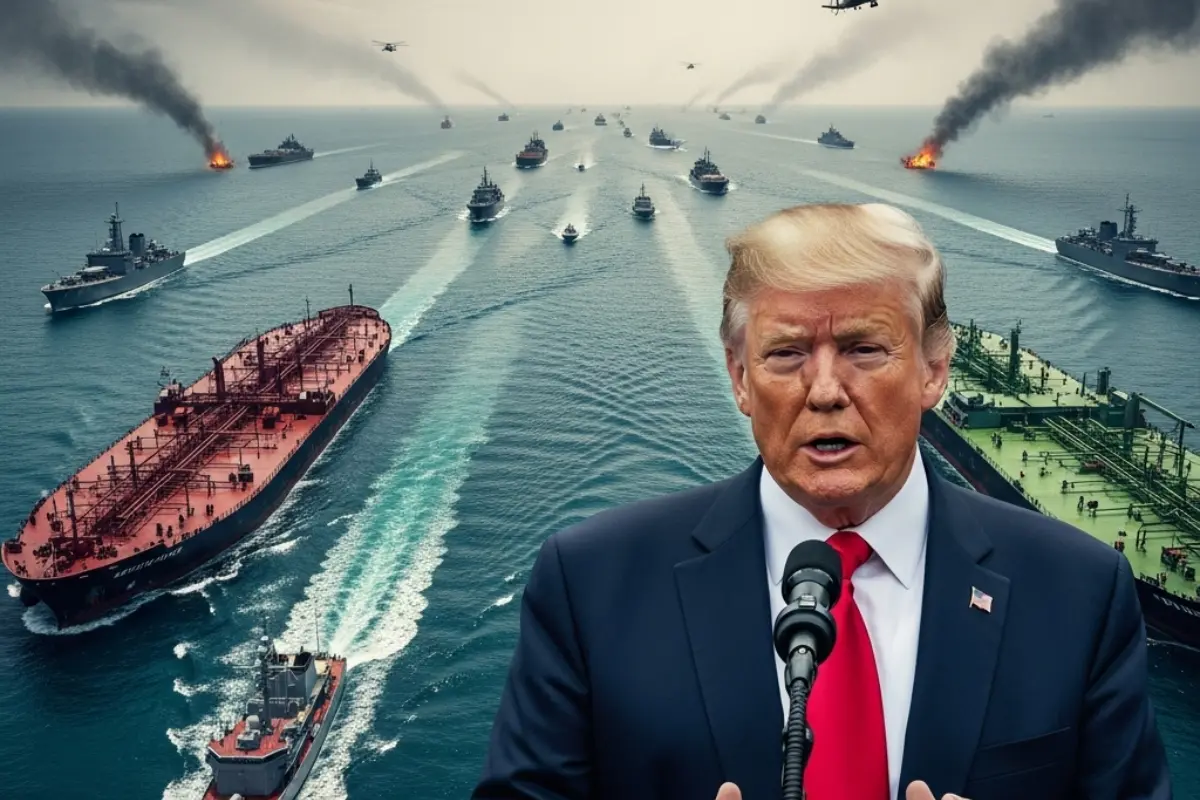
Allies of the United States have reacted cautiously after Donald Trump called on several countries to send warships to help secure the Strait of Hormuz, a vital global energy corridor increasingly threatened by the ongoing Middle East conflict.
Trump made the appeal through a social media post and later spoke to reporters aboard Air Force One, urging nations that rely heavily on oil shipments through the waterway to participate in policing it. While he initially named countries such as China, Britain, France, Japan, and South Korea, he did not specify the seven countries he referred to when speaking to journalists.
“I’m demanding that these countries come in and protect their own territory,” Trump said, arguing that many nations benefit far more from the oil shipments passing through the strait than the United States does. He noted that countries like China import a large portion of their oil through the route and should therefore help protect it.
The Strait of Hormuz, located between Iran and Oman, is one of the world’s most important maritime chokepoints. Around 20 per cent of global oil supply passes through the narrow waterway, making any disruption there a major concern for international energy markets.
The crisis has escalated after the United States and Israel carried out joint strikes in Iran on February 28, an operation that triggered a broader conflict across the region. In retaliation, Iran has launched missile and drone attacks targeting Israeli assets as well as facilities linked to US forces in the Gulf. Iranian forces have also threatened shipping through the strait, effectively disrupting traffic along the critical route.
Despite Trump’s call for a multinational naval effort, several countries have indicated that they are not ready to commit warships immediately.
In Japan, Prime Minister Sanae Takaichi told parliament that the government has not taken any decision to dispatch naval escort vessels to the Middle East. She said Tokyo would first assess what actions are possible within its legal framework and consider independent measures.
Australia also signalled reluctance to join such an operation. Transport Minister Catherine King said the government does not plan to send naval ships to the Strait of Hormuz, even though it recognises the importance of keeping the waterway open.
Officials in South Korea said any decision about sending naval support would only be made after consultations with Washington and a careful review of the situation.
Meanwhile, British Prime Minister Keir Starmer discussed the crisis with Trump and other international leaders, including Canada’s Mark Carney, as governments continue evaluating possible responses. Officials in London emphasised the importance of reopening the strait to stabilise global shipping and energy markets.
In France, President Emmanuel Macron has previously suggested that the French navy could escort ships if the situation stabilises. However, Paris has not yet formally committed to joining a naval patrol.
China, which is one of the largest importers of oil passing through the strait, has not publicly responded to Trump’s request but has repeatedly called for de-escalation and an end to hostilities in the region.
As the conflict enters its third week, the disruption to the Strait of Hormuz has already contributed to rising oil and gas prices worldwide. With allies hesitating to deploy naval forces, uncertainty remains over whether a multinational effort to secure the waterway will materialise.