Airbus finds quality issue in 500 A321neo jets, not a safety hazard
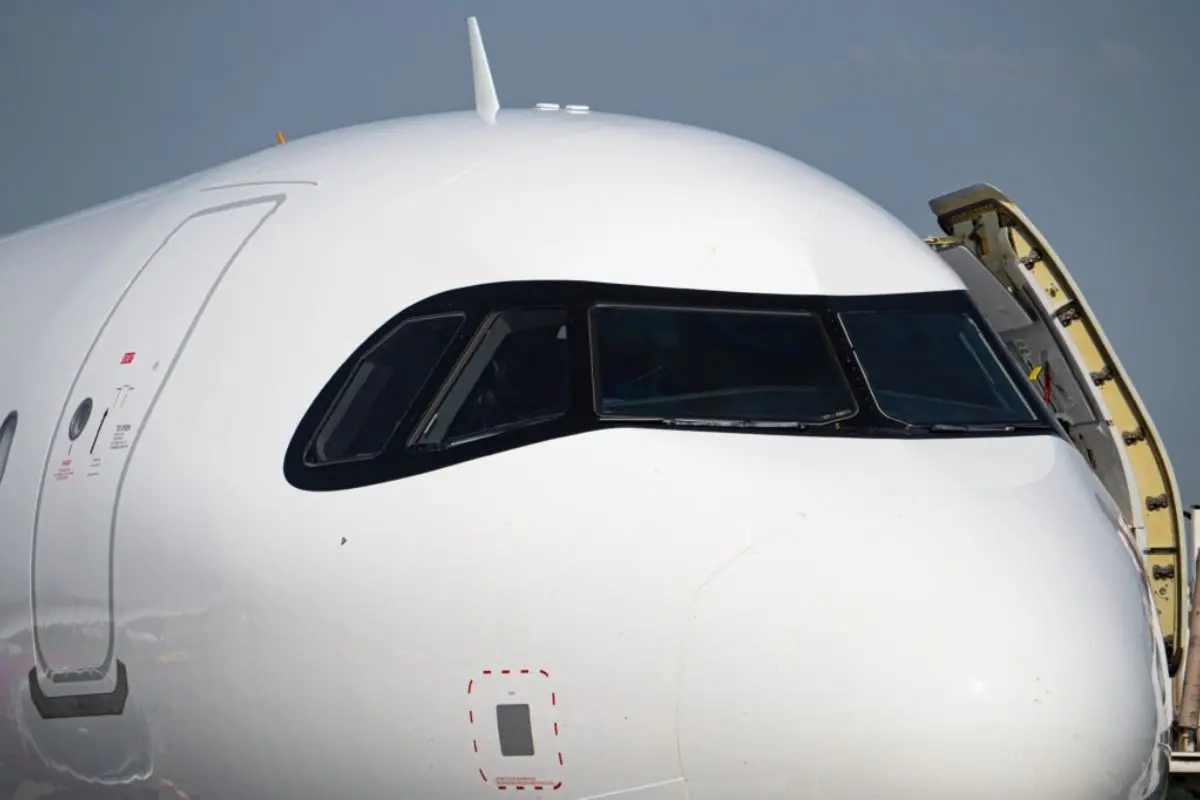
Airbus is working to fix a newly discovered manufacturing-quality issue affecting around 500 A321neo passenger aircraft. The company says there is no immediate safety risk and the affected planes can continue flying. However, the issue has raised fresh questions about aircraft manufacturing and the complex global supply chain behind modern passenger jets.
What exactly has gone wrong?
The issue involves a small but important part inside the aircraft's fuselage called a stringer.
Stringers are long structural members that run along the inside of an aircraft's body. They work with the outer skin and other structural parts to give the fuselage strength and help it withstand the forces experienced during flight. The affected stringers are located in the lower forward section of the A321neo's fuselage.
These components are normally covered with a protective primer or coating. The coating helps protect the metal from moisture and corrosion over the aircraft's lifetime. In the latest issue, some of the stringers were found to have gaps or inadequate protection in the primer.
That does not mean the aircraft are currently unsafe. Airbus has said the issue does not pose an immediate safety risk. However, the protective coating is important for preventing corrosion over time, which is why the affected aircraft will need corrective work.
How was the problem discovered?
The issue was reportedly discovered during routine work on aircraft being produced. During the process, paint was removed from a fuselage component and technicians found that parts of the protective primer underneath were missing or did not meet the required standard.
Airbus then investigated the problem and identified the aircraft that could be affected. The company has also developed a corrective procedure and says that newly coated stringers now meet the required specifications.
The problem does not require the affected stringers to be removed from the aircraft, which is expected to make the repair considerably simpler.
Around 500 aircraft are affected
Airbus has said that around 500 A321neo aircraft are involved. Approximately 250 of these aircraft are already in service with airlines, while another 250 are at different stages of production.
For aircraft that have not yet been delivered, Airbus can carry out the required work before they enter airline service.
For aircraft already flying, airlines will be able to continue operating them while the necessary corrective work is planned. Reports indicate that airlines will have up to two years to complete the repair work. This means passengers should not expect to see hundreds of A321neo aircraft suddenly grounded because of this issue.
So, are passengers safe?
For passengers, this is probably the most important question. Based on the information released by Airbus, there is no immediate safety concern for passengers travelling on an affected aircraft. Airbus has not announced a general grounding of the affected A321neo fleet, and the aircraft can continue operating while the corrective work is arranged.
The issue is primarily about long-term protection against corrosion, rather than an immediate structural failure.
Aircraft manufacturers regularly identify manufacturing deviations through inspections, production checks and maintenance activities. When such issues are found, corrective action can be planned before they develop into more serious problems.
In this case, Airbus has identified the affected aircraft and developed a repair procedure.
Also read: Should Indian passengers worry about the latest Boeing 737 MAX aircraft glitch?
Why is corrosion protection important?
An aircraft spends its working life exposed to very different environments. It can fly through humid conditions, rain, salt-laden air and significant changes in temperature and pressure. Moisture can also accumulate in certain areas inside the fuselage.
The lower part of the fuselage can be particularly vulnerable to moisture accumulation. This is why protective coatings are applied to structural metal parts. They act as a barrier between the metal and the environment, helping prevent corrosion.
Corrosion does not happen overnight. It can develop gradually over years if protective measures are inadequate.
That is why finding a problem early and correcting it within the appropriate maintenance period is an important part of aircraft safety and reliability.
A problem hidden deep inside the aviation supply chain
The incident also highlights something passengers rarely think about, an aircraft is built by a huge network of companies, not by one manufacturer alone.
A modern passenger aircraft contains millions of individual parts. Many are produced by specialist companies in different countries before eventually becoming part of the finished aircraft. Reports have linked the coating investigation to TESI, an Italian coatings company that works as a subcontractor to Leonardo.
Airbus has not publicly identified the supplier responsible for the issue. Leonardo has confirmed that TESI is one of its suppliers but has not confirmed its involvement in the Airbus work. Engineers from Airbus and Leonardo are reportedly working with the supplier to investigate what caused the problem. The exact root cause has not yet been publicly established.
Why this matters to airlines
For airlines, even a relatively small manufacturing problem can create a significant amount of additional work if hundreds of aircraft are affected. The corrective procedure has to be scheduled without unnecessarily taking aircraft out of service.
Airlines will therefore need to coordinate the work with their maintenance teams and, where required, MRO companies organisations that specialise in aircraft maintenance, repair and overhaul. The reported two-year period for completing the work gives airlines some flexibility.
The repair can potentially be planned alongside other scheduled maintenance, reducing the amount of additional time an aircraft has to spend in a hangar.
Airbus is under pressure to increase production
The discovery comes at an important time for Airbus. The European aircraft manufacturer is working to increase production of its popular A320 family of aircraft to around 75 aircraft a month.
The A321neo is one of the most important members of that family. Airlines around the world have placed strong demand for the aircraft because it offers a combination of passenger capacity, range and fuel efficiency. Any additional inspections or corrective work can therefore add pressure to an already busy production system.
Airbus has nevertheless reaffirmed its delivery target for 2026. The company will now have to manage the corrective work while continuing to increase production and deliver aircraft to customers.
This is not the first fuselage-related issue
The latest discovery also comes less than a year after another fuselage-related quality problem affected Airbus aircraft. That earlier issue involved fuselage panels and contributed to delivery delays. However, the two problems are not the same.
The latest issue concerns the protective coating on structural stringers inside the fuselage. The earlier problem involved the manufacture of fuselage panels.
Still, the latest discovery is likely to keep attention focused on quality control across Airbus' manufacturing and supplier network.
What happens next?
Airbus now has to complete its investigation, determine exactly how the coating problem occurred and make sure the corrective process is completed across the affected aircraft.
For passengers, there is currently no indication of a need for concern when travelling on an A321neo because of this particular issue.
For airlines and maintenance companies, however, the coming months will involve careful planning to ensure the affected aircraft receive the necessary corrective work without causing unnecessary disruption to flight schedules.
The incident is also a reminder of how much work goes into keeping a modern passenger aircraft safe long after it leaves the factory.
A problem that may appear small such as an incomplete protective coating on a structural component can eventually involve hundreds of aircraft, manufacturers, suppliers, airlines and maintenance teams. For Airbus, the focus now will be on fixing the affected aircraft, identifying the root cause and ensuring that the same problem does not happen again.