Indian diaspora hails US federal court decision to strike down $100,000 H-1B Visa fee
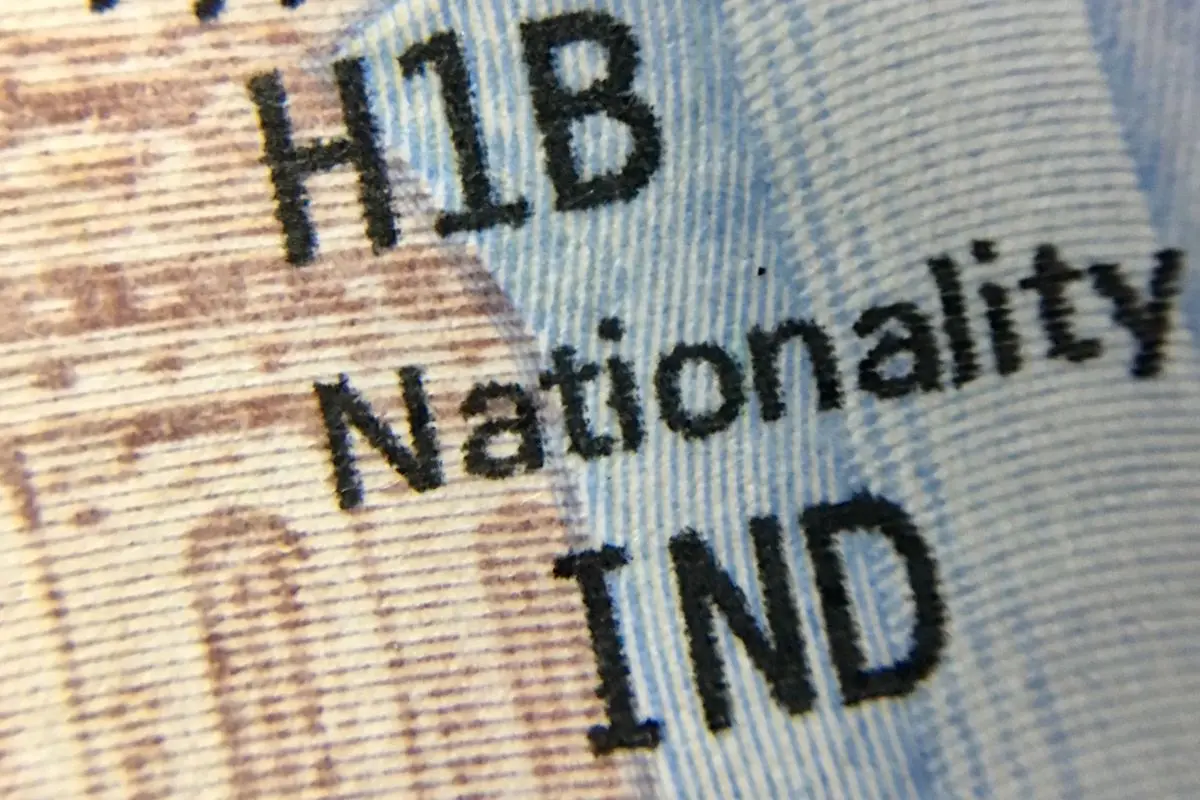
Washington: Prominent Indian diaspora organisations in the United States have strongly welcomed a federal court order invalidating a massive $100,000 fee on H-1B visa applications. Advocacy groups hailed the judicial intervention as a vital move that restores equity, predictability and fairness to the American employment-based immigration framework.
On Monday, a federal judge in Massachusetts ruled that the exorbitant $100,000 tariff—which was unilaterally enacted by US President Donald Trump via a presidential proclamation in September last year—was entirely unlawful. The court observed that the executive branch had bypassed mandatory legislative protocols, enforcing the fee without securing the required approval from the US Congress.
The H-1B programme is a critical non-immigrant visa category that permits American enterprises to temporarily recruit highly specialised foreign professionals possessing deep technical or theoretical expertise. Silicon Valley and the broader US technology landscape rely heavily on this visa system to onboard tens of thousands of skilled workers annually, primarily drawing talent from India and China.
Safeguarding global talent and innovation
Reacting to the judicial victory, Khanderao Kand, Chief of Policy and Strategy at the Foundation for India and Indian Diaspora Studies (FIIDS), expressed strong support for the verdict, noting its relevance for American industrial growth.
"We welcome the Massachusetts federal court's decision striking down the USD 100,000 H-1B visa fee, which restores predictability and fairness to the employment-based immigration system," Kand stated. He emphasised that maintaining fluid access to elite global professionals remains foundational to preserving America's competitive edge in research, innovation and entrepreneurship across core sectors like healthcare, technology and advanced manufacturing.
Kand added that the court's intervention rightly "reinforces the principle that major policy changes must be grounded in statutory authority and economic realities”, reiterating that a balanced, merit-driven framework ultimately bolsters both American corporate interests and the wider economy.
Concerns linger over potential red tape
While the verdict marks an immediate triumph for applicants and tech firms, some community representatives urge caution regarding the administration's next steps.
Sanjeev Joshipura, the Executive Director of Indiaspora, noted that while the entire ecosystem of H-1B stakeholders will "heave a sigh of relief”, it remains to be seen whether this judicial strike down truly signals the end of the conflict. Given the ongoing institutional friction between the white house and the federal judiciary, Joshipura warned that the executive branch could pivot to alternative strategies.
"If the executive branch wishes to impose impediments on H-1B visa holders, as per the administration's stated policy preferences, then they might still be able to do so through procedural means that do not run afoul of US law," Joshipura cautioned, hinting at potential bureaucratic delays or stricter processing rules that could achieve similar restrictive outcomes without violating statutory boundaries.
The Indian footprint in high-skilled immigration
Indian professionals consistently comprise the overwhelming majority of H-1B beneficiaries, frequently drawing the world's finest technical brains into the US economic engine.
Under the existing limits mandated by the US Congress, the government caps standard annual allocations at 65,000 visas, alongside an additional exemption of 20,000 visas specifically set aside for foreign professionals who have completed post-graduate higher education at accredited American universities.
PTI