Bangladesh's loss, India's gain: Why Zara and H&M are shifting $254 million in orders
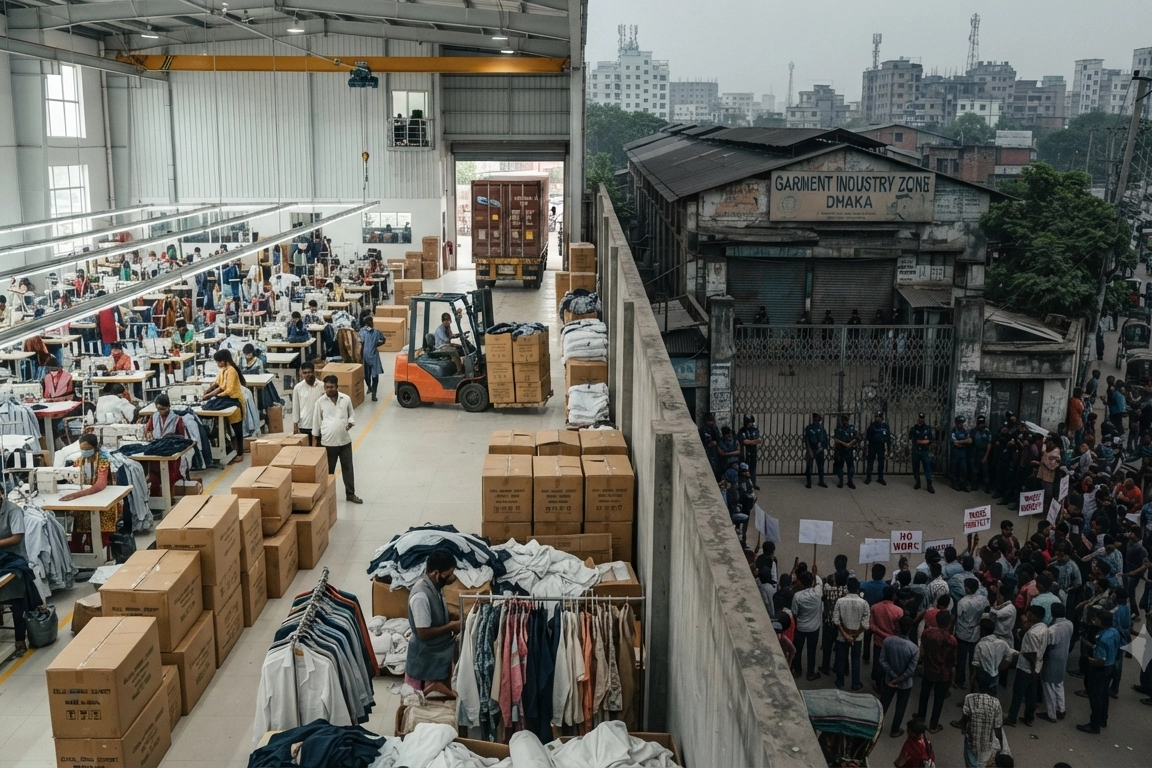
New Delhi: Global fashion brands, including Zara, H&M, Marks & Spencer and Celio, have shifted garment orders worth approximately $254 million (around Rs 2,350 crore) out of Bangladesh, with India emerging as the biggest beneficiary. The move follows weeks of labour unrest, rising manufacturing costs and operational disruptions that have raised concerns over the country's ability to meet international delivery commitments.
According to a Reuters report published on Friday, November 27, citing three Bangladeshi factory owners, the brands diverted orders worth $254 million between November 1 and 18. The amount represents nearly a tenth of Bangladesh's monthly garment orders.
Most of the diverted business has gone to India, while Vietnam, Cambodia and Indonesia have also secured additional orders as global retailers seek alternative manufacturing locations.
The development has highlighted the pressure on Bangladesh's ready-made garment (RMG) industry, a major contributor to its economy. The sector employs around four million workers, accounts for more than 80 per cent of the country's export earnings and contributes approximately 10 per cent of its GDP.
Bangladesh garment industry faces production losses
The shift in orders comes after weeks of protests by garment workers demanding higher minimum wages. Demonstrations began in the second half of October and escalated from October 31, with workers clashing with police, damaging factories, setting vehicles on fire and blocking major highways in and around Dhaka, Gazipur and Narayanganj.
The unrest forced hundreds of factories to suspend operations or declare holidays, disrupting production and affecting workers across major textile manufacturing centres.
According to the Bangladesh Garment Manufacturers and Exporters Association (BGMEA), production losses caused by the protests have exceeded $400 million, Reuters reported.
Manufacturers are also facing higher wages, utility expenses and raw-material costs. M Mohiuddin Chowdhury, a BGMEA director, told Reuters that delivery timelines had become an increasingly important consideration for international buyers.
He said competing manufacturing hubs such as India could typically complete production and delivery within 60 to 90 days, compared with approximately 120 days in Bangladesh.
Khan Monirul Alam, managing director of Alps Apparels Group, told Reuters that most of his buyers had stopped placing orders since November 1. Some orders had been shifted to other countries, while others were postponed or cancelled.
Why are garment workers protesting in Bangladesh?
The central demand behind the protests is an increase in minimum wages to keep pace with inflation and the rising cost of living.
Garment workers had initially demanded an increase in the minimum monthly wage from Tk 12,500 to Tk 30,000, arguing that their existing earnings were insufficient to cover essential expenses such as food, housing, transport and healthcare.
The previous minimum wage revision took place in December 2023, when the Sheikh Hasina government raised it from Tk 8,000 to Tk 12,500.
In January 2025, the interim administration led by Muhammad Yunus increased the annual wage increment for garment workers from 5 per cent to 9 per cent, without revising the basic minimum wage.
On November 1, the Bangladesh government constituted a six-member minimum wage board to examine the workers' demands. Following negotiations, the board approved a 36 per cent increase on November 25, raising the minimum monthly wage from Tk 12,500 to Tk 17,000.
However, the revised amount remained below the workers' original demand. Reuters reported that it was also the smallest percentage increase in four decades.
The announcement failed to end the unrest, with fresh clashes reported between workers and police. Authorities used tear gas and sound grenades to disperse protesters attempting to block highways in Gazipur.
Indian textile stocks gain after order diversion
The reported shift in garment orders triggered buying interest in Indian textile companies.
Gokaldas Exports shares rose as much as 11 per cent, while Trident gained around 5 per cent. Other companies, including Welspun Living, KPR Mill and Vardhman Textiles, recorded gains of approximately 2 per cent each, according to Reuters.
The market response reflects expectations that Indian manufacturers could secure a larger share of international orders if brands continue diversifying their sourcing away from Bangladesh.
However, the reported order transfers do not necessarily indicate permanent shifts in manufacturing arrangements. Their long-term impact will depend on whether Bangladesh can restore factory operations and regain the confidence of international buyers.
Can India turn Bangladesh's garment crisis into a long-term opportunity?
Bangladesh has built a major position in global apparel manufacturing through its large workforce, established factory network and export-oriented production ecosystem. The current labour unrest and delivery disruptions have exposed vulnerabilities in that model, creating an opportunity for competing manufacturing hubs.
India has several advantages, including an established textile industry, a large domestic raw-material base and manufacturing capacity across multiple states. The reported delivery timelines of 60 to 90 days, compared with around 120 days in Bangladesh, could also make Indian suppliers attractive to brands facing tight retail schedules.
However, securing diverted orders is different from retaining them over the long term. Indian manufacturers will need to demonstrate consistent quality, competitive pricing, reliable delivery schedules and the capacity to handle large international orders.
For Bangladesh, the stakes are significant. Garments account for more than 80 per cent of its export earnings, making prolonged production disruptions a threat to employment, foreign exchange earnings and economic stability.
The immediate challenge for the country is to resolve the wage dispute, restore factory operations and reassure global retailers that their orders can be delivered on time. If instability continues, temporary order diversions could turn into longer-term sourcing decisions.