Once a flying office for Angela Merkel, this aircraft cabin is coming home to Germany
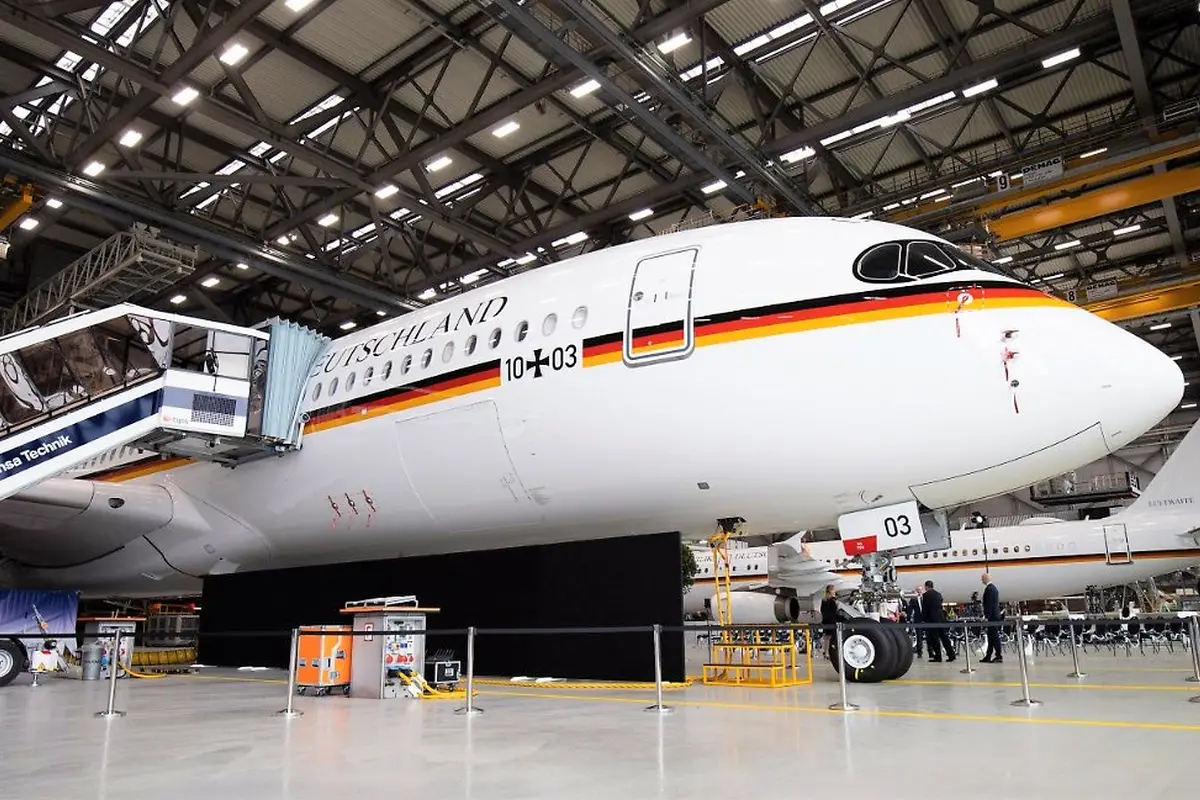
There was a time when this cabin travelled thousands of feet above the ground, carrying German leaders across countries and continents. Inside, important meetings took place, discussions continued while the aircraft was in the air, and decisions were considered far away from government offices on the ground.
Now, the aircraft no longer flies. But a part of its story is getting ready for a new journey.
A cabin from Germany’s former government Airbus A340, known as Konrad Adenauer, is being brought back to Berlin from Spain. The space, associated with the era of former German Chancellor Angela Merkel, will be preserved for public display at a military history museum.
It is a journey that takes a piece of aviation history back home and gives people a chance to step into a small but significant part of Germany’s past.
A room in the sky where history unfolded
The Airbus A340, formerly registered as 16+01, served as one of Germany’s government aircraft. Its specially designed interior included two conference rooms and a private office. These were not ordinary rooms. They were places where government work continued even while the aircraft was thousands of feet above the earth. Important meetings on the international political stage took place inside the cabin.
Created by specialists in VIP aircraft interiors in the late 2000s, the cabin was designed to meet the needs of senior government leaders travelling on official duties. For people looking back today, it offers a glimpse of a world that most passengers never get to see, the private spaces inside an official aircraft, where diplomacy and the business of government continued between destinations.
Over the years, the aircraft became associated with Germany’s leadership, including the time when Angela Merkel was Chancellor. Now, long after its flying days have ended, the cabin is set to tell its story in a very different way.
Saved from the end of an aircraft’s life
The cabin could easily have disappeared when the aircraft was dismantled. The A340 underwent a professional recycling process in Teruel, Spain. During this work, TARMAC Aerosave, the company handling the process, salvaged a large section of the aircraft’s forward fuselage.
That section contains the historic cabin, making it possible to preserve the space for the future.
It is a reminder that when an aircraft reaches the end of its working life, not everything connected with it has to disappear. An airframe may be dismantled and its materials recycled, but certain parts can hold memories and historical value that go far beyond their original purpose. For this aircraft, the saved cabin will allow visitors to see a part of Germany’s recent history up close.
A long journey back to Berlin
The journey home is almost as unusual as the story of the cabin itself.
The exhibit has begun a journey of around 2,500 kilometres from Spain to Berlin. It will travel by road, cross the sea and then continue by river vessel before reaching the German capital.
Moving a large section of an aircraft is no simple task. It requires careful planning and coordination across different modes of transport. Yet, this time, the journey is not about taking an aircraft to another airport or preparing it for another flight. It is about bringing a piece of the past to a new home.
Once it reaches Berlin, the cabin will be stored until it is ready to become part of the Military History Museum of the German Armed Forces at Berlin-Gatow Airfield.
The planned display is expected to give visitors a sense of the political and parliamentary work that took place inside the aircraft. Details of when the exhibit will open to the public have not yet been announced.
When an aircraft becomes a memory
Aircraft are built to fly. They carry people to new places, connect countries and bring families, colleagues and leaders together. But every aircraft eventually reaches a day when its journeys come to an end.
For most, that is when their story slowly fades from public memory. For a few, however, something remains, a special cabin, a familiar name or a space that witnessed moments worth remembering.
The Konrad Adenauer cabin is one such survivor. For aviation enthusiasts, it will offer a rare look inside a former government aircraft. For others, it may bring back memories of a period in European politics when Angela Merkel was one of the world's most recognisable leaders.
And for younger visitors, it will offer a chance to imagine what it was like to work and hold important meetings aboard an aircraft travelling between countries. Soon, the cabin will no longer cross the skies. Instead, it will stand still, allowing visitors to walk around it and reflect on the stories it carries.
Sometimes, preserving history does not mean saving an entire aircraft. Sometimes, it means saving one room, a room that once travelled the world, witnessed important conversations and now has one final journey to make. This time, its destination is not another country or capital. It is the past, brought back to life for the generations to come.