‘Next-gen GST reforms will set economy open and transparent’: Nirmala Sitharaman
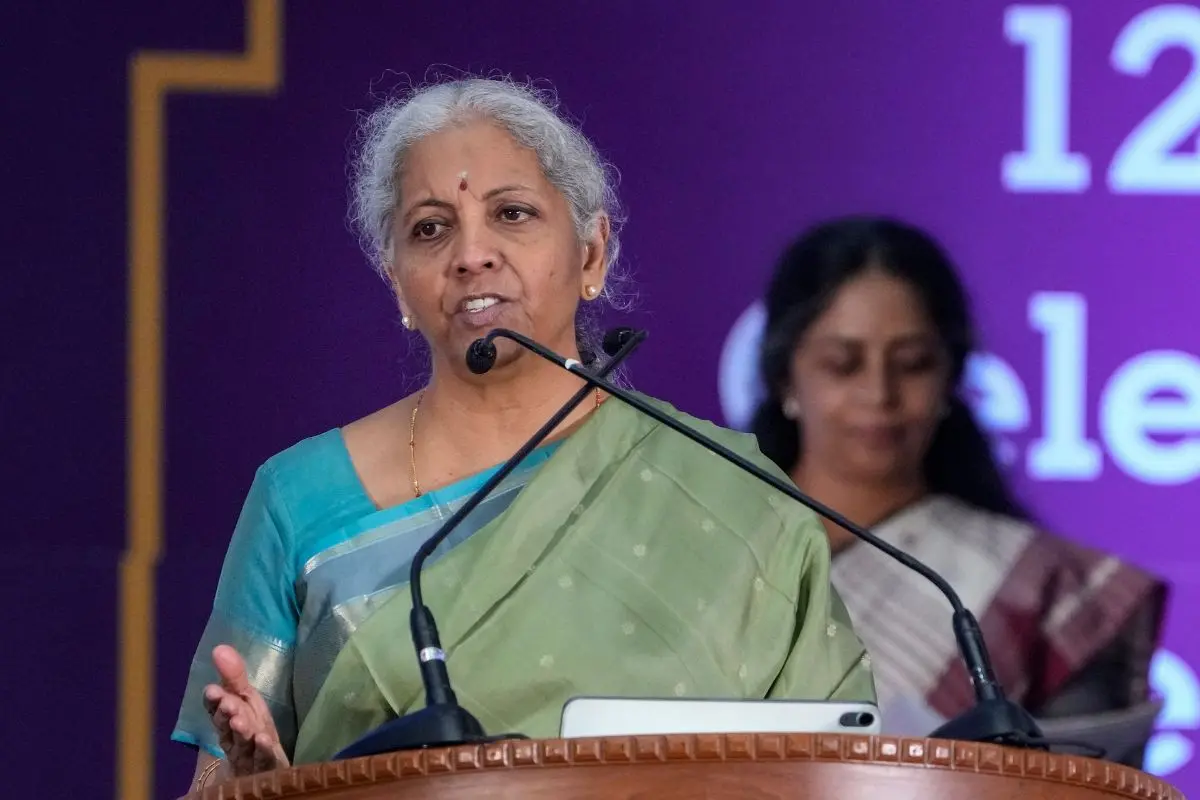
Chennai: The upcoming wave of Goods and Services Tax (GST) reforms will pave the way for a more open, transparent, and business-friendly economy, Union Finance Minister Nirmala Sitharaman said on Tuesday. She was speaking at the 120th Foundation Day celebration of Tamil Nadu-based City Union Bank, where President Droupadi Murmu was the chief guest.
Sitharaman said the next-generation GST reforms, to be discussed at the upcoming GST Council meetings, aim to significantly reduce compliance burdens, particularly for small businesses. The reforms, she said, would "absolutely" create an economy that is simpler, more transparent, and conducive to entrepreneurial growth.
GST reform task force in focus
She highlighted Prime Minister Narendra Modi’s announcement of a Task Force for next-generation reforms, with a clear mandate to simplify regulations, cut compliance costs, and foster an enabling environment for startups, MSMEs, and entrepreneurs.
“The planned rollout of the next-generation GST reforms… will set an economy absolutely open and transparent in the coming months, with further reduction in compliance burden, making it easier for small businesses to thrive,” she said.
The remarks come weeks after the Prime Minister’s Independence Day address, where he promised major GST reform and a “Diwali bonanza” for citizens.
Banking sector: Backbone of ‘Viksit Bharat 2047’
The Finance Minister underlined the critical role of India’s banking sector in realising the ‘Viksit Bharat 2047’ vision. She urged banks to expand credit, finance infrastructure development, and support MSMEs and the unbanked.
“The guiding principles for this transformation must be Trust, Technology and Transparency,” she stated.
She lauded the opening of over 56 crore Jan Dhan accounts, with deposits totalling ₹2.68 lakh crore—most held by women—saying it had significantly boosted financial inclusion.
Record gains in banking health
Sitharaman also cited a sharp improvement in asset quality among scheduled commercial banks. Gross NPAs have fallen to 2.3%, and net NPAs to 0.5% as of March 2025.
“For our banks to achieve this during such challenging times is phenomenal,” she said, adding that capital levels remain above regulatory minimums even under “adverse stress scenarios.”
This financial stability, she said, will translate into cheaper, steadier credit for households, MSMEs and infrastructure, and continued global confidence in India’s banking system.
Strong economic indicators
India’s economy remains robust, Sitharaman added, with GDP growth at 7.8% in Q1 FY2025–26, exceeding all estimates. Inflation has been declining for nine consecutive months, reaching an eight-year low of 1.55% in July 2025.
The EPFO saw a net addition of 22 lakh members in June, the second month of record-breaking employment numbers.
‘Bank Account is a passport to opportunity’
Quoting a study by IIM-Bangalore, the minister noted the critical role played by PM Jan Dhan Yojana accounts in protecting household savings, particularly during the COVID-19 pandemic.
“A bank account is not just a passbook—it is a passport to opportunities,” she remarked.
The City Union Bank, she noted, has lived up to its mission of grassroots financial inclusion by supporting MSMEs, farmers, and small traders through focused lending.