Kerala govt to study Unified Pension Scheme
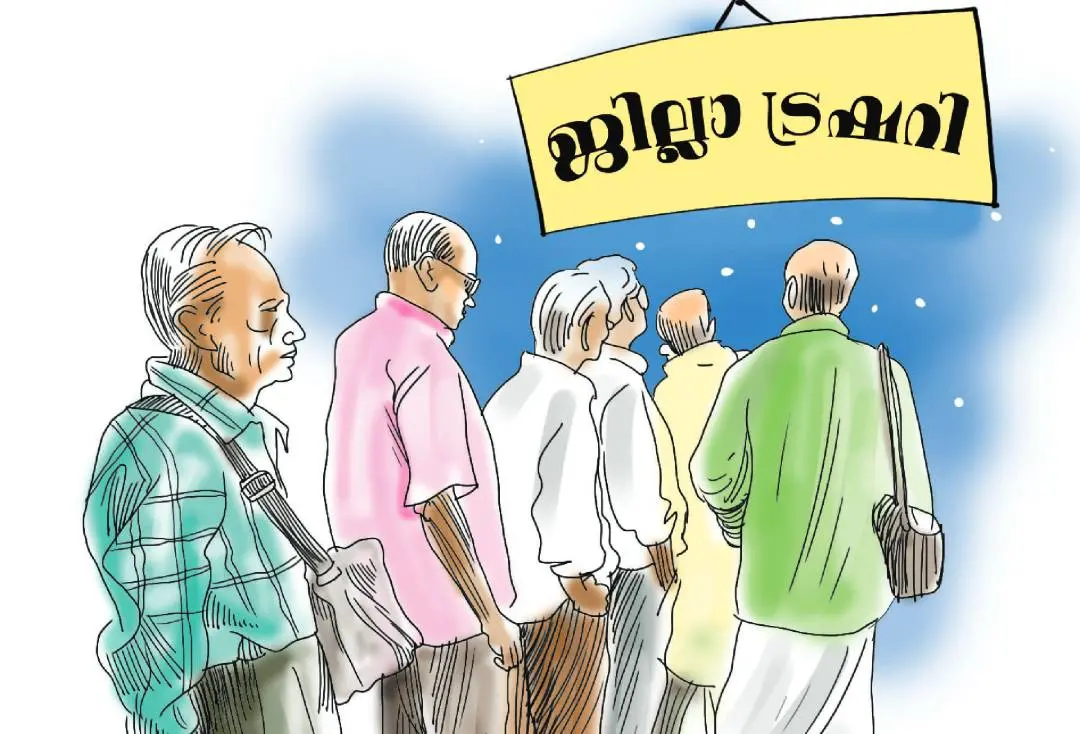
Thiruvananthapuram: Employees are eagerly awaiting the Kerala government's stand on the Unified Pension Scheme (UPS) announced by the Centre, following the state's decision to withdraw from the National Pension System (NPS). However, the state government's stand is that they will examine the UPS before making any decisions.
Although the withdrawal of NPS was announced months ago, the high-level committee appointed to review the UPS is yet to convene. This committee includes the Finance and Law Ministers, as well as the Chief Secretary. The committee's task is to evaluate whether adopting the UPS would be feasible. Government sources indicate that an officer-level committee will soon be formed for a preliminary assessment. Finance Minister KN Balagopal has stated that he will review the UPS details as soon as they are available to determine the appropriate course of action.
Adopting UPS could significantly increase the state government's financial obligations. Under the UPS, the central government contributes 18.5% to its employees, compared to the 14% under NPS.
In the case of Kerala, the govt only contributes 10% to NPS in the state. The state has previously resisted increasing its contribution from 10% to 14%, citing financial constraints. An increase to 18.5% would impose an even greater financial burden, potentially making it difficult to ensure the pension benefits promised by the scheme.
Despite this, UPS is considered an improvement over NPS. It guarantees a pension equivalent to 50% of the retirement salary, which provides more stability compared to NPS, where the pension amount is not fixed and is subject to market fluctuations. The UPS also offers several advantages over the NPS and statutory pension schemes, such as a higher minimum pension and family pension benefits.
Comparison of Pension Schemes:
Statutory Pension
- Employee Contribution: None
- Pension: 50% of the average salary over the last 10 months
- Minimum Pension: Rs 11,500
- Family Pension: 50%
- Commutation: Available
- Gratuity: Entitled
- Retirement Age: 56 years
National Pension Scheme (NPS)
- Employee Contribution: 10%
- Government Contribution: 10%
- Pension: No guaranteed fixed amount
- Minimum Pension: None
- Family Pension: None
- Commutation: Not available
- Gratuity: Not available
- Retirement Age: 60 years
Unified Pension Scheme (UPS)
- Employee Contribution: 10%
- Government Contribution: 18.5%
- Pension: 50% of the average salary over the last 12 months
- Minimum Pension: Rs 10,000
- Family Pension: 60%
- Commutation: Not available
- Gratuity: Entitled
- Retirement Age: 60 years