Middle East war triggers electric motorbike boom across Africa
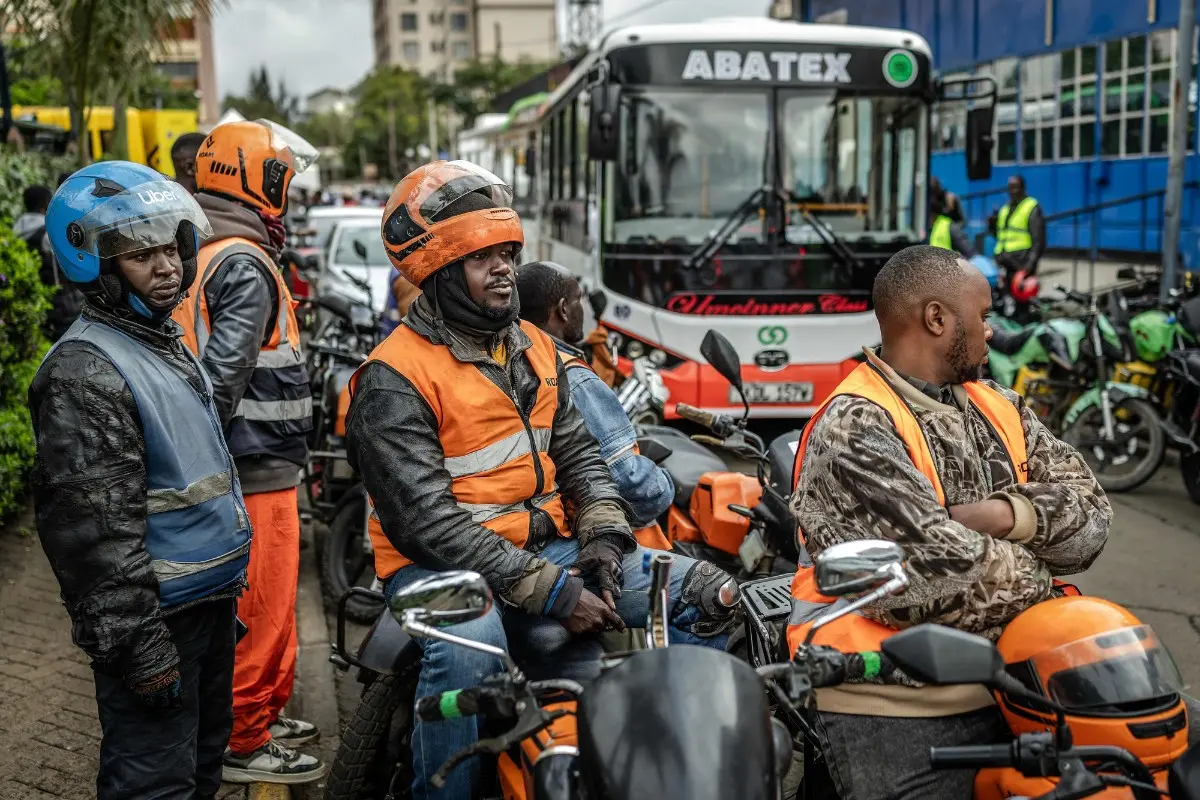
Nairobi: The familiar growl of petrol-powered motorbikes is increasingly being replaced by the quieter hum of electric two-wheelers in streets here, as rising fuel costs drive a major shift in how people move around the Kenyan capital.
An unexpected factor is helping speed up the transition. The conflict in the Middle East, which began with military action by the United States and Israel in February, has pushed up fuel prices globally, encouraging more riders in fuel-import-dependent countries such as Kenya to switch to electric vehicles.
For many Kenyans, the decision is less about environmental concerns and more about economics.
Boda-Bodas keep Kenya moving
Motorbikes, locally known as "boda-bodas", are an essential part of daily life and business in Kenya. They transport passengers, deliver groceries, carry furniture and provide employment for thousands of people.
Among them is Wisly Onyaiti, a bike taxi rider who uses his earnings to support his studies in criminology and digital marketing.
After switching to an electric motorbike, Onyaiti says his operating costs have fallen dramatically.
According to him, running an electric bike costs roughly 2,000 Kenyan shillings, or about $15, less per day than a petrol-powered vehicle. In a country where many workers earn around $100 a month, those savings can make a significant difference.
"Electric bikes are a game-changer," Onyaiti said.
Fuel price surge drives demand
The financial advantages have become even more noticeable since the outbreak of the Middle East conflict.
Fuel prices in Kenya have risen by about 22 per cent, making petrol-powered transport increasingly expensive and prompting more riders to explore electric alternatives.
The impact has been visible in sales figures. According to the E-Mobility Association of Kenya, electric motorbike sales have risen by around 40 per cent over the past three months.
Several companies are now competing for a share of the rapidly growing market, including ArcRide, Ampersand and Roam.
Spiro leads the market
Among the various players, African startup Spiro has established itself as the dominant force in Kenya's electric motorbike sector, accounting for roughly 90 per cent of sales.
At the company's assembly facility on the outskirts of Nairobi, workers produce hundreds of bikes each day. When operating at full capacity, the factory can manufacture more than 400 motorbikes daily.
Since entering the Kenyan market in September 2023, Spiro has recorded rapid growth. The company says sales climbed from 4,000 units in 2024 to 14,000 the following year.
Its target for 2026 is even more ambitious, with plans to sell 50,000 bikes.
"Growth has been tremendous, quite exponential," said Raymond Kitunga, the company's second-in-command.
Beyond Kenya, Spiro also operates in Uganda, Rwanda, Benin, Togo, Nigeria and Cameroon. The company estimates that about 100,000 of its electric motorbikes are currently in use across Africa and hopes to triple that number before the end of the year.
Government policies support growth
The growth of electric mobility is also being supported by policy changes in several African countries.
Rwanda has prohibited traditional motorcycles in parts of its capital, while Uganda is actively promoting a large-scale transition to electric two-wheelers.
According to Spiro, those two countries alone could represent a market of approximately 1.5 million potential customers.
Why Africa's transition is happening faster
Industry experts say Africa's move towards electric motorbikes is progressing more quickly than similar transitions in many Western countries.
Hezbon Muse, Kenya director for Ampersand, believes this is because motorbikes in Africa are primarily used for work rather than recreation.
For commercial riders who depend on their vehicles to earn a living, lower operating costs can have an immediate impact on household income.
In developing economies where fuel expenses account for a large share of daily costs, even modest savings can be significant.
Battery swapping makes electric bikes affordable
Another factor helping drive adoption is the cost structure.
Entry-level electric motorbikes can be purchased for around $750 because buyers do not need to purchase the battery itself. Instead, batteries are rented and exchanged at dedicated swapping stations located across urban areas.
At one Ampersand battery-swapping station in Nairobi, replacing a depleted battery takes less than two minutes.
A fully charged battery can travel approximately 80 kilometres, or 50 miles, and costs about 265 shillings, roughly half the cost of covering the same distance using petrol.
Challenges remain despite growth
While demand is rising, manufacturers still face challenges.
Many components used in electric motorbikes are imported from China, and the Middle East conflict has pushed up supply costs. Currency fluctuations have also complicated business operations.
Joe Croft, founder of ArcRide, said Chinese suppliers are increasingly requesting payments in yuan rather than US dollars due to currency volatility.
However, he believes these difficulties are outweighed by the savings riders enjoy as petrol prices continue to climb.
Croft argued that higher fuel costs resulting from the conflict have made electric vehicles significantly more attractive to consumers.
"The surprising conclusion is that Trump has made EVs much more attractive while making sure that market is not conducted in dollars," he said.
Green energy adds another advantage
Environmental benefits are also playing a role in Kenya's transition.
Around 93 per cent of the country's electricity comes from renewable sources, including geothermal, hydroelectric, solar and wind energy.
As a result, electric vehicles in Kenya offer a cleaner alternative not only because they reduce fuel consumption but also because they are powered largely by renewable energy.
Looking ahead, industry leaders believe Africa's experience could become a model for other parts of the world.
"The world will learn from Africa," said Spiro's Kitunga.
Agency inputs