Indian rupee falls 41 paise to 91.99 as geopolitical risks weigh on markets
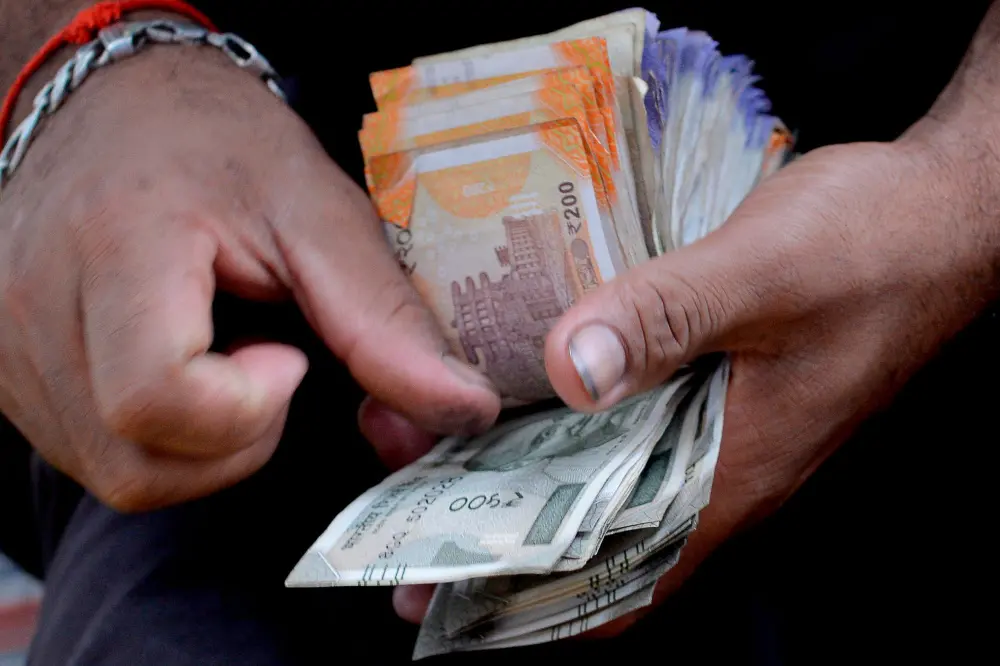
Mumbai: The Indian rupee plunged 41 paise to a fresh record low of 91.99 against the US dollar in intraday trade on Friday, weighed down by persistent foreign fund outflows and a volatile geopolitical environment.
Forex traders noted that intervention by the Reserve Bank of India (RBI) has helped smooth market volatility, but has not reversed the overall downward trend for the domestic currency. The pending India-US trade agreement remains a key stabilising factor, and until clarity emerges, the rupee is expected to remain vulnerable to external shocks.
The currency opened at 91.45 against the dollar and initially climbed to 91.41, but selling pressure soon returned, pushing it to the record low of 91.99. On Thursday, the rupee had rebounded 7 paise to 91.58, recovering slightly from all-time lows.
Meanwhile, the dollar index, which measures the greenback’s strength against six major currencies, rose 0.03 per cent to 98.38. Brent crude traded higher by 1.09 per cent at USD 64.76 per barrel in futures markets.
Domestic equities also came under pressure, with the Sensex falling 797.94 points to 81,509.43 and the Nifty dropping 240.55 points to 25,049.35. Foreign institutional investors offloaded equities worth ₹2,549.80 crore on Thursday, according to exchange data.
Bankers reported that renewed dollar demand from importers through private banks added to the rupee’s weakness. A currency trader noted, “It looks like the opening flow was limited; once it passed, USD/INR was back to being bid.” A swap trader at a state-run bank added, “When the RBI isn’t around, the premiums naturally drift higher.”
The RBI’s holdings of US Treasury bonds have fallen to a five-year low of USD 174 billion, down 26 per cent from the 2023 peak, as India seeks to defend the rupee and diversify its forex reserves. By selling these holdings, the RBI can use the funds to buy rupees and support its value.
The local currency has also faced pressure from delays in the India-US trade deal, after Washington imposed 50 per cent tariffs on certain Indian exports, the steepest in Asia.
The Indian rupee’s decline reflects a combination of domestic and international pressures, including sustained outflows by foreign institutional investors and heightened geopolitical risks. Despite temporary gains earlier in the week, the rupee’s trajectory remains negative.
The RBI continues to intervene selectively in the forex market to manage volatility, using its reduced US Treasury holdings to buy rupees when needed. However, analysts warn that until the US-India trade agreement progresses and external uncertainties ease, the rupee is likely to face continued downward pressure.
Equity markets mirrored investor caution, with significant declines in Sensex and Nifty, indicating that foreign investors are actively adjusting portfolios in response to both currency volatility and broader global market concerns.
(With PTI inputs)