Can India meet its 2027 Sustainable Aviation Fuel target without raising airfares?
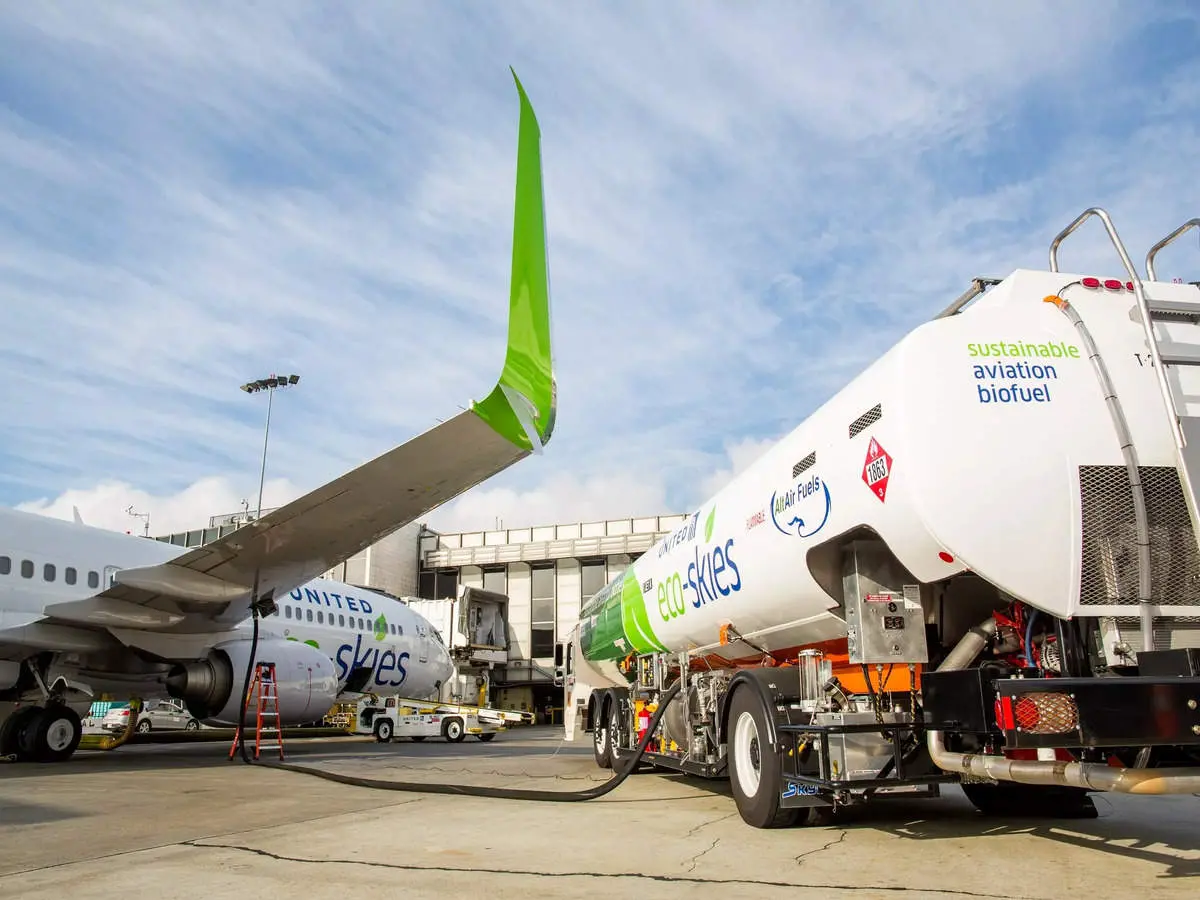
India has begun accelerating its plans to introduce Sustainable Aviation Fuel (SAF) as the country prepares to comply with the International Civil Aviation Organization's (ICAO) Carbon Offsetting and Reduction Scheme for International Aviation (CORSIA). With the mandatory phase of CORSIA set to begin on January 1, 2027, the government is racing against time to build the policy framework, production ecosystem and supply chain needed to meet its commitments.
At a high-level review meeting chaired by Union Civil Aviation Minister K. Rammohan Naidu, officials from multiple ministries, airlines, oil companies, airport operators and regulators assessed India's preparedness for SAF adoption and carbon reduction targets.
While the government remains optimistic, the bigger question remains: Is India truly ready for Sustainable Aviation Fuel?
What is SAF and why does it matter?
Sustainable Aviation Fuel is an alternative to conventional Aviation Turbine Fuel (ATF). It is produced from renewable feedstocks such as agricultural waste, used cooking oil, municipal waste and biomass instead of crude oil.
Unlike conventional jet fuel, SAF can significantly reduce lifecycle carbon emissions while being compatible with existing aircraft engines and airport fuel infrastructure. This makes it one of the aviation industry's most practical tools for reducing emissions without redesigning aircraft.
Globally, airlines are increasingly adopting SAF as governments tighten environmental regulations and investors demand cleaner operations. For India, however, SAF is not just about reducing emissions, it is also about remaining competitive in the global aviation market.
India's CORSIA commitment
India has committed to introducing SAF blending for international flights under ICAO's CORSIA framework.
The targets are 1% SAF blending by 2027, 2% blending by 2028 and 5% blending by 2030
To achieve these milestones, the government is preparing a comprehensive SAF policy covering production, transportation, airport infrastructure, certification, carbon accounting and monitoring mechanisms. According to Minister Naidu, the draft policy is now in its final stages following consultations with various ministries and industry stakeholders.
The government is confident, but challenges remain
Speaking after the review meeting, Naidu said India is committed to creating a globally competitive SAF ecosystem. He said the objective is not merely to comply with international regulations but also to create economic opportunities across the value chain, including for farmers and domestic fuel producers.
The minister also highlighted India's progress in aviation sustainability, pointing out that while no airport operated entirely on green energy in 2014, today more than 100 airports are powered by 100% green energy. Oil Marketing Companies (OMCs), including Indian Oil, Bharat Petroleum and Hindustan Petroleum, are also developing domestic SAF production facilities. On paper, these developments indicate encouraging progress.
However, building a successful SAF ecosystem involves much more than producing fuel.
Is India really prepared?
The answer is partly yes, but significant work remains. India has made progress in policy discussions and refinery planning. Multiple stakeholders are now working together, and domestic SAF production projects are underway.
However, several critical pieces of the puzzle are still under development.
First and foremost, India needs large-scale commercial SAF production, reliable feedstock availability throughout the year, airport storage and fuel blending infrastructure, efficient transportation and distribution networks, national SAF registry with end-to-end traceability, carbon accounting systems aligned with ICAO requirements and clear certification standards and regulatory approvals.
Most importantly, all these elements must be operational before January 2027.
Meeting the deadline will require close coordination between ministries, regulators, airports, fuel suppliers and airlines.
The biggest hurdle is cost not production
Interestingly, Minister Naidu acknowledged that production may not be India's biggest challenge. Instead, the real concern is economics. Today, SAF costs considerably more than conventional Aviation Turbine Fuel. Globally, SAF prices are estimated to be two to four times higher than traditional jet fuel, depending on the production pathway and feedstock availability.
Since fuel accounts for nearly 35-40% of an airline's operating costs, even a small increase in fuel prices can affect airline profitability. This is why the government says it wants to identify the "most cost-effective pathway" from production to airport delivery.
Will airlines have to absorb the additional cost?
This is perhaps the biggest question facing India's aviation industry. Initially, airlines may absorb part of the additional fuel costs to remain competitive. However, if SAF prices remain significantly higher than conventional ATF, airlines may eventually have little choice but to pass at least some of the additional cost on to passengers.
The extent of any fare increase will depend on several factors like future SAF production costs, government initiatives, scale of production, global crude oil price and competition between airlines. If domestic production expands rapidly, costs are expected to reduce over time.
Will air travel remain affordable?
The concern among travellers is understandable. India has witnessed remarkable growth in aviation largely because flying has become affordable for millions of middle-class passengers. Budget airlines have transformed air travel from a luxury into an everyday mode of transport. Industry experts believe that a 1% SAF blending mandate alone is unlikely to cause a major jump in ticket prices.
However, as blending requirements increase to 2% and eventually 5%, airlines may face higher operating costs unless SAF production becomes cheaper. This makes affordability one of the most important issues policymakers will have to balance over the next decade. The government's emphasis on developing domestic production is aimed precisely at avoiding sharp increases in aviation costs.
Can India turn SAF into an economic opportunity?
Beyond environmental benefits, SAF could become an important industrial opportunity for India. The country produces large quantities of agricultural residue, biomass and other renewable feedstocks that could support SAF manufacturing.
A strong domestic SAF industry could create new revenue streams for farmers, encourage investments in clean energy, reduce dependence on imported fossil fuels and position India as a regional supplier of sustainable aviation fuel.
If supported by favourable policies and investment, SAF could become another pillar of India's growing aviation ecosystem.
The government's review meeting signals that India recognises the urgency of preparing for the mandatory CORSIA phase beginning in 2027. The draft SAF policy is expected to provide clear guidelines on airport infrastructure, production responsibilities, transportation, carbon accounting and stakeholder obligations. Yet policy alone will not guarantee success.
India must now move quickly from planning to execution. Scaling production, reducing costs, building supply chains and ensuring fuel availability at airports will determine whether the country can meet its international commitments without placing additional financial pressure on airlines and passengers.
The transition to Sustainable Aviation Fuel is far from a distant environmental ambition, it is more of a business necessity but the real challenge is ensuring that India's journey towards cleaner skies does not come at the cost of affordable air travel. For now, the government appears committed to striking that balance.
Whether India can achieve it will become clearer over the next 18 months as the country's SAF ecosystem moves from policy to practice.