Explainer | Here’s what will change for taxpayers with the new income tax bill
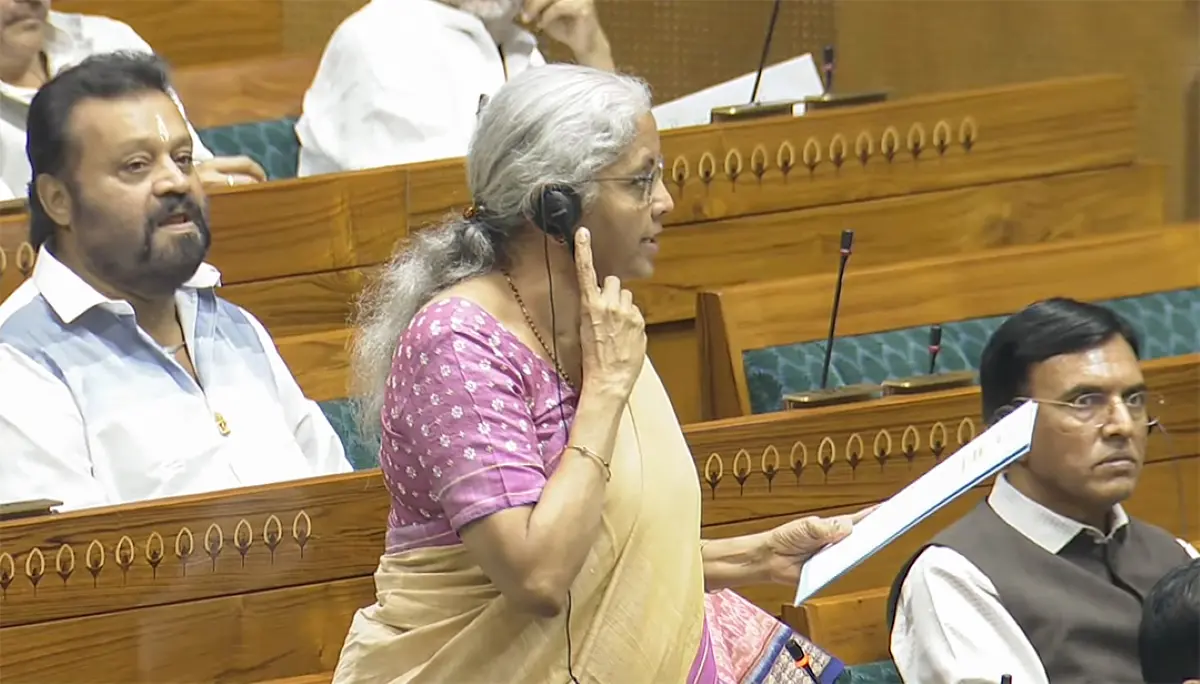
The Lok Sabha on Monday passed the Income Tax Bill, 2025, a landmark move aimed at replacing India’s six-decade-old direct tax framework. The government says the new law balances investor confidence, taxpayer relief, and administrative efficiency.
Once enacted, it will formally replace the 63-year-old Income Tax Act, 1961, bringing in a modernised legal framework to reflect evolving economic realities.
Finance Minister Nirmala Sitharaman tabled the revised bill after the earlier draft presented on 13 February 2025 was withdrawn on 8 August to avoid confusion from multiple versions. This latest bill consolidates all approved changes into a single, updated text.
Why was the earlier draft withdrawn?
The February draft had been sent to a Parliamentary Select Committee, chaired by BJP MP Baijayant Panda, for review. The committee submitted its report on 21 July after examining the provisions in detail. Its focus: simplifying the language, removing redundancies, and improving procedural clarity.
The revised bill now includes most of the 285 recommendations from the panel, covering drafting refinements such as phrase alignment, consequential amendments, and corrections in cross-references.
What are the key changes in the Income Tax Bill, 2025?
The bill introduces several notable provisions:
- Deductions under Section 80M of the 1961 Act (Clause 148 of the IT Bill, 2025) will now also be available to companies opting for the new regime.
- Commuted pension and gratuity deductions for family members will be provided under Clause 93.
- MAT (Minimum Alternate Tax) and AMT (Alternate Minimum Tax) have been separated into two sub-sections under Section 206.
- AMT provisions will apply only to non-corporates claiming deductions. LLPs with only capital gains income will not be liable for AMT if no deductions are claimed.
- The term "profession" has been added after "business" in Clause 187, enabling professionals with receipts over ₹50 crore a year to use prescribed electronic payment modes.
- Flexibility for refund claims has been introduced, even if the return is not filed on time, with the removal of Clause 263(1)(ix).
- Rules on carry forward and set off of losses have been re-drafted for clarity, without changing their intent.
- The concept of receipt has been replaced with the concept of income, as in the existing Act.
- Use of capital gains for buying a new capital asset will count as application of income for registered non-profits, as before.
- If regular income falls short of 85% due to late or non-receipt, the assessee can opt to treat it as application of income in the year it is actually derived.
- Rules on taxing anonymous donations have been aligned with existing provisions, with exemptions extended to mixed-object registered non-profits.
- Mixed-object registered non-profit organisation has been clearly defined.
- The requirement to invest or deposit 15% of deemed accumulated income in specified modes has been removed.
- TDS correction statements can now be filed within two years instead of six, which is expected to cut grievances substantially.
- Amendments from the Finance Act, 2025 and the Taxation Laws (Amendment) Bill, 2025 are now part of the new Bill
When will the new law come into effect?
The law will be effective from 1 April 2026 and will replace the Income Tax Act, 1961, which has been in place since 1 April 1962.
How has tax administration changed since 2014?
According to the government, the new law reflects major reforms made over the past decade, including changes in corporate tax, personal income tax, capital gains taxation, and the merging of two trust regimes.
Tax administration reforms include:
- Annual Information System with verified third-party data to pre-fill returns.
- Centralised processing of returns, reducing average processing time by 90% (to about 10 days) and enabling faster refunds.
- Faceless assessments and appeals, ensuring impartiality by eliminating physical interface and geographical limits.
What about reducing litigation?
Measures to curb disputes include:
- The Vivad se Vishwas schemes in 2020 and 2024 to settle old tax cases.
- Higher thresholds for the tax department to file appeals at various forums.
How has tax policy been reformed?
Key policy changes include:
- Corporate tax rate of 22% for companies not claiming specific deductions, and 15% for new manufacturing companies for a limited time.
- New tax regime for individuals with liberal slabs, lower rates, and higher rebates, meaning no tax for incomes up to ₹12 lakh.
- Expanded presumptive tax provisions for non-residents, now covering cruise shipping, raw diamonds, and services or technology for electronics manufacturing.
What steps have been taken to promote voluntary compliance?
The bill enables:
- Updated returns to be filed up to four years from the end of the assessment year.
- Reduced reassessment window from six years to five years.
- Rationalised rules for search case assessments.
What’s new for trusts and capital gains taxation?
- Two separate trust regimes have been merged, offering relief to non-profits.
- Capital gains tax has been overhauled with no indexation, reduced rates, and a simplified holding period framework.