Did PM Modi's appeal really bring down gold prices? Here's what the data shows
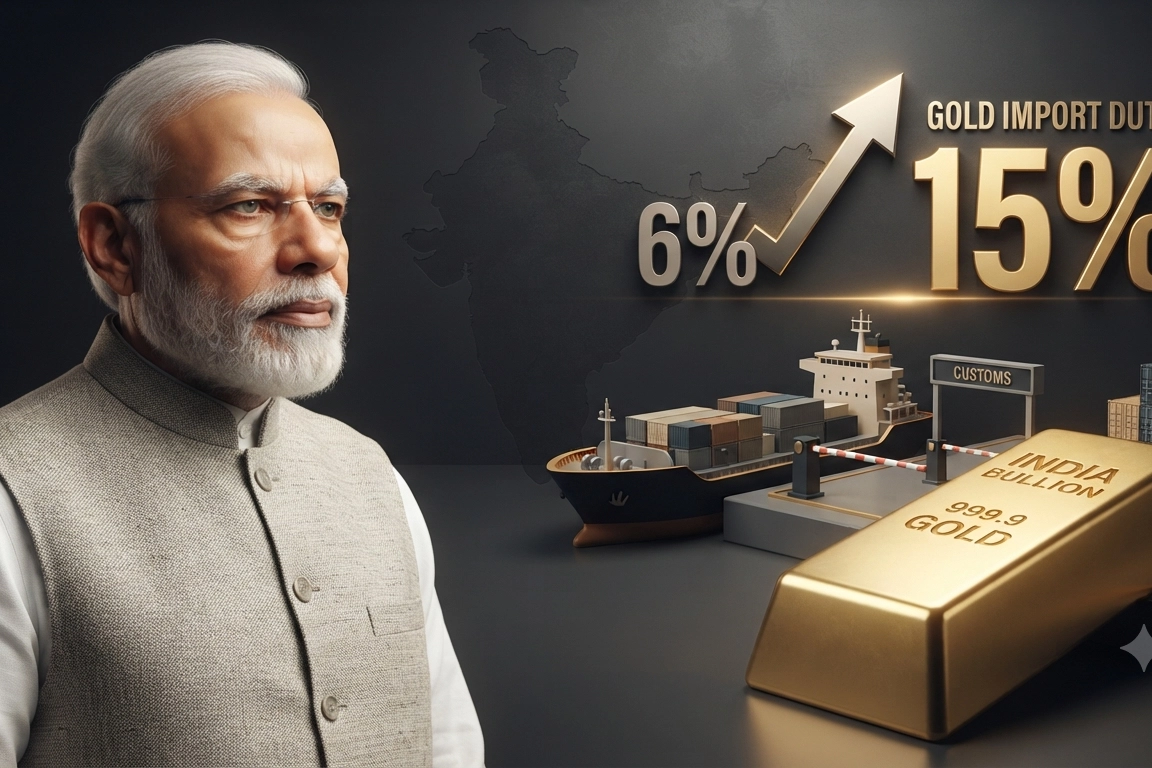
Mumbai: Prime Minister Narendra Modi has credited Indians with helping bring down gold prices after they responded to his appeal to avoid non-essential purchases of the precious metal for a year. However, the fall in prices has also coincided with changes in international markets and an increase in India's gold import duty.
Speaking at the fifth Kaushal Deekshant Samaroh in Lucknow on November 21, Modi recalled his appeal and compared the public response to former Prime Minister Lal Bahadur Shastri's call to skip one meal during the 1965 food shortage.
Modi said people had bought less gold after his request and had consequently saved money as prices declined. He cited the fall in the 24-carat gold rate from Rs 15,250 per gram on May 9 to Rs 12,523 per gram on November 21.
The Prime Minister had made the appeal on May 10, 2026, amid concerns over rising crude oil prices and pressure on India's foreign exchange reserves following the conflict in West Asia. He urged people to avoid buying gold unless necessary for a year.
While gold prices have fallen significantly since January, the decline cannot be attributed to the appeal alone. International market conditions, higher import duties and changes in consumer demand have also played a role.
How much have gold prices fallen?
Gold prices have witnessed a sharp correction after reaching record levels in January 2026.
International gold prices fell to around US3,830 per ounce on November 16,marking a decline of approximately 31.5% from the January record of US5,594.82 per ounce, according to Reuters.
In the domestic market, the 24-carat gold rate cited by Modi fell from Rs 15,250 per gram on May 9 to Rs 12,523 per gram on November 21. This represents a decline of around 17.9% over that period.
These figures cover different time periods. The international decline began months before Modi's May appeal, while the domestic price comparison starts one day before his announcement. This distinction is important when assessing his claim.
Why are gold prices falling?
Several international developments have contributed to the decline.
1. Higher interest rates in the US
Expectations of further interest rate increases by the US Federal Reserve have put pressure on gold prices. When interest rates rise, investors may prefer deposits and other investments that offer returns over gold, which does not pay interest.
2. A stronger US dollar
Gold is traded internationally in US dollars. When the dollar strengthens, gold becomes more expensive for buyers using other currencies, which can reduce demand and put pressure on prices.
3. Changes in global investment
Investors have also been changing where they put their money amid uncertainty in financial markets. Gold has faced selling pressure as some investors moved towards other assets or sold holdings to raise cash.
These developments have affected gold prices internationally, not just in India. This means that the fall cannot be explained by changes in Indian jewellery purchases alone.
India's gold import duty increase: What changed?
Another important development came just days after Modi's appeal.
On May 12, the Centre announced an increase in the import duty on gold and silver from 6% to 15%. The revised rates came into effect on May 13.
This meant that importing gold into India became more expensive. The government introduced the increase to discourage unnecessary imports and reduce the amount of foreign currency spent on buying gold from other countries.
The change is also reflected in India's import figures.
Gold imports fell by around 40% in value during April-October 2026, dropping from US41.24 billion in the same period last year to US 24.78 billion.
Commerce Secretary Rajesh Agrawal said the higher import duty had helped slow gold shipments. He also indicated that India's gold import bill could fall to US 35-40 billionin the current financial year,compared with nearly US 72 billion in 2025-26.
The increase in import duty was a direct government measure to make imported gold more expensive. Unlike Modi's appeal, which asked people to reduce non-essential purchases, this change affected the cost of bringing gold into the country.
Did Indians actually buy less gold?
There is evidence of a decline in domestic gold demand.
According to the World Gold Council's third-quarter 2026 report, India's gold demand by volume was 29% lower year-on-year. Jewellery demand fell 20%, while demand for gold bars and coins declined 40% compared with the same quarter in 2025.
However, the report also showed that demand improved compared with the previous quarter. India's total gold demand rose 24% from the second quarter to 162 tonnes in the third quarter.
High prices and affordability concerns were among the factors affecting purchases. The figures therefore show that consumers bought less gold than they did a year earlier, but they do not establish how much of that change resulted specifically from Modi's appeal.
Are central banks and other buyers still purchasing gold?
Despite the decline in prices, gold demand has continued in several parts of the global market.
The World Gold Council reported that central banks added 321 tonnes of gold to their reserves in the third quarter of 2026, a 42% increase compared with the same period last year.
Gold-backed investment funds also recorded fresh purchases during the quarter, adding 211 tonnes after seeing withdrawals in the previous quarter.
Demand from the technology sector, which uses gold in electronic components and other products, increased by 3% year-on-year.
These figures show that the decline in jewellery purchases has not translated into a complete fall in global demand. Central banks, investors and technology companies continue to buy gold for different reasons.
What does the price fall mean for gold buyers?
For people who postponed purchases after May 10, the subsequent decline in prices may have created an opportunity to buy gold at a lower rate than before the appeal.
Based on the figures cited by Modi, the 24-carat rate fell by approximately 17.9% between May 9 and November 21. However, this does not mean prices will continue to decline or that the current rate is necessarily the lowest point.
Gold prices can change quickly depending on international markets, currency movements, import costs and demand. Retail prices also vary according to purity, location, taxes and jewellery-making charges.
People planning wedding or jewellery purchases should therefore consider their actual requirements rather than assume that the market has reached its bottom.
How much credit can Modi's appeal take?
Modi's appeal and the subsequent fall in gold prices are connected by timing, but that alone does not prove that the appeal caused the decline.
There are three developments to consider.
First, the Prime Minister asked people to avoid unnecessary gold purchases to help reduce pressure on India's foreign exchange reserves. The fall in domestic gold demand and the decline in imports are consistent with that objective.
Second, the Centre increased the import duty from 6% to 15% just three days after the appeal. Commerce Secretary Rajesh Agrawal has directly linked the higher duty to slower gold imports. This policy change also influenced the cost of buying imported gold.
Third, international gold prices fell sharply amid a stronger US dollar and expectations of higher interest rates. These developments affected gold markets worldwide, regardless of how much gold Indian consumers purchased.
The distinction is between reducing India's gold imports and bringing down international gold prices. Modi's appeal may have encouraged some consumers to postpone purchases, but the available figures do not establish that it caused the global price decline.
His statement highlights a public response that aligned with the government's effort to reduce gold purchases. However, the wider fall in prices also reflects international market movements and domestic policy decisions.