Consumer in Kerala most aware and sophisticated: Damodar Mall, Reliance Retail
As Kerala gears up for the Onam festival, the state's retail sector is experiencing a notable surge in consumer spending. This season sees a significant increase in footfall at retail stores and supermarkets, with shoppers seeking everything from essential ingredients for the traditional Onam Sadhya to new festive attire.
In light of this, Mathrubhumi spoke with Damodar Mall, CEO of Grocery Retail at Reliance Limited, to discuss how retail giants are preparing for the Onam festivities and to explore how the market has evolved over the years.
You're known as a man with a Midas touch. Groups that you have been associated with have kind of, you know prospered in terms of earnings and revenue. Could you shed more light on your journey?
After my initial years with Hindustan Unilever, my interest in consumer business really took its shape. It's been a journey of conviction in modernizing Indian retail. And I've always believed that in a society that is aspiring, modernizing retail actually moves empowerment in the direction of the female shopper. Whether it is self-service physical retail or whether it is digital retail, all actually in societal terms make the consumer and the shopper more powerful. Nobody judges them. They can make their choices freely. And both forms of modern retail are theatres of choice on which people can enjoy their new incomes. So, that's been the conviction that I've driven. Modern retail is a very appropriate platform in which everyday joys can be expressed by the consumers of India.
I once read something where someone said, "I love visiting stores. I love watching what women like to buy". Do you think studying customer behaviour is essential in the retail sector?
It is our business. So, It can be examined in two ways. One is my consumer spending, unlike any other consumer business, my consumer spends 45 minutes to one hour inside my brand. So, it's a very unique position. If I am selling Dove or I am selling shampoo, I have to do studies. I have to call consumers and ask them questions. You can observe her behaviour, every nuance of her behaviour. You can talk to her. You also know exact behaviour as it translates into shopping because 95% of the shopping that happens on our platform is linked to a unique customer identity. So, I don't see it as an option. I see it as a core of what any retailer is and should be. It's a personal choice whether you do it as your job or whether you enjoy it as a discovery and a treasure hunt.
I make that choice and I enjoy, as I say, funnily, I enjoy chasing women down the aisles of supermarkets.
With the kind of boom in the e-commerce segment, how has the retail sector impacted the retail sector and how has the retail sector adapted to this?
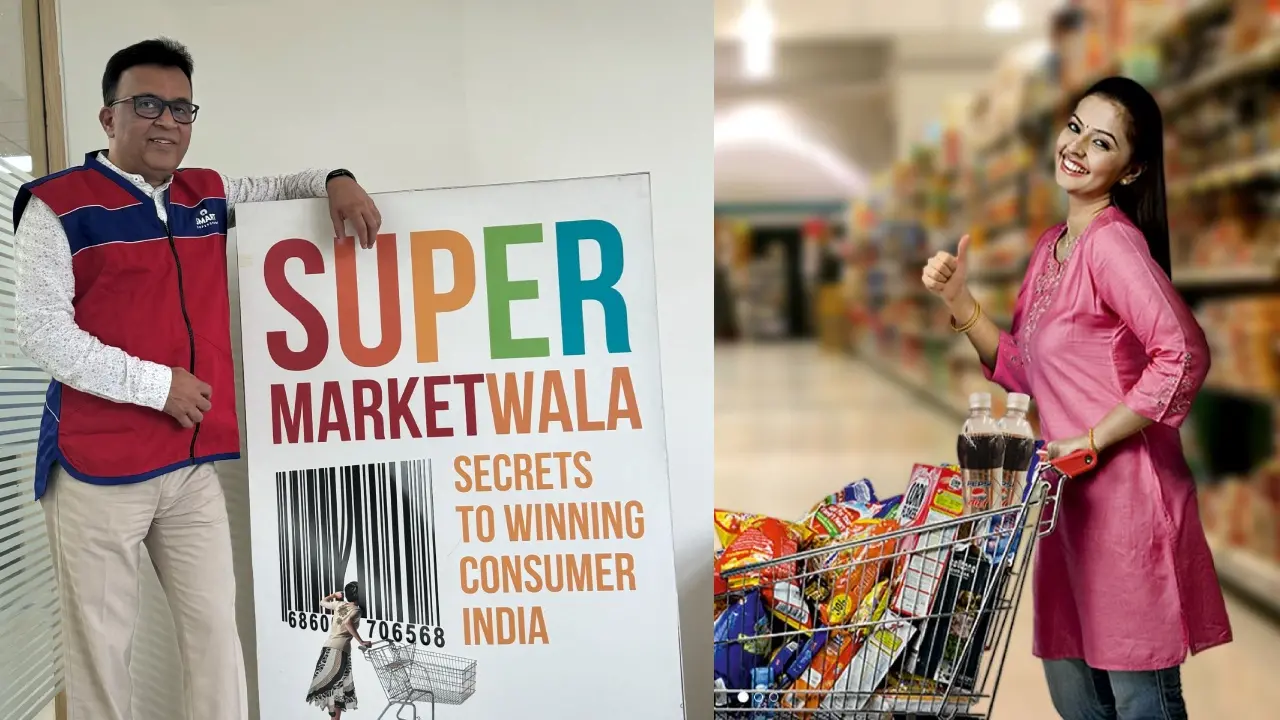
So, I'm a supermarket wala and my primary program is grocery. When we talk about e-commerce and stores, we miss out on one very important fact of urban India. In urban India, 50% of all groceries were always home delivered even in 1990. So, I define e-commerce as the consumer trusting a service provider without visiting their place of business and by transmitting their order in some form or the other and for the delivery to come home. When I was growing up, it was called home delivery. Now, it's called e-commerce. It's the same thing, the phone call to the shop or the slip of paper that you sent to the shop. It has been changed to an electronic way of passing the order.
But half of the groceries in urban India were always home delivered. So, that's the customer habit. Like physical supermarkets modernize the physical store, which is the Kirana store and make it self-service and open. In the same manner, e-commerce is trying to modernize the other half of consumer behaviour. But she always wanted half her groceries delivered home. So, to me, these are actually twin engines which are driving in the same direction, which is modernizing her shopping.
To answer a short-term question, the number of people walking into our stores, even as the e-commerce orders are growing on our platform or any other platform, is continuously increasing. As people get more choices and more ways in which to participate in modern retail, I think everything will flourish.
What will happen is people like us, who have a head start in physical stores, will now learn digital commerce. And we are doing so and we are using our stores also. We think we are being smart. We don't have to incur set-up costs for our e-commerce, etc. There are other sets of players in modern retail who are starting with e-commerce and now trying to learn stores. But I think everybody conceptually believes that the customers of India on grocery will always be omnichannel shoppers. So our e-commerce orders are increasing. So are our footfalls in our stores as we speak.
How big is Kerala as a market?
It's not about big or small. It's about how important it is. I think Kerala is important and interesting. One is the consumer is significantly more sophisticated and aware, more educated, has better incomes, better exposure to global good practices, and therefore more ready for modern solutions like ours. To me, you have to understand the difference between Calicut and Kasaragod, Thrissur and Kochi, and Kollam and Trivandrum. We believe and we practice this. The more we tune in to the nuances of what the consumer of Kerala needs, the more she rewards us with business. And that's why it is important, but it is also fun to do business with the consumers of Kerala.
What can consumers in Kerala expect from Reliance Retail this Onam?
We believe inherently we believe that the Indian consumer in all parts of India, that includes Kerala, is as much an emerging customer as she is an asserting customer. When it comes to our food, our fashion choices, our entertainment choices, as well as the way we celebrate, I think we are not giving up what we have. We have started celebrating even each other's festivals as we go on. So festival and their following are only increasing, not decreasing.
When I was growing up, I was aware of Onam. I was aware of Sadhya (feast). I would once in a while go to my friend's place and have Sadhya. But now over the last several years, there is no way I will not plan properly and be part of Onam one way or the other sitting here in Mumbai.
Therefore, the more we tune in, the better it gets. The other thing is that we also believe that all our festivals are actually pre-marketed consumption opportunities. Festivals make us eat good food, meet people, buy new clothes and so on. And that's what we retailers want people to do. And all our festivals, small or large, exactly do the same.
This is a celebration of our cultural identity. But also festivals of consumption.
So the fact that we need to connect and do Onam well in Kerala to us is a given. Our next level is to say that which are the 15 stores of ours in the city of Bangalore where our store must celebrate Onam because we know the top three communities that live in the area. So taking this understanding forward wherever the ethnic communities travel is our approach to festivals that exist. And we are finding this because our store density is higher, especially in Kerala. Therefore, we need to tune into different parts of Kerala. We have to know how Pala will celebrate different festivals compared to Ernakulam. We have to understand the difference. And the same thing applies across geography and across communities.
You said the customer is the king and the queen. So, how do you curate your products?
Well, the starting point is simple. The starting point is the positioning of the format. So if I have a format that is a smart bazaar format, then it is a big-box destination store that offers very strong value. If I have a fresh signature store, that is for a more sophisticated customer who has evolved and cares about fresh foods more, cares about foods that are healthier to eat, and also is sophisticated and knows international cuisines, etc. So once you've defined that, then you build every category around that positioning.
The good thing is, for the everyday goods that we sell, the speed of learning in every catchment is very, very fast. If I'm selling furniture and the customer asks for furniture, it will take me six months or nine months to source that furniture. But if the customer is asking for a different brand of rice powder or batter that she prefers, then I can source it and make it available within a week. And this learning, when you do this cycle for 50-60 weeks, then we start looking like we understand every need of the consumer and we are meeting that in that catchment. I might be running a few thousand stores. But as far as my customer is concerned, she has only one store. And if one of the neighbourhood mall stores in Ernakulam does not know that one of the prominent communities in that catchment is the Nair community, then I will miss it. So all I need to do is to tune in over the period of time to the requests that are coming from customers and the curation happens. So once you are humble and you respond to customers, those layers get added over a period of time.
How does Reliance help local brands to expand into the national market?
Yeah, we do have a large, large assortment of products at amazing prices for this Onam. What also happens with a network like ours is that Kerala brands will succeed with us. They go to newer territories where otherwise they would have taken 10 and 15 years to grow. So even fresh food brands like, brands of chapati and batter first worked with us in the Kerala markets.
And now they're available in Bengaluru, and Hyderabad as well. So we help brands that succeed with us to go beyond their local area. So otherwise distribution in India can be a very time-consuming and costly thing. However, we believe that modern retailers like us could provide a flyover over the Indian distribution problem for brands that want to succeed with consumers. There are numerous examples. The fresh chapati ready to eat started with us.
And the largest, state in which we sell the highest number of branded chapatis is Kerala. Similarly, we find Tamil Nadu and Kerala to be some of our big states for Gulab Jamun and Kaju Kachori.