Air India faces Rs 22,000 crore loss as external shocks add pressure to turnaround plan
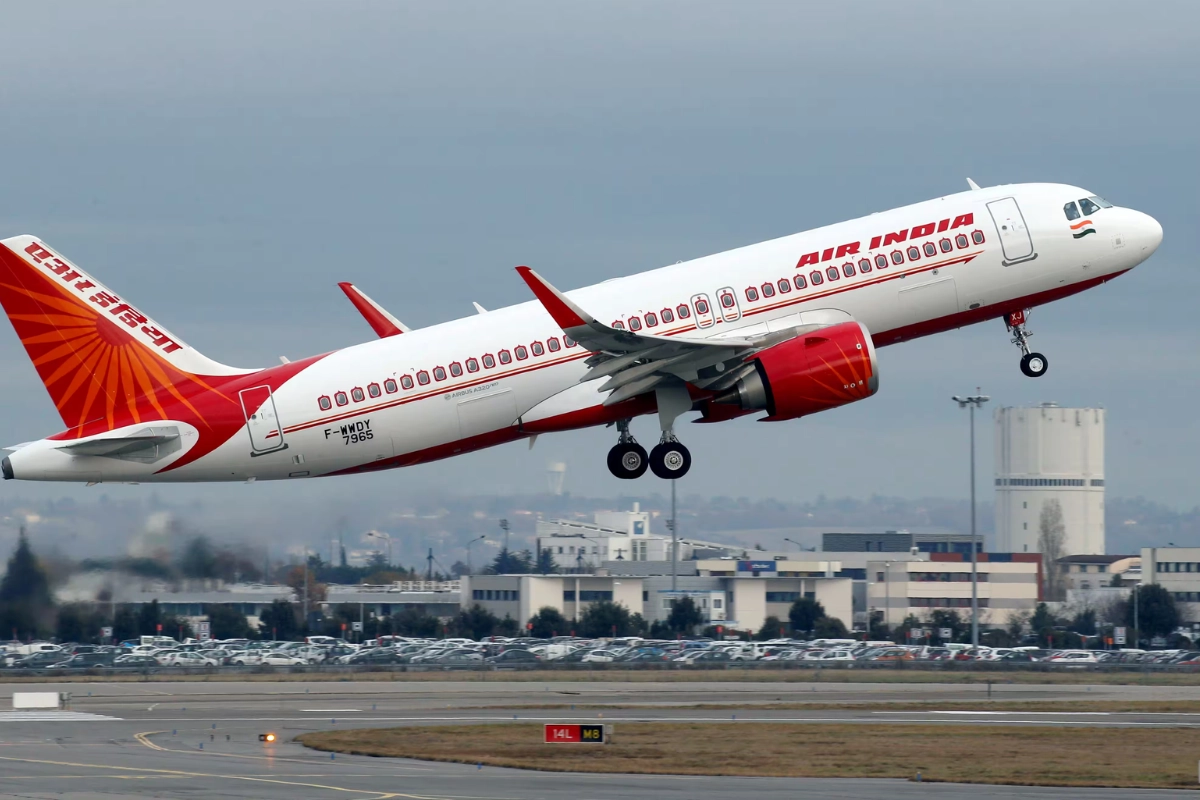
Mumbai: Air India's board is determined to see through the airline's ongoing transformation despite a Rs 22,000-crore loss driven largely by external shocks, including Pakistan airspace closure and surging fuel prices, Independent Director Sanjiv Mehta said on Saturday.
Addressing the 122nd Birth Anniversary celebrations of the Air India founder, JRD Tata, organised by JRD Tata Memorial Trust here, Mehta also said that new Air India Chief Tewolde Gebremerium has a sharp eye for cost-efficiency and commercial execution and a practical hands-on approach to strengthening how the organisation runs.
"In recent times, much of the public conversation in the country has focused on the financial results of the year ended March 2026, in which the airline incurred a loss of over Rs 22,000 crore. When a headline figure of that magnitude appears, it invites scrutiny. Under the board, we welcome candid scrutiny," Mehta said.
At the same time, it is vital to look at the extraordinary exceptions that shaped the year, he said, and identified three major external shocks, including the AI 171 crash, the closure of Pakistan airspace, and a surge in aviation fuel prices due to the Iran-US war.
"The closure of Pakistan airspace to Indian carriers, a severe geopolitical disruption that lengthens flight times, adds fuel burn, and operational complexity on key routes, and importantly, does not burden our Western competitors in the same way," he said.
The unprecedented surge in oil prices following the Iran war injected fuel costs at a moment when Air India was already absorbing heavy transformation and operating expenses, Mehta stated.
"Those were not ordinary business fluctuations. They were compounding external shocks colliding with a massive multi-year refill. Yet, as a board, we do not use external headwinds as an excuse to slow down. On the contrary, they are hardened by resolve. The board is completely determined to see this turnaround through," he added.
Stating that Air India's transformation rests on three pillars'mindset, distinctive capabilities and high-performance organisation, Mehta said, "A healthy mindset needs distinctive capabilities. And this translates into assets, product craft and institutional modes that set you apart in the long run."
In aviation, fleet and onboard products are foundational, Mehta said and added that the airline has embarked on a nearly 600-aircraft order and a 100-plus aircraft retrofit program, he said.
The objective is to build a modern, fuel-efficient fleet capable of competing with leading international airlines, he emphasised.
"To stay the course with discipline, confront cost structure head-on, and build a resilient, financially sustainable airline worthy of JRD's name," Mehta said.
He said that vision and capability only compound when one builds high performance in autonomy (and) the right governance, operational rhythm, cost discipline and leadership talent work in sync.
"In any complex turnaround, the anatomy of the organisation must keep evolving as the airline moves from foundation building to scaled sustained performance," he said.
Exhibiting the board's confidence in the new CEO and Managing Director, he said Tewolde, who led Ethiopian Airlines for over a decade, brings deep battle-tested global airline leadership and is proving to be a great addition to Air India at a pivotal moment.
"What stands out is the combination he brings. An unwavering focus on safety and operational discipline, a sharp eye for cost-efficiency and commercial execution and a practical hands-on approach to strengthening how the organisation runs.
"On the board, we see him complementing the heavy lifting already underway, helping sharpen operating rhythm so that world-class aircraft and lounges are matched by world-class execution and long-term sustainability," Mehta stated.
(Except for the headline, this story has not been edited by Mathrubhumi and is published from a syndicated feed.)