Why Kerala must remember Renaissance icon Dakshayani Velayudhan
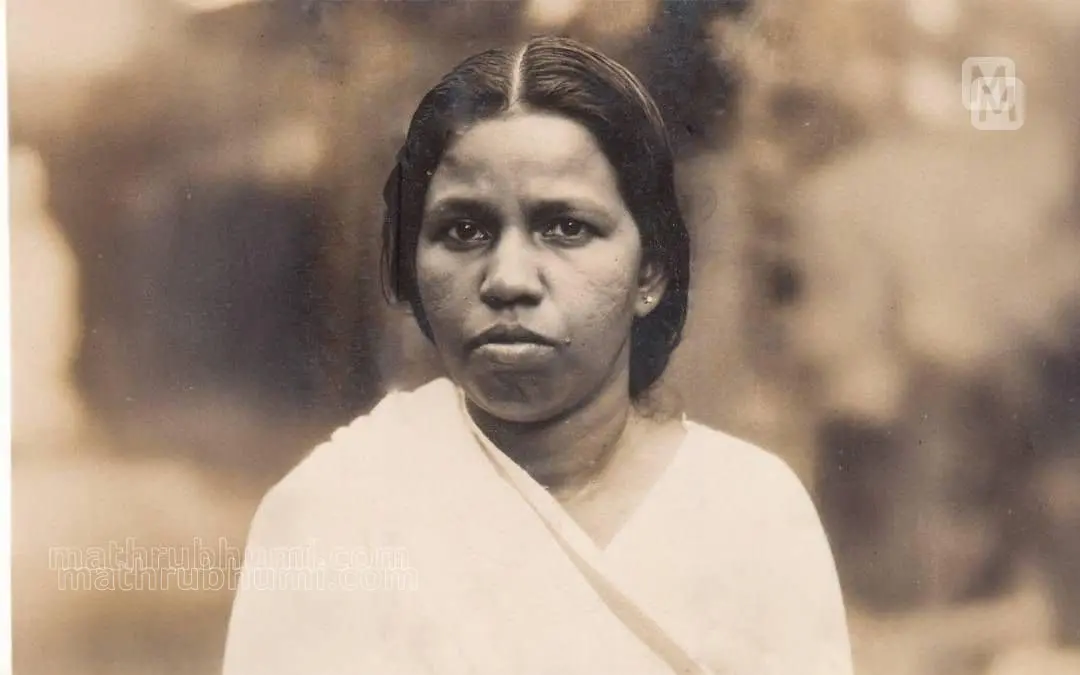
When discussions arise about Kerala’s Renaissance period, one name that the new generation must remember is Dakshayani Velayudhan, the first female graduate from the Dalit community and one of nine female members of the Constituent Assembly of India.
Through her own determination and education, she showed the world that knowledge is a woman’s greatest weapon. When she studied and asserted her supremacy even in the Constitution, those who had been sidelined in the name of caste until then were left ashamed and defeated. During his Independence Day speech, Prime Minister Narendra Modi even mentioned her name and her contribution.
Breaking barriers
Dakshayani was born on July 4, 1912, in Mulavukad, an island in Ernakulam. She was the first woman from the untouchable caste in the Kingdom of Cochin to pass the ESLC examination. The first woman from the untouchable caste in India to graduate.
At that time, giving the name Dakshayani to a girl from a lower caste was a revolution in itself. It was there that her father, Kunjan and mother Mani gave their daughter the name Dakshayani. Thus, those parents began the revolution by replacing the usual Pulaya names such as Azhaki, Chakki, Kali and Kurumba. When she was not old enough to go to school, she stubbornly went with adults to study, and others confronted her with teasing. Her parents taught her the first lesson: education was the only way to overcome resistance.
She boarded a local ferry and travelled for hours, continuing her studies at St. Mary’s LP School in Mulavukad and Chathyoth LMC Girls School in Pachalam. Thus, Dakshayani became the first Scheduled Caste girl to pass matriculation in Kochi. Even then, she was teased and ostracised. But she did not give up. She joined Maharaja’s College, Ernakulam, for a science degree. Dakshayani was the only girl in the chemistry class at Maharaja’s College. Seeing the Dalit girl who had come to college for the first time wearing a saree, those around her frowned. She faced discrimination even at her educational institution. She was told to stand far away from the teacher and study. She was also forbidden to touch the equipment. Dakshayani did not flinch. She left those standing in front of her, dumbfounded by asking questions. The truth is that even after completing her studies and taking up teaching, the teasing and isolation did not change. Still, Dakshayani was not ready to give up.
Second-class degree, still called Pulaya teacher
Dakshayani graduated from Maharaja’s College, Ernakulam, with a second-class degree. After completing her teacher training in Madras, she joined the Peringottukara Government School, Thrissur, in 1935 as a teacher. But the call of the Pulaya teacher remained. Dakshayani’s daughter, Dr Meera Velayudhan, often said the headmaster did not even ask Dakshayani to sit down when she came to the office with the admission order. It was difficult to even find a rented house to stay in. The upper castes did not even allow her to draw water from the nearby pond. Once, while walking to school, an upper-caste woman came towards her. At that time, if you saw the upper castes, others had to move aside. But Dakshayani did not move. With this, the other woman stepped aside. Even the students call her Pulaya teacher and mock her. But Dakshayani was not ready to stop there. In this way, Dakshayani’s progress completely overturned the usual caste discrimination. Many people had to concede defeat in front of her leadership.
Cochin Legislative Council and Constituent Assembly
Two years before the country gained independence, Dakshayani was nominated to the Cochin Legislative Council in 1945 and to the Constituent Assembly the following year. She was 34 years old at the time. Thus, Dakshayani became the first woman from the backwards class in the Constituent Assembly. When Dr B R Ambedkar presented the draft constitution for discussion, Dakshayani Velayudhan actively participated. After praising Dr Ambedkar, she submitted some of her suggestions.
In each of her speeches, she argued for the educational rights and opportunities of the backwards class. She also actively participated in the formation of the government. It was Dakshayani who put forward the revolutionary idea of getting the people’s approval for the constitution through general elections. She argued that it should not only create a constitution, but also become a framework for people’s lives. Even after the constitution was drafted, she remained in Delhi and later became an LIC officer. Instead of getting involved in party politics, she worked among the city’s sweepers. She convened a national conference of Dalit women in Delhi and formed an organisation called Mahila Jagriti Parishad. Thus, Dakshayani spoke up for her community, which was silenced at every step.
Voice of reform
''The functioning of the Constitution depends not on the implementation of the law, but on how people behave, themselves. Therefore, I hope that over time, there will be no community called untouchables.''
Dakshayani Velayudhan’s strong words are still relevant today. She had argued in the assembly that the constitution should have a clear provision against untouchability and that real protection should be ensured for the downtrodden. In her name, since 2019, the state government has also been giving the Dakshayani Velayudhan Award to women who contribute to women’s empowerment.
She was married to R Velayudhan, a Scheduled Caste leader and Member of Parliament. Velayudhan and Dakshayani had five children. Their eldest son, Dr Raghu, was the doctor of the late Prime Minister Indira Gandhi. Dakshayani died in Delhi on July 20, 1978, aged 66.