The rapid construction of Bailey Bridge in Wayanad by Madras Engg Group; Who are Madras Sappers?
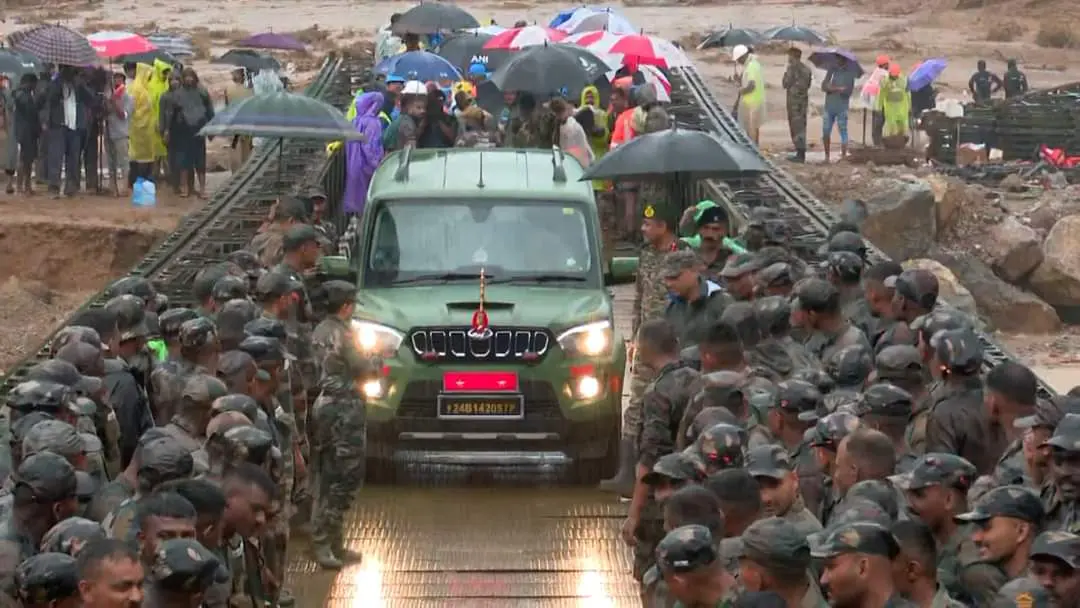
Bengaluru: The Bailey Bridge which rose rapidly in Wayanad’s Chooralmala is the result of hard work by the Army's Madras Engineering Group (MEG) from Bengaluru. Known as the ‘Madras Sappers’, this engineering unit is crucial for the army, providing support in various locations across the country.
They have received specialised training and are the first to arrive at battlefields to clear the way for the army, build bridges, and find and defuse landmines. They also assist in rescue operations during natural disasters, having played a key role in flood rescues in Kerala in the past.
A 70-member team led by Major General Vinod T Mathew, the General Officer Commanding (GOC) of the Karnataka-Kerala Sub Area, travelled from Bengaluru to Chooralmala. They brought the necessary materials for the bridge construction from Bengaluru and Delhi. Major Sita Shelke, the only female officer in the team, led the bridge building efforts.
Established on September 30, 1780, by the British, the MEG is now one of the world’s leading Army engineering units. Originally formed to assist the British army in the Madras Province, the Madras Sappers, along with the Bengal and Bombay Sappers, have served diligently over the past 244 years.
Bailey Bridge
The Bailey bridge, a type of modular military bridge, was developed during World War II by the British engineer Sir Donald Bailey. The design was conceived in response to the need for quick-to-assemble, portable bridges that could be rapidly deployed in combat zones. It is a type of portable, pre-fabricated truss bridge, extensively used in emergency situations such as rescue operations following landslides. Key aspects of the Bailey bridge’s utility in such scenarios include:
- Rapid deployment: Bailey bridges can be assembled quickly and easily by a relatively small team, making them ideal for emergency situations where time is critical.
- Accessibility: These bridges can be transported to remote or inaccessible areas—often the case in landslide-affected regions—using trucks or even helicopters.
- Sturdy construction: Despite their portability, Bailey bridges are robust and can support heavy loads, including vehicles and equipment necessary for rescue and relief operations.
- Versatility: They can be adapted to varying lengths and capacities, suitable for crossing gaps created by landslides or damaged infrastructure.
- Temporary but reliable: Although typically used as temporary solutions, Bailey bridges provide reliable and safe passage for both rescue teams and affected populations until permanent repairs can be undertaken.