From virtual fencing to container shops: What Kerala can learn from TN to combat man-animal conflict
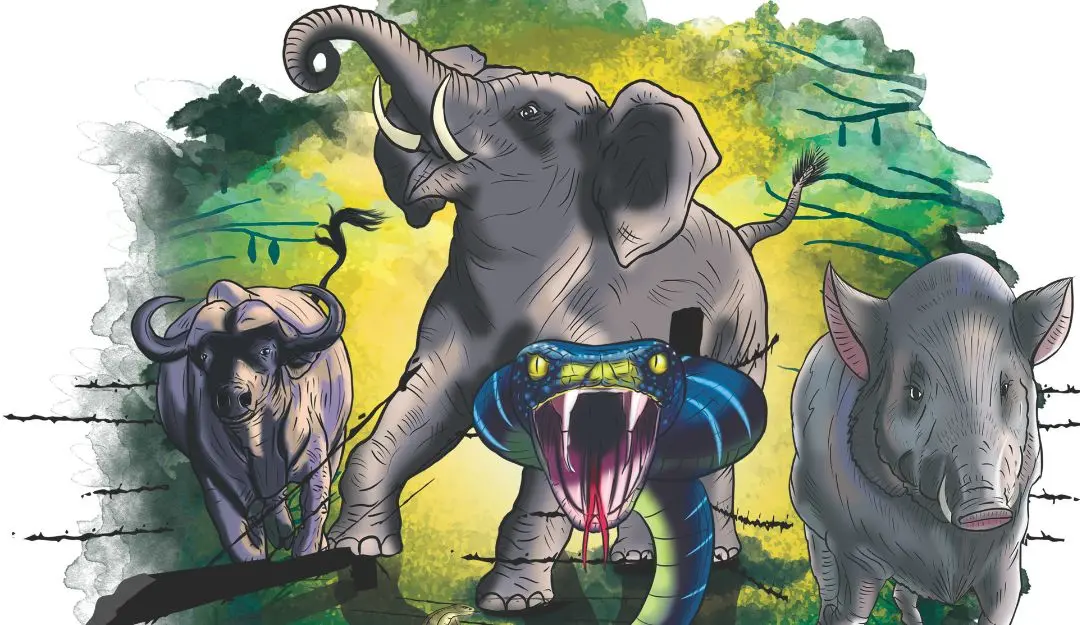
Valparai: As Kerala grapples with human-wildlife conflicts, innovative technologies implemented to prevent wildlife attacks in Tamil Nadu are proving to be successful. The virtual fencing system recently implemented by the Forest Department in the estate area of Valparai in Tamil Nadu has been a great success.
The system, with no wire fence, has infrared sensors and works on a solar energy system, will sound an alarm and light up if any animal comes within a 100-meter radius. The system, which operates 24 hours, is most useful at night.
“People are mostly victims of wild animal attacks at night. Once the alarm goes off, you could be alert knowing that there is an elephant or other animals nearby. It would also be easy for the Forest Department officials to chase away the animals,” said Bhargava Teja, Deputy Director of the Anamalai Tiger Reserve, which is located on the outskirts of the Valparai forest area, to Mathrubhumi.
Virtual fencing, alarms
The Tamil Nadu government's Innovation Initiative developed virtual fencing that was installed at 1,800 places in the Valparai and Manambolly ranges at a cost of about three crores. With the success of the project, the TN Forest Department is preparing to expand it to the Gudalur and Sathyamangalam ranges.
The SMS alert and LED lights introduced since 2011 to detect the presence of wild animals and systems like light flash and voice calls are also being successfully used.
Container ration shops
The Forest Department and the WWF (World Wildlife Fund) NGO have started a container ration shop on a trial basis in Thaimudi Estate. The shop is owned by a Malayali woman, Subaida.
"Elephants used to break into the ration shop at least four or five times a month. Now, after shifting to the container, there is no problem," said Subaida’s son Sunir.
The Forest Department has decided to shift all the ration shops in the estate to containers.
Data and takeaways
From 1991 to 2021, 49 people were killed in wildlife attacks in Valparai.
From 2021 to 2023, there has not been a single death. Although a death was reported last year, the Forest Department says that it was not due to a technical fault.
While the damage caused by elephants was 75 in 2022, it was only 11 last year.
“The Forest Department in Kerala should be able to use such innovative systems too. It is high time to understand that fencing and drugging animals is not the only solution,” said Dr Sridhar Vijayakan, who has been conducting wildlife research in Valparai for eight years.